Epstein Files Full PDF

CLICK HERE
Technopedia Center
PMB University Brochure
Faculty of Engineering and Computer Science
S1 Informatics S1 Information Systems S1 Information Technology S1 Computer Engineering S1 Electrical Engineering S1 Civil Engineering

faculty of Economics and Business
S1 Management S1 Accountancy

Faculty of Letters and Educational Sciences
S1 English literature S1 English language education S1 Mathematics education S1 Sports Education
teknopedia

  • Registerasi
  • Brosur UTI
  • Kip Scholarship Information
  • Performance
Flag Counter
  1. World Encyclopedia
  2. Houston Ship Channel - Wikipedia
Houston Ship Channel - Wikipedia
Coordinates: 29°42′30″N 95°00′18″W / 29.70833°N 95.00500°W / 29.70833; -95.00500
From Wikipedia, the free encyclopedia
Canal in Texas

Houston Ship Channel
The Buffalo Bayou portion of the Houston Ship Channel
Map
Interactive map of Houston Ship Channel
CountryUnited States
Specifications
Length50 miles (80 km)
Geography
Start pointPort of Houston
End pointGulf of Mexico

The Houston Ship Channel, in Houston, Texas, is part of the Port of Houston, one of the busiest seaports in the world.[1] The channel is the conduit for ocean-going vessels between Houston-area terminals and the Gulf of Mexico, and it serves an increasing volume of inland barge traffic.

Overview

[edit]
San Jacinto River in Channel - inset (white line top left) magnified as bottom photo showing the Texas and San Jacinto Monument

The channel is a widened and deepened natural watercourse created by dredging Buffalo Bayou and Galveston Bay.[2] The channel's upstream terminus lies about four miles east of downtown Houston, at the Turning Basin, with its downstream terminus at a gateway to the Gulf of Mexico, between Galveston Island and the Bolivar Peninsula.[3] Major products, such as petrochemicals and Midwestern grain, are transported in bulk together with general cargo. The original watercourse for the channel, Buffalo Bayou, has its headwaters 30 miles (48 km) to the west of the city of Houston. The navigational head of the channel, the most upstream point to which general cargo ships can travel, is at Turning Basin in east Houston.[4]

The channel has numerous terminals and berthing locations along Buffalo Bayou and Galveston Bay. The major public terminals include Turning Basin, Barbours Cut, and Bayport. Many private docks are there as well, including the ExxonMobil Baytown Complex and the Deer Park Complex.[5][6]

The channel, occasionally widened and deepened to accommodate ever-larger ships, is 530 feet (160 m) wide by 45 feet (14 m) deep by 50 miles (80 km) long.[1] The islands in the ship channel are part of the ongoing widening and deepening project. The islands are formed from soil pulled up by dredging, and the salt marshes and bird islands are part of the Houston Port Authority's beneficial use and environmental mitigation responsibilities.[1]

The channel has five vehicle crossings: Washburn Tunnel, Sidney Sherman Bridge, Sam Houston Ship Channel Bridge, popularly known as the Beltway 8 Bridge. Two Dollar bridge is another local nickname; Fred Hartman Bridge connecting La Porte and Baytown, Texas; and Lynchburg Ferry.

History

[edit]
Photo of the Houston Ship Channel in 1913

John Richardson Harris platted the town of Harrisburg, Texas on Buffalo Bayou at the mouth of Brays Bayou in 1826. He established a steam mill there, while making Harrisburg into a logistical center for the Austin's Colony. He plied his schooner The Rights of Man through the waters of Galveston Bay and Buffalo Bayou, importing supplies from the United States, and exporting cotton and hides. However, fewer people settled Buffalo Bayou than the fertile Brazos Valley, so Harrisburg remained a remote overland location from the critical mass of farmlands: about 20 miles from Fort Bend, Texas and about 40 miles from San Felipe de Austin, Texas. Travelling the Brazos River presented several hazards, most of all, its shifting, shallow sandbars at its mouth. Despite several interventions, the river remained hostile to navigation.[7] Nicholas Clopper acquired land downstream from Harrisburg, the eponymously named Clopper's Point. He recruited six men from Ohio to work as traders, who sailed the schooner Little Zoe from Cincinnati laden with supplies such as flour and spices, nails and other hardware, and whiskey and tobacco. Two of these hires were his sons, Edward and Joseph Clopper. They recorded their travels in a journal, reporting several hazards of Galveston Bay in route to Buffalo Bayou. They ran Little Zoe aground on Galveston Island and later observed two wrecked ships in the bay. They encountered the shallow Red Fish Bar, which they passed while dragging over it.[8]

The channel has been used to move goods to the sea since at least 1836. Buffalo Bayou and Galveston Bay were dredged during the late 19th and early 20th centuries to accommodate larger ships. In the wake of the 1900 Galveston hurricane, the inland Port of Houston was seen as a safer long-term option, and planning for a larger ship channel began.[9] By the mid 1900s the Port of Houston had established itself as the leading port in Texas, eclipsing the natural harbors at Galveston and Texas City.[10] The Turning Basin terminal in Harrisburg (now part of Houston) became the port's largest shipping point.

Postcard of the Houston Ship Channel, undated

On January 10, 1910, residents of Harris County voted 16 to 1 to fund dredging the Houston ship channel to a depth of 25 feet for the amount of $1,250,000, which was then matched by federal funds. On June 14, 1914 the first deepwater ship, steamship Satilla, arrived at the port of Houston, establishing steamboat service between New York City and Houston. On November 10, 1914, President Woodrow Wilson opened the Houston Ship Channel, part of the Port of Houston.[11] The onset of World War I and the first mechanized war's thirst for oil greatly increased use of the ship channel.

The United States Army Corps of Engineers increased the depth of the channel from 25 to 30 feet in 1922.[12]

In 1933, the United States Department of War and the United States House Committee on Rivers and Harbors approved a plan to increase the depth of the channel from 30 to 34 feet and widen the Galveston Bay section from 250 to 400 feet. The Public Works Administration provided $2,800,000 for the project, which was completed in late 1935.[13]

The proximity to Texas oilfields led to the establishment of numerous petrochemical refineries along the waterway, such as the ExxonMobil Baytown installation on the eastern bank of the San Jacinto River. Now the channel and surrounding area support the second-largest petrochemical complex in the world.[14]

While much of the Houston Ship Channel is associated with heavy industry, an icon of Texas history is also located along its length. The San Jacinto Monument commemorates the Battle of San Jacinto (1836) in which Texas won its independence from Mexico. From 1948 to 2022, also along the channel's path was the museum ship USS Texas (BB-35). She saw service during both world wars, and is the oldest remaining example of a dreadnought-era battleship in existence.[15] In 2022, the USS Texas was permanently relocated from her berth along the channel.

The US Army's San Jacinto Ordnance Depot was located on the channel from 1941–1964.[16]

During World War II, two large shipyards produced side-by-side at the confluence of Greens Bayou: Todd Houston Shipbuilding built mostly Liberty Ships and Brown Shipbuilding built a substantial number of destroyer escorts, submarine chasers and amphibious landing craft.

Currently, the channel is dredged to a depth of 43–45 feet. The channel was designated a National Civil Engineering Landmark by the American Society of Civil Engineers (ASCE) in 1987.[14]

The "Texas chicken" maneuver is known to mariners who regularly navigate large vessels on the Houston Ship Channel.[17]

Expansion

[edit]

In 2022, Port Houston began its channel expansion project, Project 11, in 2022. This project involves expanding the length of the channel from 530 feet to 700 feet, as well as deepening some segments to 46.5 feet deep. Other goals this project focuses on are: safety improvements, better environmental features, and increased economical benefits.[18]

Pollution

[edit]
[icon]
This section needs expansion with: Expansion. You can help by adding missing information. (October 2014)

On December 25, 2007, the Houston Ship Channel was featured on the CNN Special, Planet in Peril, as a potential polluter of nearby neighborhoods. That year, the University of Texas released a study suggesting that children living within 2 miles (3.2 km) of the Houston Ship Channel were 56% more likely to become sick with leukemia than the national average.[19]

On March 22, 2014, a barge carrying nearly a million gallons of marine fuel oil collided with another ship in the Houston Ship Channel, causing the contents of one of the barge's 168,000-gallon tanks to leak into Galveston Bay.[20]

On January 26, 2024, a report published by Amnesty International stated that more than 103,000 people live within 3 miles of those facilities, which were found to have violated air pollution regulations a total of 2,315 times during the last 20 years and 167 times since 2020.[21]

On March 5, 2025, an article Published by Public Health Watch stated that the Texas Department of State Health services found greater than expected rates of leukemia, cervix, lung, and bronchus cancer on Harris County's industrial east side.[22]

Gallery

[edit]
  • Drawing of ship at port 1859
    Drawing of ship at port 1859
  • Drawing of ship at port 1859
    Drawing of ship at port 1859
  • The Houston Ship Channel during its first opening in 1915
    The Houston Ship Channel during its first opening in 1915
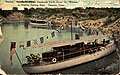
  • Houston Ship Channel and foot of Main Street, Houston, Texas (postcard, circa 1910)
    Houston Ship Channel and foot of Main Street, Houston, Texas (postcard, circa 1910)
  • Yachts in the Houston Turning Basin, Houston (postcard, circa 1911)
    Yachts in the Houston Turning Basin, Houston (postcard, circa 1911)
  • Ship Turning Basin, Buffalo River, Houston (postcard, circa 1914-1924)
    Ship Turning Basin, Buffalo River, Houston (postcard, circa 1914-1924)
  • Cotton on the ship channel, Houston (circa, 1914)
    Cotton on the ship channel, Houston (circa, 1914)
  • Mosaic tile mural at the Houston Ship Channel Visitor Center - 2016
    Mosaic tile mural at the Houston Ship Channel Visitor Center - 2016
  • Fireboat Howard T. Tellepsen in the Houston Channel (2006)
    Fireboat Howard T. Tellepsen in the Houston Channel (2006)
  • USS Texas museum is in the Houston Ship Channel

See also

[edit]
  • flagTexas portal
  • Phillips disaster of 1989
  • I-610 Ship Channel Bridge

References

[edit]
  • "Houston Ship Channel, Texas". NASA Earth Observatory. Archived from the original on 2006-10-01. Retrieved 2006-05-01.
  1. ^ a b c "Welcome to the Houston-Galveston Navigation Channel Project Online Resource Center". U.S. Army Corps of Engineers, Galveston District. December 2005. Archived from the original on January 9, 2009.
  2. ^ "The Houston Ship Channel A History". The Port of Houston Authority. Archived from the original on 13 June 2008. Retrieved 9 September 2009.
  3. ^ Sibley, Marilyn McAdams (1968). The Port of Houston: A History. Austin: University of Texas Press. p. 3.
  4. ^ "Turning Basin". Port of Houston Authority. Archived from the original on 18 February 2010. Retrieved 9 February 2010.
  5. ^ "DHR05: HRD for Competitive Advantage: Assignment I". All India Management Association. Retrieved 9 Feb 2010.
  6. ^ Aslam, Abid (7 Jan 2008). "ENVIRONMENT: U.S. Groups Sue Shell Over Refinery Pollution". Inter Press Service News Agency. Archived from the original on 2008-05-31.
  7. ^ Sibley (1968), pp. 15–17.
  8. ^ Sibley (1968), pp. 17–19.
  9. ^ Manny Fernandez and Richard Fausset, "A Storm Forces Houston, the Limitless City, to Consider Its Limits", The New York Times, 30 August 2017. Accessed 31 August 2017.
  10. ^ Diana J. Kleiner, "Galveston County," Handbook of Texas Online, accessed August 30, 2014. Uploaded on September 19, 2010. Published by the Texas State Historical Association.
  11. ^ Houston History: Industry for War and Peace (1910-1920).
  12. ^ Report of the Chief of Engineers U.S. Army 1922
  13. ^ "A Detailed Description of the Port". Houston Port Book. May, 1935, pg 19.
  14. ^ a b "Houston Ship Channel". American Society of Civil Engineers. Retrieved January 29, 2022.
  15. ^ Battleship Texas State Historic Site. Texas Parks and Wildlife Department. Accessed August 30, 2014.
  16. ^ Carter Barcus, "San Jacinto Ordnance Depot," Handbook of Texas Online, accessed August 30, 2014. Uploaded on June 15, 2010. Published by the Texas State Historical Association.
  17. ^ "Collision of the Tankship Elka Apollon With the Containership MSC Nederland Houston Ship Channel, Upper Galveston Bay, Texas October 29, 2011". NTSB report, page 20
  18. ^ Ashley-Daniels, Lisa (October 27, 2025). "Port Houston Completes its Portion of Project 11 Dredging" (PDF).
  19. ^ "Possible Link Between Ship Channel Air Pollutants, Cancer Risks". University of Texas School of Public Health. Archived from the original on 2009-09-09. Retrieved 2009-08-30.
  20. ^ "Oil Spill Cleanup Impedes Major Texas Ship Channel". NPR. The Associated Press. March 23, 2014.
  21. ^ Zuvanich, Adam (January 26, 2024). "Houston Ship Channel deemed 'sacrifice zone' in new pollution report by Amnesty International". Houston Public Media. Retrieved November 5, 2024.
  22. ^ Arredondo, Salina (March 5, 2025). "Residents of Channelview Grapple With Results of Alarming Cancer Study". Public Health Watch. Retrieved November 6, 2025.

External links

[edit]
Wikimedia Commons has media related to Houston Ship Channel.
  • Houston Ship Channel from the Handbook of Texas Online
  • Time-lapse video of a barge navigating a length of the Houston Ship Channel at night
  • See historical photographs of the Houston Ship Channel, the Houston community, and more at the University of Houston Digital Library

29°42′30″N 95°00′18″W / 29.70833°N 95.00500°W / 29.70833; -95.00500

  • v
  • t
  • e
Texas Ports of Texas
Deep-water seaports
  • Beaumont
  • Brownsville
  • Corpus Christi
  • Freeport
  • Galveston
  • Houston (Barbours Cut, Bayport)
  • Port Arthur
  • Port Lavaca/Point Comfort
  • Texas City
Shallow-draft seaports
  • Victoria
Canals / waterways
  • Bolivar Roads
  • Brazos Santiago Pass
  • Houston Ship Channel
  • Intracoastal Waterway
  • Matagorda Ship Channel
  • Port Mansfield Channel
  • Sabine–Neches Waterway
  • Category
  • Economy
  • Communications
  • v
  • t
  • e
Texas Waters of Texas
Bays and estuaries
of the Gulf of Mexico
  • Alazan Bay
  • Aransas Bay
  • Baffin Bay
  • Carancahua Bay
  • Christmas Bay
  • Copano Bay
  • Corpus Christi Bay
  • Dickinson Bay
  • East Bay
  • East Matagorda Bay
  • Espiritu Santo Bay
  • Galveston Bay
  • Guadalupe Bay
  • Laguna Madre
  • Lavaca Bay
  • Matagorda Bay
  • Nueces Bay
  • Oso Bay
  • Redfish Bay
  • Sabine Lake
  • San Antonio Bay
  • South Bay
  • St. Charles Bay
  • Tres Palacios Bay
  • Trinity Bay
  • West Bay
Channels and canals
  • Acequia Madre de Valero
  • American Canal
  • Aransas Pass
  • Bolivar Roads
  • Brazos Santiago Pass
  • Cedar Bayou
  • Franklin Canal
  • Gulf Intracoastal Waterway
  • Houston Ship Channel
  • Matagorda Ship Channel
  • Pass Cavallo
  • Port Mansfield Channel
  • Riverside Canal
  • Sabine Pass
  • Sabine–Neches Waterway
  • San Luis Pass
Lakes and reservoirs
  • Amistad Reservoir
  • Caddo Lake
  • Canyon Lake
  • Cedar Creek Reservoir
  • Choke Canyon Reservoir
  • Falcon International Reservoir
  • Inks Lake
  • Lady Bird Lake
  • Lavon Lake
  • Lake Austin
  • Lake Bardwell
  • Lake Buchanan
  • Lake Conroe
  • Lake Corpus Christi
  • Lake Ray Hubbard
  • Lake Ray Roberts
  • Lake LBJ
  • Lake Livingston
  • Lake Marble Falls
  • Lake Meredith
  • Lake Tawakoni
  • Lake Texoma
  • Lake Travis
  • Lewisville Lake
  • Richland-Chambers Reservoir
  • Sam Rayburn Reservoir
  • Toledo Bend Reservoir
Rivers
  • Angelina River
  • Blanco River
  • Bosque River
  • Brazos River
  • Buffalo Bayou
  • Colorado River
  • Concho River
  • Canadian River
  • Guadalupe River
  • James River
  • Lampasas River
  • Lavaca River
  • Leon River
  • Little River
  • Llano River
  • Navidad River
  • Neches River
  • Nolan River
  • Nueces River
    • Frio River
  • Paluxy River
  • Pease River
  • Pedernales River
  • Prairie Dog Town Fork Red River
  • Red River
  • Rio Grande
    • Devils River
    • Pecos River
  • Sabine River
  • San Antonio River
    • Medina River
  • San Bernard River
  • San Gabriel River
  • San Jacinto River
  • San Marcos River
  • San Saba River
  • Sulphur River
  • Trinity River
  • Wichita River
  • White River
Wetlands
  • Big Cypress Bayou
  • Cow Bayou
  • Ottine wetlands
  • Rincon Bayou
  • Rio Grande Valley
  • v
  • t
  • e
Flag of Texas Houston–Pasadena–The Woodlands
Counties
  • Austin
  • Brazoria
  • Chambers
  • Fort Bend
  • Galveston
  • Harris
  • Liberty
  • Montgomery
  • San Jacinto
  • Waller
Houston–Sugar Land–Baytown Metropolitan Area
"Principal" cities
  • Houston
  • Pasadena
  • The Woodlands
  • Sugar Land
  • Baytown
  • Conroe
  • Galveston
  • Texas City
Other cities
  • Alvin
  • Angleton
  • Bellaire
  • Clute
  • Deer Park
  • Dickinson
  • Freeport
  • Friendswood
  • Galena Park
  • Humble
  • Jacinto City
  • Katy
  • Lake Jackson
  • La Marque
  • La Porte
  • League City
  • Manvel
  • Missouri City
  • Pasadena
  • Pearland
  • Richmond
  • Rosenberg
  • South Houston
  • Stafford
  • West University Place

For a complete listing, see list of cities and towns in Greater Houston

Unincorporated
areas
  • Atascocita
  • Channelview
  • Cloverleaf
  • Crosby
  • Cypress
  • Fresno
  • Hockley
  • Klein
  • Port Bolivar
  • Spring
  • The Woodlands
Bodies of water
  • Buffalo Bayou
  • Galveston Bay
  • Gulf Intracoastal Waterway
  • Houston Ship Channel
  • San Jacinto River
  • Trinity River
  • Lake Houston
  • Lake Conroe
  • v
  • t
  • e
State of Texas
Austin (capital)
Topics
  • Outline
  • Architecture
  • Climate
    • climate change
  • List of counties in Texas
  • Cuisine
  • Dialects
  • Geography
  • Government
  • Healthcare
  • History
  • Languages
  • Law
  • Literature
  • Mass media
    • newspapers
    • radio
    • TV
  • National Historic Landmarks
  • National Register of Historic Places Sites
  • Recorded Texas Historic Landmarks
  • Sports
  • Symbols
  • Texans
  • Time
  • Tourist attractions
  • Transportation
Society
  • Abortion
  • Culture
  • Crime
  • Demographics
  • Economy
  • Education
  • Gambling
  • Gun laws
  • Homelessness
  • LGBTQ rights
  • Pride
  • Politics
Regions
  • Ark‑La‑Tex
  • Big Bend
  • Boca Chica
  • Blackland Prairies
  • Brazos Valley
  • Central Texas
  • Coastal Bend
  • Concho Valley
  • Cross Timbers
  • East Texas
  • Edwards Plateau
  • Golden Triangle
  • Hill Country
  • Llano Estacado
  • Northeast Texas
  • North Texas
  • Osage Plains
  • Panhandle
  • Permian Basin
  • Piney Woods
  • Rio Grande Valley
  • Southeast Texas
  • South Plains
  • South Texas
  • Texoma
  • Trans-Pecos
  • West Texas
Metropolitan
areas
  • Abilene
  • Amarillo
  • Austin–Round Rock (Greater Austin)
  • Beaumont–Port Arthur
  • Brownsville–Harlingen
  • College Station–Bryan
  • Corpus Christi
  • Dallas–Fort Worth–Arlington (DFW)
  • El Paso
  • Houston–The Woodlands–Sugar Land (Greater Houston)
  • Killeen–Temple
  • Laredo
  • Longview–Kilgore
  • Lubbock
  • McAllen–Edinburg–Mission
  • Midland
  • Odessa
  • San Angelo
  • San Antonio–New Braunfels
  • Sherman–Denison
  • Texarkana
  • Tyler
  • Victoria
  • Waco
  • Wichita Falls
flag Texas portal
Authority control databases Edit this at Wikidata
International
  • VIAF
National
  • United States
  • Israel
Other
  • Yale LUX
Retrieved from "https://teknopedia.ac.id/w/index.php?title=Houston_Ship_Channel&oldid=1341072730"
Categories:
  • Ship canals
  • Canals in Texas
  • Greater Houston
  • Galveston Bay Area
  • Geography of Houston
  • Transportation in Chambers County, Texas
  • Transportation in Galveston County, Texas
  • Historic Civil Engineering Landmarks
  • Buildings and structures in Chambers County, Texas
  • Buildings and structures in Galveston County, Texas
  • Transportation buildings and structures in Harris County, Texas
  • Canals opened in 1914
  • 1914 establishments in Texas
Hidden categories:
  • Pages using gadget WikiMiniAtlas
  • Articles with short description
  • Short description matches Wikidata
  • Use American English from July 2025
  • All Wikipedia articles written in American English
  • Articles to be expanded from October 2014
  • All articles to be expanded
  • Commons category link from Wikidata
  • Coordinates on Wikidata
  • Pages using the Kartographer extension

  • indonesia
  • Polski
  • العربية
  • Deutsch
  • English
  • Español
  • Français
  • Italiano
  • مصرى
  • Nederlands
  • 日本語
  • Português
  • Sinugboanong Binisaya
  • Svenska
  • Українська
  • Tiếng Việt
  • Winaray
  • 中文
  • Русский
Sunting pranala
url url url url url url url url url url url url url url url url url url url url url url url url url url url url url url url url url url url url url url url url url url url url url url url url url url url url url url url url url url url url url url url url url url url url url url url url url url url url url url url url url url url url url url url url url url url url url url url url url url url url url url url url url url url url url url url url url url url url url url url url url url url url url url url url url url url url url url url url url url url url url url url url url url url url url url url url url url url url url url url url url url url url url url url url url url url url url url url url url url url url url url url url url url url url url url url url url url url url url url url url url url url url url url url url url url url url url url url url url url url url url url url url url url url url url url url url url url url url url url url url url url url url url url url url url url url url url url url url url url url url url url url url url url url url url url url url url url url url url url url url url url url url url url url url url url url url url url url url url url url url url url url url url url url url url url url url url url url url url url url url url url url url url url url url url url url url url url url url url url url url url url url url url url url url url url url url url url url url url url url url url url url url url url url url url url url url url url url url url url url url url url url url url url url url url url url url url url url url url url url url url url url url url url url url url url url url url url url url url url url url url url url url url url url url url url url url url url url url url url url url url url url url url url url url url url url url url url url url url url url url url url url url url url url url url url url url url url url url url url url url url url url url url url url url url url url url url url url url url url url url url url url url url url url url url url url url url url url url url url url url url url url url url url url url url url url url url url url url url url url url url url url url url url url url url url url url url url url url url url url url url url url url url url url url url url url url url url url url url url url url url url url url url url url url url url url url url url url url url url url url url url url url url url url url url url url url url url url url url url url url url url url url url url url url url url url url url url url url url url url url url url url url url url url url url url url url url url url url url url url url url url url url url url url url url url url url url url url url url url url url url url url url url url url url url url url url url url url url url url url url url url url url url url url url url url url url url url url url url url url url url url url url url url url url url url url url url url url url url url url url url url url url url url url url url url url url url url url url url url url url url url url url url url url url url url url url url url url url url url url url url url url url url url url url url url url url url url url url url url url url url url url url url url url url url url url url url url url url url url url url url url url url url url url url url url url url url url url url url url url url url url url url url url url url url url url url url url url url url url url url url url url url url url url url url url url url url url url url url url url url url url url url url url url url url url url url url url url url url url url url url url url url url url url url url url url url url url url url url url url url url url url url url url url url url url url url url url url url url url url url url url url url url url url url url url url url url url url url url url url url url url url url url url url url url url url url url url url url url url url url url url url url url url url url url url url url url url url url url url url url url url url url url url url url url url url url url url url url url url url url url url url url url url url url url url url url url url url url url url url url url url url url url url url url url url url url url url url url url url url url url url url url url url url url url url url url url url url url url url url url url url url url url url url url url url url url url url url url url url url url url url url url url url url url url url url url url url url url url url url url url url url url url url url url url url url url url url url url url url url url url url url url url url url url url url url url url url url url url url url url url url url url url url url url url url url url url url url url url url url url url url url url url url url url url url url url url url url url url url url url url url url url url url url url url url url url url url url url url url url url url url url url url url url url url url url url url url url url url url url url url url url url url url url url url url url url url url url url url url url url url url url url url url url url url url url url url url url url url url url url url url url url url url url url url url url url url url url url url url url url url url url url url url url url url url url url url url url url url url url url url url url url url url url url url url url url url url url url url url url url url url url url url url url url url url url url url url url url url url url url url url url url url url url url url url url url url url url url url url url url url url url url url url url url url url url url url url url url url url url url url url url url url url url url url url url url url url url url url url url url url url url url url url url url url url url url url url url url url url url url url url url url url url url url url url url url url url url url url url url url url url url url url url url url url url url url url url url url url url url url url url url url url url url url url url url url url url url url url url url url url url url url url url url url url url url url url url url url url url url url url url url url url url url url url url url url url url url url url url url url url url url url url url url url url url url url url url url url url url url url url url url url url url url url url url url url url url url url url url url url url url url url url url url url url url url url url url url url url url url url url url url url url url url url url url url url url url url url url url url url url url url url url url url url url url url url url url url url url url url url url url url url url url url url url url url url url url url url url url url url url url url url url url url url url url url url url url url url url url url url url url url url url url url url url url url url url url url url url url url url url url url url url url url url url url url url url url url url url url url url url url url url url url url url url url url url url url url url url url url url url url url url url url url url url url url url url url url url url url url url url url url url url url url url url url url url url url url url url url url url url url url url url url url url url url url url url url url url url url url url url url url url url url url url url url url url url url url url url url url url url url url url url url url url url url url url url url url url url url url url url url url url url url url url url url url url url url url url url url url url url url url url url url url url url url url url url url url url url url url url url url url url url url url url url url url url url url url url url url url url url url url url url url url url url url url url url url url url url url url url url url url url url url url url url url url url url url url url url url url url url url url url url url url url url url url url url url url url url url url url url url url url url url url url url url url url url url url url url url url url url url url url url url url url url url url url url url url url url url url url url url url url url url url url url url url url url url url url url url url url url url url url url url url url url url url url url url url url url url url url url url url url url url url url url url url url url url url url url url url url url url url url url url url url url url url url url url url url url url url url url url url url url url url url url url url url url url url url url url url url url url url url url url url url url url url url url url url url url url url url url url url url url url url url url url url url url url url url url url url url url url url url url url url url url url url url url url url url url url url url url url url url url url url url url url url url url url url url url url url url url url url url url url url url url url url url url url url url url url url url url url url url url url url url url url url url url url url url url url url url url url url url url url url url url url url url url url url url url url url url url url url url url url url url url url url url url url url url url url url url url url url url url url url url url url url url url url url url url url url url url url url url url url url url url url url url url url url url url url url url url url url url url url url url url url url url url url url url url url url url url url url url url url url url url url url url url url url url url url url url url url url url url url url url url url url url url url url url url url url url url url url url url url url url url url url url url url url url url url url url url url url url url url url url url url url url url url url url url url url url url url url url url url url url url url url url url url url url url url url url url url url url
Pusat Layanan

UNIVERSITAS TEKNOKRAT INDONESIA | ASEAN's Best Private University
Jl. ZA. Pagar Alam No.9 -11, Labuhan Ratu, Kec. Kedaton, Kota Bandar Lampung, Lampung 35132
Phone: (0721) 702022
Email: pmb@teknokrat.ac.id