Epstein Files Full PDF

CLICK HERE
Technopedia Center
PMB University Brochure
Faculty of Engineering and Computer Science
S1 Informatics S1 Information Systems S1 Information Technology S1 Computer Engineering S1 Electrical Engineering S1 Civil Engineering

faculty of Economics and Business
S1 Management S1 Accountancy

Faculty of Letters and Educational Sciences
S1 English literature S1 English language education S1 Mathematics education S1 Sports Education
teknopedia

  • Registerasi
  • Brosur UTI
  • Kip Scholarship Information
  • Performance
Flag Counter
  1. World Encyclopedia
  2. Semerkhet
Semerkhet
From Wikipedia, the free encyclopedia
Egyptian pharaoh

Semerkhet
Semempses, Mempses
Pottery shard inscribed with Semerkhet's serekh, originally from his tomb, now in the Petrie Museum, UC 36756
Pharaoh
Reign8½ years, ca. 2920 BC
PredecessorAnedjib
SuccessorQa'a
Royal titulary
Horus name
Hor-Semerkhet
Ḥr-smr.ẖt
Companion of the divine community
Alternative:
Companion of the gods[1]
G5
S29 U23 F32

Prenomen
Nisut-Bity-Nebty-Iry
nsw.t-bty-nb.ty-iry
King of Upper and Lower Egypt, he of the two ladies,
he who belongs to them

Alternative:
He whom the two ladies guard[1]
M23
t
L2
t
G16A21A

Abydos King List
Iry?/Semsu?
iry?/smsw?
<
A21A
>


Turin King List
Semsem
smsm
Horus the Elder
<
S29mS29m
>G7
FatherAnedjib ? Den ?
MotherBetrest
BurialTomb U, Umm el-Qa'ab
DynastyFirst Dynasty

Semerkhet is the Horus name of an early Egyptian king who ruled during the First Dynasty. This ruler became known through a tragic legend handed down by the historian Manetho, who reported that a calamity of some sort occurred during Semerkhet's reign. The archaeological records seem to support the view that Semerkhet had a difficult time as king and some early archaeologists questioned the legitimacy of Semerkhet's succession to the Egyptian throne.

Length of reign

[edit]

Manetho named Semerkhet Semêmpsés and credited him with a reign of 18 years,[2] whilst the Royal Canon of Turin credited him with an implausibly long reign of 72 years.[3] Egyptologists and historians now consider both statements as exaggerations and credit Semerkhet with a reign of 8½ years. This evaluation is based on the Cairo Stone inscription, where the complete reign of Semerkhet has been recorded. Additionally, they point to the archaeological records, which strengthen the view that Semerkhet had a relatively short reign.[4]

Name sources

[edit]
Semsu, cartouche name of Semerkhet in the Abydos king list

Semerkhet is well attested in archaeological records. His name appears in inscriptions on vessels made of schist, alabaster, breccia, and marble. His name is also preserved on ivory tags and earthen jar seals. Objects bearing Semerkhet's name and titles come from Abydos and Sakkara.[4][5]

Semerkhet's serekh name is commonly translated as "companion of the divine community" or "thoughtful friend". The latter translation is questioned by many scholars, since the hieroglyph khet (Gardiner-sign F32) normally was the symbol for "body" or "divine community".[4][5][6]

Alabaster vase marked King Iry-Nebty visits the house-of-the-pleased-king, oil jars for it, National Archaeological Museum, France

Semerkhet's birth name is more problematic. Any artefact showing his birth name curiously lacks any artistic detail of the used hieroglyphic sign: a walking man with waving cloak or skirt, a nemes head dress, and a long, plain stick in his hands. The reading and meaning of this special sign is disputed, since it doesn't appear in this form before association with king Semerkhet. Indeed, the hieroglyph of the cloaked man is extremely rare. It appears only twice in relief inscriptions depicting ceremonial processions of priests and standard bearers.[4][5] Egyptologists such as Toby Wilkinson, Bernhard Grdseloff, and Jochem Kahl read Iry-Netjer, meaning "divine guardian". During the Old Kingdom period, this word is written with uniliteral signs of a netjer flag (Gardiner-sign R8) and a human eye (Gardiner-sign D4) nearby the ideogram of the man. Some contemporary ivory tags show the Nebty name written with the single eye symbol only. Thus, the scholars also read Semerkhet's throne name as Iry (meaning "guardian") and the Nebty name as Iry-Nebty (meaning "guardian of the Two Ladies"). This reconstruction is strengthened by the observation that Semerkhet was the first king using the Nebty title in its ultimate form. For unknown reason Semerkhet did not use the Nebuy title of his predecessor. It seems that he felt connected with the 'Two Ladies', a title referring to the goddesses Nekhbet and Wadjet, the patron deities of the Ancient Egyptians who were worshiped by all after the unification of its two parts, Lower Egypt, and Upper Egypt. The Nebty title in turn was thought to function as an addition to the Nisut-Bity title.[5][6][7] His prenomen is Nisut-Bity-Nebty-Iry, nsw.t-bty-nb.ty-iry meaning, King of Upper and Lower Egypt, he of the two ladies, and he who belongs to them or He whom the two ladies guard.[1]

M23
t
L2
t
G16A21A

Scribes and priests of the Ramesside era were also confused, because the archaic ideogram that was used during Semerkhet's lifetime was very similar to the sign of an old man with a walking stick (Gardiner sign A19). This had been read as Semsu or Sem and means "the eldest". It was used as a title identifying someone as the head of the house. Due to this uncertainty, it seems that the compiler of the Abydos king list simply tried to imitate the original figure, whilst the author of the Royal Canon of Turin seems to have been convinced about reading it as the Gardiner-sign A19 and he wrote Semsem meaning, Horus the Elder, with uniliteral signs. The Saqqara King List omits Semerkhet's throne name. The reason for that is unknown, but all kings from Narmer up to king Den also are missing their throne names.[5][6][7]

Identity

[edit]
See also: First Dynasty of Egypt family tree
Nebty name of Semerkhet from Djoser's pyramid complex at Saqqara[8]

Virtually nothing is known about Semerkhet's family. His parents are unknown, but it is thought that one of his predecessors, king Den, might have been his father. Possibly, Semerkhet was born to queen Betrest. On the Cairo Stone she is described as his mother, but definite evidence for that view has not yet been found. It would be expected that Semerkhet had sons and daughters, but their names have not been preserved in the historical record. A candidate as a possible member of his family line is his immediate successor, king Qa'a.[9]

Reign

[edit]
Ivory label of Semerkhet
Ivory label of Semerkhet, on display in the British Museum. The right section, introduced by the 'year'-sign Renpet (a bald palm stem), reports -from top to bottom- a feast of the Sokar-bark, a visitation to the temple of the ancestor-deity, Wer-Wadyt, and the travelling in a royal boat. The left part of the label shows the throne name Iry-Nebty of Semerkhet with a blessing wish below. On the upper left corner is described the content of the jar, to which the label was once adjusted. Also the name of the high official Henuka is preserved, who was obviously responsible for the delivery of the mentioned jar.

Usurper debate

[edit]

An old theory, supported by Egyptologists and historians such as Jean-Philippe Lauer, Walter Bryan Emery, Wolfgang Helck, and Michael Rice once held that Semerkhet was a usurper and not the rightful heir to the throne. Their assumption was based on the observation that a number of stone vessels with Semerkhet's name on them, originally were inscribed with king Adjib's name. Semerkhet simply erased Adjib's name and replaced it with his own. Furthermore, they point out that no high official and priest associated with Semerkhet was found at Sakkara. All other kings, such as Den and Adjib, are attested in local mastabas.[4][10][11]

Today this theory has little support. Egyptologists such as Toby Wilkinson, I. E. S. Edwards, and Winifred Needler deny the 'usurping theory', because Semerkhet's name is mentioned on stone vessel inscriptions along with those of Den, Adjib, and Qa'a. The objects were found in the underground galleries beneath the Pyramid of Djoser at Saqqara. The inscriptions show that king Qa'a, immediate successor of Semerkhet and sponsor of the vessels, accepted Semerkhet as a rightful ancestor and heir to the throne. Furthermore, the Egyptologists point out that nearly every king of First Dynasty had the habit of taking special vessels (so-called 'anniversary vessels') from their predecessor's tomb and then replacing their predecessor's name with their own. Semerkhet not only confiscated Adjib's vessels, in his tomb several artefacts from the necropolis of queen Meritneith and king Den also were found. The lack of any high official's tomb at Saqqara might be explained by the rather short reign of Semerkhet. It seems that the only known official of Semerkhet, Henu-Ka, had survived his king: His name appears on ivory tags from Semerkhet's and Qaa's tomb.[5][9]

Celebration of certain rituals

[edit]

Seal impressions from Semerkhet's burial site show the new royal domain, Hor wep-khet, (meaning "Horus, the judge of the divine community") and the new private household Hut-Ipty (meaning "house of the harem"), which was headed by Semerkhet's wives. Two ivory tags show the yearly 'Escort of Horus', a feast connected to the regular tax collections. Other tags report the cult celebration for the deity of the ancestors, Wer-Wadyt ("the Great White"). Further tags show the celebration of a first (and only) Sokar feast.[5][12][13]

Year by year records

[edit]

While the Cairo Stone reports the whole of Semerkhet's reign, unfortunately, the surface of the stone slab is badly worn and most of the events are now illegible. The following chart follows the reconstructions by Toby A. H. Wilkinson, John D. Degreef, and Hermann Alexander Schlögl:

Cairo Stone, main fragment:

  • Year of coronation: Appearance of the king of Lower- and Upper Egypt; unifying the two realms; circumambulation of the White Wall of Memphis
  • first year: Escort of Horus; destruction of Egypt
  • second year: Appearance of the king; creation of a statue for Seshat and Sed
  • third year: Escort of... (rest is missing)
  • fourth year: Appearance of the king of Upper Egypt; creation of... (rest is missing)
  • fifth year: Escort of... (rest is missing)
  • sixth year: Appearance of the king of Upper Egypt... (rest is missing)
  • seventh year: Escort of... (rest is missing)
  • eighth year: Appearance of the king of Lower- and Upper Egypt... (rest is missing)
  • year of death: The ...th month and ...th day. (damaged)

[7][13][14]

"Calamity"

[edit]

Egyptologists and historians pay special attention to the entry "Destruction of Egypt" in the second window of Semerkhet's year records. The inscription gives no further information about that event, but it has a resemblance to Manetho's report. The Eusebian version says: "His son, Semémpsês, who reigned for 18 years; in his reign a very great calamity befell Egypt." The Armenian version sounds similar: "Mempsis, 18 years. Under him many portents happened and a great pestilence occurred." None of the documents from after Semerkhet's reign provide any details about this "calamity".[2][7][13]

Tomb

[edit]
Map of Semerkhet's tomb in the Umm el-Qa'ab[15]

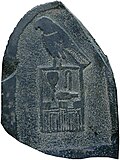
Semerkhet's burial site was excavated in 1899 by archaeologist and Egyptologist Sir William Matthew Flinders Petrie at Abydos and is known as "Tomb U". While excavating, Petrie found no stairways as he did at the necropolis of Den and Adjib. He found a ramp, four metres wide and leading straight into the main chamber. The ramp starts approximately ten metres east outside the tomb and has a base slope of 12°. Inside the tomb the ramp shows irregular graduations. Petrie was also confused by the small number of clay seals. Only 17 seals were found. For archaeologists and Egyptologists, the complete arrangement of the burial site suggests that the builders were pressed for time. When Petrie freed the ramp from sand, he found that the complete ramp was thickly covered in aromatic oil, which still gave off a scent. Beside the ramp several wooden and hand-made baskets and earthen jars were found. These were dated to the Ramesside era. Scholars now think that Semerkhet's tomb was re-opened and restored when Ramesside priests and kings saw the tomb of king Djer as the ritual burial of Osiris's head. The findings inside the main chamber included precious objects such as inlays and fragments of furniture (especially pedestals), copper-made armatures, and jewelry made of ebony, amethyst, and turquoise. Some vessels originating from the Levant were also found. They once contained Bescha oil, which was of great value to the Egyptians. Outside the tomb, close to the entrance, a damaged tomb stela made of black granite displaying Semerkhet's serekh name was excavated.[5][11][16][17][18]

The burial chamber measures 29.2 × 20.8 metres and is of simple construction. Petrie found that the king's mastaba once covered the whole of the subsidiary tombs. Now the royal burial formed a unit with the 67 subsidiary tombs. Egyptologists such as Walter Bryan Emery and Toby Wilkinson see this architectural development as proof that the royal family and household were killed willingly when their royal family head had died. Wilkinson goes further and thinks that Semerkhet, as the godlike king, tried to demonstrate his power over the death and life of his servants and family members even in their afterlife. The tradition of burying the family and court of the king when he died was abandoned at the time of king Qaa, one of the last rulers of the First Dynasty. The tombs of Second Dynasty founder, Hotepsekhemwy, onward have no subsidiary tombs.[11][16][18]

  • Calcite dish, from Royal Tomb "U", Semerkhet, at Abydos, Egypt, First Dynasty, The Petrie Museum of Egyptian Archaeology, London
    Calcite dish, from Royal Tomb "U", Semerkhet, at Abydos, Egypt, First Dynasty, The Petrie Museum of Egyptian Archaeology, London
  • Pottery shard bearing Semerkhet's serekh, on display at the Musée du Louvre
    Pottery shard bearing Semerkhet's serekh, on display at the Musée du Louvre
  • Clay jar incised with Semerkhet's serekh, Musée du Louvre
    Clay jar incised with Semerkhet's serekh, Musée du Louvre
  • Fragment of a vessel of white marble bearing the serekh of Semerkhet, at the left of the serekh a per bja, meaning "brazen house" or "house of ore", is mentioned, Egyptian Museum, Cairo
    Fragment of a vessel of white marble bearing the serekh of Semerkhet, at the left of the serekh a per bja, meaning "brazen house" or "house of ore", is mentioned, Egyptian Museum, Cairo
  • Tomb stela of Semerkhet
    Tomb stela of Semerkhet

References

[edit]
  1. ^ a b c Nicolas Grimal, Ian Shaw (translator): A History of Ancient Egypt, 1992, Oxford: Blackwell publishing, ISBN 978-0-63-119396-8, p. 54
  2. ^ a b William Gillan Waddell: Manetho (The Loeb Classical Library, Volume 350). Harvard University Press, Cambridge (Mass.) 2004 (Reprint), ISBN 0-674-99385-3, page 33–37.
  3. ^ Alan H. Gardiner: The royal Canon of Turin. Griffith Institute of Oxford, Oxford (UK) 1997, ISBN 0-900416-48-3; page 15 & Table I.
  4. ^ a b c d e Wolfgang Helck: Untersuchungen zur Thinitenzeit. (Ägyptologische Abhandlungen, Volume 45), Harrassowitz, Wiesbaden 1987, ISBN 3-447-02677-4, pages 124, 160–162 & 212–214.
  5. ^ a b c d e f g h Toby A. H. Wilkinson: Early Dynastic Egypt. Routledge, London 1999, ISBN 0-415-18633-1, page 78, 79 & 275.
  6. ^ a b c Jochem Kahl, Markus Bretschneider, Barbara Kneissler: Frühägyptisches Wörterbuch, Band 1. Otto Harrassowitz, Wiesbaden 2002, ISBN 3-447-04594-9, Seite 46.
  7. ^ a b c d Toby A. H. Wilkinson: Royal Annals of Ancient Egypt: the Palermo Stone and its Associated Fragments. Kegan Paul International, London 2000, ISBN 0-7103-0667-9, page 76.
  8. ^ Pierre Lacau, J.-Ph. Lauer: La Pyramide a Degrees. Band 4: Inscriptions gravées sur les vases. Fasc. 1: Planches. Institut Français d'Archéologie Orientale, Kairo 1959, Abb. 37.
  9. ^ a b Iorwerth Eiddon Stephen Edwards: Early History of the Middle East (The Cambridge Ancient History; Vol. 1, Pt. 2). Cambridge University Press, Cambridge 2006, ISBN 0-521-07791-5, page 27–31.
  10. ^ Michael Rice: Egypt's Making: the Origins of Ancient Egypt, 5000-2000 BC. Taylor & Francis, London/New York 1990, ISBN 0-415-05092-8, page 127.
  11. ^ a b c Walter Bryan Emery: Ägypten, Geschichte und Kultur der Frühzeit, 3200-2800 v. Chr. Fourier, Wiesbaden 1964, ISBN 0-415-18633-1, page 15–17 & 94–95.
  12. ^ Eva-Maria Engel: The Domain of Semerkhet. In: Stan Hendrickx: Studies in Memory of Barbara Adams: Proceedings of the International Conference „Origin of the State, Predynastic and Early Dynastic Egypt“, Krakow, 28 August – 1 September 2002. Peeters, Leuven 2004, ISBN 90-429-1469-6, page 705–710.
  13. ^ a b c Hermann A. Schlögl: Das alte Ägypten. Beck, München 2008, ISBN 3-406-48005-5, page 71–72.
  14. ^ Ian Shaw & Paul T. Nicholson: The Dictionary of Ancient Egypt. Harry N. Abrams, New York 2003, ISBN 0-8109-9096-2, page 202.
  15. ^ Dieter Arnold: Lexikon der ägyptischen Baukunst, Patmos Verlag, 2000, S. 11
  16. ^ a b Ian Shaw: The Oxford history of ancient Egypt. University Press, Oxford (UK) 2003, ISBN 0-19-280458-8, page 69.
  17. ^ G. Dreyer, A. Effland, U. Effland, E.M. Engel, H. Hartmann, R. Hartung, Lacher, Müller, Pokorny: Excavations in the Tomb of Semerkhet. In: Mitteilungen des Deutschen Archäologischen Institut Kairo, vol. 62. von Zabern, Mainz 2006, page 95-97.
  18. ^ a b Günter Dreyer: Zur Rekonstruktion der Oberbauten der Königsgräber der 1. Dynastie in Abydos (Mitteilungen des Deutschen Archäologischen Instituts Kairo 47). von Zabern, Mainz 1991, page 56.

External links

[edit]
Wikimedia Commons has media related to Semerkhet.
  • Francesco Raffaele: Semerkhet – nisut-bity Iry
Preceded by
Anedjib
Pharaoh of Egypt Succeeded by
Qa'a
  • v
  • t
  • e
Pharaohs
Protodynastic to First Intermediate Period  (<3150–2040 BC)
Period
Dynasty
  • Pharaohs
    • male
    • female♀
  • uncertain
Protodynastic
(pre-3150 BC)
Lower
  • Hedju-Hor
  • Ny-Hor
  • Ni-Neith
  • Hat-Hor
  • Pu
  • Hsekiu
  • Khayu
  • Tiu
  • Thesh
  • Neheb
  • Wazner
  • Mekh
  • A
  • Double Falcon
  • Wash
Upper
  • A
  • Finger Snail
  • Fish
  • Elephant
  • Stork
  • Taurus
  • Scorpion I
  • Crocodile
  • Iry-Hor
  • Ka
  • Scorpion II
  • Narmer / Menes
Early Dynastic
(3150–2686 BC)
I
  • Narmer / Menes
  • Hor-Aha
  • Djer
  • Djet
  • Den
  • Anedjib
  • Semerkhet
  • Qa'a
  • Sneferka
  • Horus Bird
II
  • Hotepsekhemwy
  • Nebra
  • Nynetjer
  • Ba
  • Nubnefer
  • Horus Sa
  • Weneg
  • Wadjenes
  • Senedj
  • Seth-Peribsen
  • Sekhemib-Perenmaat
  • Neferkare I
  • Neferkasokar
  • Hudjefa I
  • Khasekhemwy
Old Kingdom
(2686–2181 BC)
III
  • Djoser
  • Sekhemkhet
  • Sanakht
  • Nebka
  • Khaba
  • Sedjes
  • Qahedjet
  • Huni
IV
  • Sneferu
  • Khufu
  • Djedefre
  • Khafre
  • Bikheris
  • Menkaure
  • Shepseskaf
  • Thamphthis
V
  • Userkaf
  • Sahure
  • Neferirkare Kakai
  • Neferefre
  • Shepseskare
  • Nyuserre Ini
  • Menkauhor Kaiu
  • Djedkare Isesi
  • Unas
VI
  • Teti
  • Userkare
  • Pepi I Meryre
  • Merenre Nemtyemsaf I
  • Pepi II Neferkare
  • Merenre Nemtyemsaf II
  • Netjerkare Siptah
  • Neferka
1st Intermediate
(2181–2040 BC)
VII/VIII
  • Menkare
  • Neferkare II
  • Neferkare Neby
  • Djedkare Shemai
  • Neferkare Khendu
  • Merenhor
  • Neferkamin
  • Nikare
  • Neferkare Tereru
  • Neferkahor
  • Neferkare Pepiseneb
  • Neferkamin Anu
  • Qakare Ibi
  • Neferkaure
  • Neferkauhor
  • Neferirkare
  • Wadjkare
  • Khuiqer
  • Khui
  • Iytjenu
IX
  • Meryibre Khety
  • Neferkare VII
  • Nebkaure Khety
  • Setut
  • Imhotep
X
  • Meryhathor
  • Neferkare VIII
  • Wahkare Khety
  • Merikare
Middle Kingdom and Second Intermediate Period  (2040–1550 BC)
Period
Dynasty
  • Pharaohs
    • male
    • female♀
  • uncertain
Middle Kingdom
(2040–1802 BC)
XI
  • Mentuhotep I
  • Intef I
  • Intef II
  • Intef III
  • Mentuhotep II
  • Mentuhotep III
  • Mentuhotep IV
Nubia
  • Segerseni
  • Qakare Ini
  • Iyibkhentre
XII
  • Amenemhat I
  • Senusret I
  • Amenemhat II
  • Senusret II
  • Senusret III
  • Amenemhat III
  • Amenemhat IV
  • Sobekneferu♀
  • Seankhibtawy Seankhibra
2nd Intermediate
(1802–1550 BC)
XIII
  • Sekhemre Khutawy Sobekhotep
  • Sekhemkare Amenemhat Senebef
  • Nerikare
  • Sekhemkare
  • Ameny Qemau
  • Hotepibre
  • Iufni
  • Amenemhat VI
  • Semenkare Nebnuni
  • Sehetepibre
  • Sewadjkare
  • Nedjemibre
  • Khaankhre Sobekhotep
  • Renseneb
  • Hor
  • Sekhemrekhutawy Khabaw
  • Djedkheperew
  • Sebkay
  • Sedjefakare Kay Amenemhat VII
  • Wegaf
  • Khendjer
  • Imyremeshaw
  • Sehetepkare Intef
  • Seth Meribre
  • Sobekhotep III
  • Neferhotep I
  • Sihathor
  • Sobekhotep IV
  • Merhotepre Sobekhotep
  • Khahotepre Sobekhotep VI
  • Wahibre Ibiau
  • Merneferre Ay
  • Merhotepre Ini
  • Sankhenre Sewadjtu
  • Mersekhemre Ined
  • Sewadjkare Hori
  • Merkawre Sobekhotep
  • Mershepsesre Ini II
  • Sewahenre Senebmiu
  • Merkheperre
  • Merkare
  • Sewadjare Mentuhotep
  • Seheqenre Sankhptahi
XIV
  • Yakbim Sekhaenre
  • Ya'ammu Nubwoserre
  • Qareh Khawoserre
  • Ammu Aahotepre
  • Sheshi
  • Nehesy
  • Khakherewre
  • Nebefawre
  • Sehebre
  • Merdjefare
  • Sewadjkare III
  • Nebdjefare
  • Nebsenre
  • Sekheperenre
  • Bebnum
  • 'Apepi
  • Nuya
  • Wazad
  • Sheneh
  • Shenshek
  • Khamure
  • Yakareb
  • Yaqub-Har
XV
  • Sharek
  • Semqen
  • Aperanat
  • Salitis
  • Sakir-Har
  • Khyan
  • Yanassi
  • Apepi
  • Khamudi
XVI
  • Sekhemre Sementawy Djehuty
  • Sobekhotep VIII
  • Neferhotep III
  • Seankhenre Mentuhotepi
  • Nebiryraw I
  • Nebiryraw II
  • Semenre
  • Bebiankh
  • Sekhemre Shedwaset
  • Dedumose I
  • Dedumose II
  • Djedankhre Montemsaf
  • Merankhre Mentuhotep
  • Senusret IV
  • Seneferankhre
Abydos
  • Senebkay
  • Wepwawetemsaf
  • Pantjeny
  • Snaaib
XVII
  • Sekhemre Wahkhau Rahotep
  • Nebmaatre
  • Sobekemsaf I
  • Sobekemsaf II
  • Sekhemre-Wepmaat Intef
  • Nubkheperre Intef
  • Sekhemre-Heruhirmaat Intef
  • Senakhtenre Ahmose
  • Seqenenre Tao
  • Kamose
New Kingdom and Third Intermediate Period  (1550–664 BC)
Period
Dynasty
  • Pharaohs  (male
  • female♀)
  • uncertain
New Kingdom
(1550–1070 BC)
XVIII
  • Ahmose I
  • Amenhotep I
  • Thutmose I
  • Thutmose II
  • Hatshepsut♀
  • Thutmose III
  • Amenhotep II
  • Thutmose IV
  • Amenhotep III
  • Akhenaten
  • Smenkhkare
  • Neferneferuaten♀
  • Tutankhamun
  • Ay
  • Horemheb
XIX
  • Ramesses I
  • Seti I
  • Ramesses II
  • Merneptah
  • Amenmesses
  • Seti II
  • Siptah
  • Tausret♀
XX
  • Setnakhte
  • Ramesses III
  • Ramesses IV
  • Ramesses V
  • Ramesses VI
  • Ramesses VII
  • Ramesses VIII
  • Ramesses IX
  • Ramesses X
  • Ramesses XI
  • Ramesses XII
3rd Intermediate
(1069–664 BC)
XXI
  • Smendes
  • Amenemnisu
  • Psusennes I
  • Amenemope
  • Osorkon the Elder
  • Siamun
  • Psusennes II
High Priest of Amun
  • Herihor
  • Pinedjem I
  • Menkheperre
XXII
  • Shoshenq I
  • Osorkon I
  • Shoshenq II
  • Tutkheperre Shoshenq
  • Maatkheperre Shoshenq
  • Takelot I
  • Osorkon II
  • Shoshenq III
  • Shoshenq IV
  • Pami
  • Shoshenq V
Lines of XXII/XXIII
  • Harsiese A
  • Takelot II
  • Pedubast I
  • Iuput I
  • Shoshenq VI
  • Osorkon III
  • Takelot III
  • Rudamun
  • Shoshenq VII
  • Ini (pharaoh)
  • Iuput II
  • Peftjauawybast
  • Nimlot of Hermopolis
  • Djehutyemhat
  • Nimlot II of Hermopolis
  • Padinemti of Hermopolis
XXIII
  • Pedubast II
  • Osorkon IV
  • Pami II
  • Gemenefkhonsbak
  • Pedubast III
XXIV
  • Tefnakht
  • Bakenranef
XXV
  • Piye
  • Shebitku
  • Shabaka
  • Taharqa
  • Tantamani
Late to Roman Period (664 BC–313 AD)
Period
Dynasty
  • Pharaohs
    • male
    • female♀
  • uncertain
Late
(664–332 BC)
XXVI
  • Ammeris
  • Tefnakht II
  • Nekauba
  • Necho I
  • Psamtik I
  • Necho II
  • Psamtik II
  • Apries
  • Amasis II
  • Psamtik III
XXVII
  • Cambyses II
  • Petubastis III
  • Darius the Great
  • Psammetichus IV
  • Xerxes I
  • Artaxerxes I
  • Darius II
XXVIII
  • Amyrtaeus
XXIX
  • Nepherites I
  • Hakor
  • Psammuthes
  • Nepherites II
  • Muthis
XXX
  • Nectanebo I
  • Teos of Egypt
  • Nectanebo II
XXXI
  • Artaxerxes III
  • Khabash
  • Arses of Persia
  • Darius III
Hellenistic
(332–30 BC)
Argead
  • Alexander the Great
  • Philip III of Macedon
  • Alexander IV of Macedon
Ptolemaic
  • Ptolemy I Soter
  • Ptolemy II Philadelphus
  • Ptolemy III Euergetes
  • Ptolemy IV Philopator
  • Ptolemy V Epiphanes
  • Ptolemy VI Philometor
  • Cleopatra II♀
  • Ptolemy VII Neos Philopator
  • Ptolemy VIII Physcon
  • Cleopatra III♀
  • Ptolemy IX Soter
  • Ptolemy X Alexander I
  • Berenice III♀
  • Ptolemy XI Alexander II
  • Ptolemy XII Auletes
  • Cleopatra V♀
  • Berenice IV♀
  • Cleopatra VI♀
  • Cleopatra♀
  • Ptolemy XIII Theos Philopator
  • Arsinoe IV♀
  • Ptolemy XIV Philopator
  • Caesarion
Roman
(30 BC–313 AD)
XXXIV
  • Augustus
  • Tiberius
  • Caligula
  • Claudius
  • Nero
  • Galba
  • Otho
  • Vitellius
  • Vespasian
  • Titus
  • Domitian
  • Nerva
  • Trajan
  • Hadrian
  • Antoninus Pius
  • Lucius Verus
  • Marcus Aurelius
  • Commodus
  • Pertinax
  • Pescennius Niger
  • Septimius Severus
  • Geta
  • Caracalla
  • Macrinus
  • Diadumenian
  • Elagabalus
  • Severus Alexander
  • Maximinus Thrax
  • Gordian I
  • Gordian II
  • Pupienus
  • Balbinus
  • Gordian III
  • Philip the Arab
  • Decius
  • Trebonianus Gallus
  • Aemilianus
  • Valerian
  • Macrianus Minor
  • Quietus
  • Lucius Mussius Aemilianus
  • Gallienus
  • Claudius Gothicus
  • Quintillus
  • Aurelian
  • Tacitus
  • Probus
  • Carus
  • Carinus
  • Numerian
  • Diocletian
  • Maximian
  • Galerius
  • Maximinus Daza
Dynastic genealogies
  • 1st
  • 4th
  • 5th
  • 6th
  • 11th
  • 12th
  • 17th
  • 18th
  • 19th
  • 20th
  • 21st, 22nd and 23rd
  • 24th
  • 25th
  • 26th
  • 27th
  • 30th
  • 31st
  • Argead
  • Ptolemaic
List of pharaohs
  • v
  • t
  • e
First Dynasty of Ancient Egypt
Pharaohs
  • Menes/Narmer
  • Hor-Aha
  • Djer
  • Djet
  • Den
  • Anedjib
  • Semerkhet
  • Qa'a
Regents
  • Neithhotep
  • Merneith
Queen consorts
  • Benerib
  • Herneith
  • Penebui
  • Nakhtneith
  • Khenthap
  • Semat
  • Serethor
  • Seshemetka
  • Betrest
Officials
  • Amka
  • Hemaka
  • Sabef
  • Meriiti
Other people
  • Ahaneith
Artefacts and
monuments
  • Narmer macehead
  • Narmer palette
  • Den seal impressions
  • Abydos boats
  • MacGregor plaque
  • Mastabas S3503 and S3504
Capital
  • Thinis
Retrieved from "https://en.wikipedia.org/w/index.php?title=Semerkhet&oldid=1339063887"
Categories:
  • 30th-century BC pharaohs
  • Pharaohs of the First Dynasty of Egypt
Hidden categories:
  • Pages using the WikiHiero extension
  • Articles with short description
  • Short description matches Wikidata
  • Use dmy dates from April 2025
  • Pages using multiple image with auto scaled images
  • Commons category link from Wikidata

  • indonesia
  • Polski
  • العربية
  • Deutsch
  • English
  • Español
  • Français
  • Italiano
  • مصرى
  • Nederlands
  • 日本語
  • Português
  • Sinugboanong Binisaya
  • Svenska
  • Українська
  • Tiếng Việt
  • Winaray
  • 中文
  • Русский
Sunting pranala
url url url url url url url url url url url url url url url url url url url url url url url url url url url url url url url url url url url url url url url url url url url url url url url url url url url url url url url url url url url url url url url url url url url url url url url url url url url url url url url url url url url url url url url url url url url url url url url url url url url url url url url url url url url url url url url url url url url url url url url url url url url url url url url url url url url url url url url url url url url url url url url url url url url url url url url url url url url url url url url url url url url url url url url url url url url url url url url url url url url url url url url url url url url url url url url url url url url url url url url url url url url url url url url url url url url url url url url url url url url url url url url url url url url url url url url url url url url url url url url url url url url url url url url url url url url url url url url url url url url url url url url url url url url url url url url url url url url url url url url url url url url url url url url url url url url url url url url url url url url url url url url url url url url url url url url url url url url url url url url url url url url url url url url url url url url url url url url url url url url url url url url url url url url url url url url url url url url url url url url url url url url url url url url url url url url url url url url url url url url url url url url url url url url url url url url url url url url url url url url url url url url url url url url url url url url url url url url url url url url url url url url url url url url url url url url url url url url url url url url url url url url url url url url url url url url url url url url url url url url url url url url url url url url url url url url url url url url url url url url url url url url url url url url url url url url url url url url url url url url url url url url url url url url url url url url url url url url url url url url url url url url url url url url url url url url url url url url url url url url url url url url url url url url url url url url url url url url url url url url url url url url url url url url url url url url url url url url url url url url url url url url url url url url url url url url url url url url url url url url url url url url url url url url url url url url url url url url url url url url url url url url url url url url url url url url url url url url url url url url url url url url url url url url url url url url url url url url url url url url url url url url url url url url url url url url url url url url url url url url url url url url url url url url url url url url url url url url url url url url url url url url url url url url url url url url url url url url url url url url url url url url url url url url url url url url url url url url url url url url url url url url url url url url url url url url url url url url url url url url url url url url url url url url url url url url url url url url url url url url url url url url url url url url url url url url url url url url url url url url url url url url url url url url url url url url url url url url url url url url url url url url url url url url url url url url url url url url url url url url url url url url url url url url url url url url url url url url url url url url url url url url url url url url url url url url url url url url url url url url url url url url url url url url url url url url url url url url url url url url url url url url url url url url url url url url url url url url url url url url url url url url url url url url url url url url url url url url url url url url url url url url url url url url url url url url url url url url url url url url url url url url url url url url url url url url url url url url url url url url url url url url url url url url url url url url url url url url url url url url url url url url url url url url url url url url url url url url url url url url url url url url url url url url url url url url url url url url url url url url url url url url url url url url url url url url url url url url url url url url url url url url url url url url url url url url url url url url url url url url url url url url url url url url url url url url url url url url url url url url url url url url url url url url url url url url url url url url url url url url url url url url url url url url url url url url url url url url url url url url url url url url url url url url url url url url url url url url url url url url url url url url url url url url url url url url url url url url url url url url url url url url url url url url url url url url url url url url url url url url url url url url url url url url url url url url url url url url url url url url url url url url url url url url url url url url url url url url url url url url url url url url url url url url url url url url url url url url url url url url url url url url url url url url url url url url url url url url url url url url url url url url url url url url url url url url url url url url url url url url url url url url url url url url url url url url url url url url url url url url url url url url url url url url url url url url url url url url url url url url url url url url url url url url url url url url url url url url url url url url url url url url url url url url url url url url url url url url url url url url url url url url url url url url url url url url url url url url url url url url url url url url url url url url url url url url url url url url url url url url url url url url url url url url url url url url url url url url url url url url url url url url url url url url url url url url url url url url url url url url url url url url url url url url url url url url url url url url url url url url url url url url url url url url url url url url url url url url url url url url url url url url url url url url url url url url url url url url url url url url url url url url url url url url url url url url url url url url url url url url url url url url url url url url url url url url url url url url url url url url url url url url url url url url url url url url url url url url url url url url url url url url url url url url url url url url url url url url url url url url url url url url url url url url url url url url url url url url url url url url url url url url url url url url url url url url url url url url url url url url url url url url url url url url url url url url url url url url url url url url url url url url url url url url url url url url url url url url url url url url url url url url url url url url url url url url url url url url url url url url url url url url url url url url url url url url url url url url url url url url url url url url url url url url url url url url url url url url url url url url url url url url url url url url url url url url url url url url url url url url url url url url url url url url url url url url url url url url url url url url url url url url url url url url url url url url url url url url url url url url url url url url url url url url url url url url url url url url url url url url url url url url url url url url url url url url url url url url url url url url url url url url url url url url url url url url url url url url url url url url url url url url url url url url url url url url url url url url url url url url url url url url url url url url url url url url url url url url url url url url url url url url url url url url url url url url url url url url url url url url url url url url url url url url url url url url url url url url url url url url url url url url url url url url url url url url url url url url url url url url url url url url url url url url url url url url url url url url url url url url url url url url url url url url url url url url url url url url url url url url url url url url url url url url url url url url url url url url url url url url url url url url url url url url url url url url url url url url url url url url url url url url url url url url url url url url url url url url url url url url url url url url url url url url url url url url url url url url url url url url url url url url url url url url url url url url url url url url url url url url url url url url url url url url url url url url url url url url url url url url url url url url url url url url url url url url url url url url url url url url url url url url url url url url url url url url url url url url url url url url url url url url url url url url url url url url url url url url url url url url url url url url url url url url url url url url url url url url url url url url url url url url url url url url url url url url url url url url url url url url url url url url url url url url url url url url url url url url url url url url url url url url url url url url url url url url url url url url url url url url url url url url url url url url url url url url url url url url url url url url url url url url url url url url url url url url url url url url url url url url url url url url url url url url url url url url url url url url url url url url url url url url url url url url url url url url url url url url url url url url url url url url url url url url url url url url url url url url url url url url url url url url url url url url url url url url url url url url url url url url url url url url url url url url url url url url url url url url url url url url url url url url url url url url url url url url url url url url url url url url url url url url url
Pusat Layanan

UNIVERSITAS TEKNOKRAT INDONESIA | ASEAN's Best Private University
Jl. ZA. Pagar Alam No.9 -11, Labuhan Ratu, Kec. Kedaton, Kota Bandar Lampung, Lampung 35132
Phone: (0721) 702022
Email: pmb@teknokrat.ac.id