


The Biography Portal

A biography, or simply bio, is a detailed description of a person's life. It involves more than just basic facts like education, work, relationships, and death; it portrays a person's experience of these life events. Unlike a profile or curriculum vitae (résumé), a biography presents a subject's life story, highlighting various aspects of their life, including intimate details of experience, and may include an analysis of the subject's personality.
Biographical works are usually non-fiction, but fiction can also be used to portray a person's life. One in-depth form of biographical coverage is called legacy writing. Works in diverse media, from literature to film, form the genre known as biography.
An authorized biography is written with the permission, cooperation, and at times, participation of a subject or a subject's heirs. An unauthorized biography is one written without such permission or participation. An autobiography is written by the person themselves, sometimes with the assistance of a collaborator or ghostwriter. (Full article...)
Featured biographies –
-

General John Churchill, 1st Duke of Marlborough, 1st Prince of Mindelheim, 1st Count of Nellenburg, Prince of the Holy Roman Empire, KG, PC (26 May 1650 – 16 June 1722 O.S.) was a British army officer and statesman. From a gentry family, he served as a page at the court of the House of Stuart under James, Duke of York, through the 1670s and early 1680s, earning military and political advancement through his courage and diplomatic skill. He is known for never having lost a battle.
Churchill's role in defeating the Monmouth Rebellion in 1685 helped secure James on the throne, but he was a key player in the military conspiracy that led to James being deposed during the Glorious Revolution. Rewarded by William III with the title Earl of Marlborough, persistent charges of Jacobitism led to his fall from office and temporary imprisonment in the Tower of London. William recognised his abilities by appointing him as his deputy in Southern Netherlands (modern-day Belgium) before the outbreak of the War of the Spanish Succession in 1701, but not until the accession of Queen Anne in 1702 did he secure his fame and fortune. (Full article...) -
Phillip Jack Brooks (born October 26, 1978), better known by his ring name CM Punk, is an American professional wrestler and actor. As a wrestler, he has been signed to WWE since November 2023[update], where he performs on the Raw brand and is the World Heavyweight Champion in his record-tying second reign. Regarded as one of the greatest professional wrestlers of all time, Brooks is known for his outspoken and confrontational straight edge persona, which is based on his real-life experiences. His 434-day reign as WWE Champion is the 10th-longest world title reign in WWE history.
Brooks began his wrestling career on the independent circuit in 1997. He joined Ring of Honor (ROH) in 2002, where he won the ROH World Championship once and was inducted into the ROH Hall of Fame in 2022. Brooks signed with WWE in 2005 and won the WWE Championship twice, the World Heavyweight Championship three times, the ECW Championship, the WWE Intercontinental Championship, and the World Tag Team Championship once each. Brooks also won the Money in the Bank ladder match in 2008 and 2009 (making him its only back-to-back winner), was named Superstar of the Year at the 2011 Slammy Awards, and was voted PWI Wrestler of the Year in 2011 and 2012. After acrimoniously leaving WWE in 2014, Brooks retired from wrestling but returned in 2021 when he joined All Elite Wrestling (AEW), where he won the AEW World Championship twice. Brooks was fired in September 2023 after backstage controversies and returned to WWE two months later, where he has since headlined multiple major pay-per-view and livestreaming events, including WrestleMania 41 – Night 1, and won the World Heavyweight Championship twice. (Full article...) -
Charles Hercules Green DSO (26 December 1919 – 1 November 1950) was an Australian military officer who was the youngest Australian Army infantry battalion commander during World War II. He went on to command the 3rd Battalion, Royal Australian Regiment (3 RAR), during the Korean War, where he died of wounds. He remains the only commanding officer of a Royal Australian Regiment battalion to die on active service. Green joined the part-time Militia in 1936, and before the outbreak of World War II had been commissioned as a lieutenant. He volunteered for overseas service soon after the war began in September 1939, and served in the Middle East and the Battle of Greece with the 2/2nd Battalion. After the action at Pineios Gorge on 18 April 1941, Green became separated from the main body of the battalion, and made his way through Turkey to Palestine, to rejoin the reformed 2/2nd Battalion. The 2/2nd Battalion returned to Australia in August 1942 via Ceylon (modern Sri Lanka), to meet the threat posed by the Japanese.
Green performed instructional duties and attended courses until July 1943 when he rejoined the 2/2nd Battalion as its second-in-command. At the time, the unit was training in Queensland. From March to July 1945, Green commanded the 2/11th Battalion during the Aitape-Wewak campaign in New Guinea. For his performance during the campaign, Green was appointed a Companion of the Distinguished Service Order. After the war, Green briefly returned to civilian life and part-time military service as commanding officer of the 41st Battalion. When the Regular Army was formed, Green returned to full-time service in early 1949. (Full article...) -
Jean-Joseph Rabearivelo (4 March 1901 or 1903 – 22 June 1937), born Joseph-Casimir Rabearivelo, was a Malagasy poet who is widely considered to be Africa's first modern poet and the greatest literary artist of Madagascar. Part of the first Malagasy generation raised under French colonization, Rabearivelo grew up impoverished and failed to complete secondary education. His passion for French literature and traditional Malagasy oral poetry (hainteny) prompted him to read extensively and educate himself on a variety of subjects, including the French language and its poetic and prose traditions. He published his first poems as an adolescent in local literary reviews, soon obtaining employment at a publishing house where he worked as a proofreader and editor of its literary journals. He published numerous poetry anthologies in French and Malagasy as well as literary critiques, an opera, and two novels.
Rabearivelo's early period of modernist-inspired poetry showed skill and attracted critical attention, but adhered strictly to traditional genre conventions. The surrealist poetry he composed beginning in 1931 displayed greater originality, garnering him strong praise and acclaim. Despite increasing critical attention in international poetry reviews, Rabearivelo was never afforded access to the elite social circles of colonial Madagascar. He suffered a series of personal and professional disappointments, including the death of his daughter, the French authorities' decision to exclude him from the list of exhibitors at the Universal Exposition in Paris, and growing personal debt worsened by his opium addiction and philandering. Following Rabearivelo's suicide by cyanide poisoning in 1937, he became viewed as a colonial martyr. (Full article...) -
George I (Greek: Γεώργιος Α΄, romanized: Geórgios I; 24 December 1845 – 18 March 1913) was King of Greece from 30 March 1863 until his assassination on 18 March 1913.
Originally a Danish prince, George was born in Copenhagen, and seemed destined for a career in the Royal Danish Navy. He was only 17 years old when he was elected king by the Greek National Assembly, which had deposed the unpopular King Otto. His nomination was both suggested and supported by the Great Powers: the United Kingdom of Great Britain and Ireland, the Second French Empire and the Russian Empire. He married Grand Duchess Olga Constantinovna of Russia in 1867, and became the first monarch of a new Greek dynasty. Two of his sisters, Alexandra and Dagmar, married into the British and Russian royal families. Edward VII of the United Kingdom and Alexander III of Russia were his brothers-in-law, and George V of the United Kingdom, Christian X of Denmark, Haakon VII of Norway, and Nicholas II of Russia were his nephews. (Full article...) -
Matthew Brettingham (1699 – 19 August 1769), sometimes called Matthew Brettingham the Elder, was an English architect who supervised the construction of Holkham Hall, and became one of the best-known architects of his generation, despite coming from modest origins. Much of his principal work has since been demolished, particularly his work in London, where he revolutionised the design of the grand townhouse. As a result, he is often overlooked today, remembered principally for his Palladian remodelling of numerous country houses, many of them situated in the East Anglia area of Britain. As Brettingham neared the pinnacle of his career, Palladianism began to fall out of fashion and neoclassicism was introduced, championed by the young Robert Adam.
Born in Norwich, into a family of craftsmen, Brettingham worked initially as a surveyor, gaining experience through jobs for the city's civic authorities. Work included restorations at Norwich Cathedral, at the castle, at the local prison and the shire hall. His professional ascent began in 1743 with his appointment to the post of Clerk of Works at Holkham. The succeeding decades saw many aristocratic commissions, predominantly in East Anglia, but including work at Kedleston Hall in Derbyshire. (Full article...) -
Ellen Cicely Wilkinson (8 October 1891 – 6 February 1947) was a British Labour Party politician who served as Minister of Education from July 1945 until her death. Earlier in her career, as the Member of Parliament (MP) for Jarrow, she became a national figure when she played a prominent role in the 1936 Jarrow March of the town's unemployed to London to petition for the right to work. Although unsuccessful at that time, the March provided an iconic image for the 1930s and helped to form post-Second World War attitudes to unemployment and social justice.
Wilkinson was born into a poor though ambitious Manchester family and she embraced socialism at an early age. After graduating from the University of Manchester, she worked for a women's suffrage organisation and later as a trade union officer. Inspired by the Russian Revolution of 1917, Wilkinson joined the British Communist Party, and preached revolutionary socialism while seeking constitutional routes to political power through the Labour Party. She was elected Labour MP for Middlesbrough East in 1924, and supported the 1926 General Strike. In the 1929–31 Labour government, she served as Parliamentary Private Secretary to the junior Health Minister. She made a connection with a young female member and activist Jennie Lee. Following her defeat at Middlesbrough in 1931, Wilkinson became a prolific journalist and writer, before returning to parliament as Jarrow's MP in 1935. She was a strong advocate for the Republican government in the Spanish Civil War, and made several visits to the battle zones. Wilkinson was also part of the India League delegation sent to India to document aspects of colonial rule. These findings were later published in The Condition of India. (Full article...) -
Nynetjer (also known as Ninetjer and Banetjer) was the third pharaoh of the Second Dynasty of Egypt during the Early Dynastic Period, prior to the Old Kingdom period. The dates for his reign are uncertain. Egyptologists have proposed that it took place at some point between the late 29th and the early 27th century BC for 35 to 49 years, and most probably lasted around 40 years. Archaeologically, Nynetjer is the best-attested king of the early Second Dynasty and he is also recorded on several king lists dating to the Old Kingdom and the later Ramesside and Ptolemaic periods. There is strong evidence that he succeeded Raneb on the throne. The events at the end of his reign and the identity of his successor are much less clear. Both historical sources and archaeological evidence point to some breakdown or partition of the state along both religious and political lines, most probably seeing concurrent rulers reigning over Upper and Lower Egypt until the country was reunited by Khasekhemwy at the end of the dynasty.
Most of the events recorded for Nynetjer's reign on the Palermo Stone, the Old Kingdom royal annals, are regular religious festivals and censuses undertaken for taxation purposes. The probable locations for these events indicate that royal activity was largely confined to the capital Memphis and its vicinity in Lower Egypt, with the possible exception of a military campaign in Nubia. The administrative structure of the state continued on its First Dynasty (c. 3150 – 3000 BC) basis but became more sophisticated, with the earliest evidence for the administrative partition of Egypt into nomes, a regional management system, dating to Nynetjer's reign. (Full article...) -
Fanny Bullock Workman (January 8, 1859 – January 22, 1925) was an American geographer, cartographer, explorer, travel writer, and mountaineer, notably in the Himalayas. She was one of the first female professional mountaineers; she not only explored but also wrote about her adventures. She set several women's altitude records, published eight travel books with her husband, and championed women's rights and women's suffrage.
Born to a wealthy family, Workman was educated in the finest schools available to women and traveled in Europe. Her marriage to William Hunter Workman cemented these advantages, and, after being introduced to climbing in New Hampshire, Fanny Workman traveled the world with him. They were able to capitalize on their wealth and connections to voyage around Europe, North Africa, and Asia. The couple had two children, but Fanny Workman was not a motherly type; they left their children in schools and with nurses, and Workman saw herself as a New Woman who could equal any man. The Workmans began their travels with bicycle tours of Switzerland, France, Italy, Spain, Algeria and India. They cycled thousands of miles, sleeping wherever they could find shelter. They wrote books about each trip and Fanny frequently commented on the state of the lives of women that she saw. Their early bicycle tour narratives were better received than their mountaineering books. (Full article...) -

William Sterndale Bennett – engraving after a portrait by John Everett Millais, 1873
Sir William Sterndale Bennett (13 April 1816 – 1 February 1875) was an English composer, pianist, conductor and music educator. At the age of ten Bennett was admitted to the London Royal Academy of Music (RAM), where he remained for ten years. By the age of twenty, he had begun to make a reputation as a concert pianist, and his compositions received high praise. Among those impressed by Bennett was the German composer Felix Mendelssohn, who invited him to Leipzig. There Bennett became friendly with Robert Schumann, who shared Mendelssohn's admiration for his compositions. Bennett spent three winters composing and performing in Leipzig.
In 1837 Bennett began to teach at the RAM, with which he was associated for most of the rest of his life. For twenty years he taught there, later also teaching at Queen's College, London. Among his pupils during this period were Arthur Sullivan, Hubert Parry, and Tobias Matthay. Throughout the 1840s and 1850s he composed little, although he performed as a pianist and directed the Philharmonic Society for ten years. He also actively promoted concerts of chamber music. From 1848 onward, his career was punctuated by antagonism between himself and the conductor Michael Costa. (Full article...) -
Edmund John Millington Synge (/sɪŋ/; 16 April 1871 – 24 March 1909), popularly known as J. M. Synge, was an Irish playwright, poet, writer, and collector of folklores. As a key figure of the Irish Literary Revival during the early 20th century, he is widely regarded by critics and scholars as one of the most influential dramatists of the Edwardian era, and by several of his peers, among them William Butler Yeats, as the most prolific playwright in Irish literature.
His play The Playboy of the Western World (1907), one of his best-known works, was initially poorly received, due to its bleak ending, crude depiction of poor Irish peasants, and the idealisation of patricide, leading to hostile audience reactions and street riots in Dublin during its opening run at the Abbey Theatre, which he had co-founded with W. B. Yeats and Lady Gregory. His other major works include In the Shadow of the Glen (1903), Riders to the Sea (1904), The Well of the Saints (1905), and The Tinker's Wedding (1909). Most of his plays were known for their highly realistic depiction of Irish societies and culture, and included plots, themes, landscapes, and settings from places he visited during his travels. (Full article...) -
Nathaniel Parker Willis (January 20, 1806 – January 20, 1867), also known as N. P. Willis, was an American writer, poet and editor who worked with several notable American writers including Edgar Allan Poe and Henry Wadsworth Longfellow. He became the highest-paid magazine writer of his day. His brother was the composer Richard Storrs Willis and his sister Sara wrote under the name Fanny Fern. Harriet Jacobs wrote her autobiography while being employed as his children's nurse.
Born in Portland in what was then the District of Maine, Willis came from a family of publishers. His grandfather Nathaniel Willis owned newspapers in Massachusetts and Virginia, and his father Nathaniel Willis was the founder of Youth's Companion, the first newspaper specifically for children. Willis developed an interest in literature while attending Yale College and began publishing poetry. After graduation, he worked as an overseas correspondent for the New York Mirror. He eventually moved to New York and began to build his literary reputation. Working with multiple publications, he was earning about $100 per article and between $5,000 and $10,000 per year. In 1846, he started his own publication, the Home Journal, which was eventually renamed Town & Country. Shortly after, Willis moved to a home on the Hudson River where he lived a semi-retired life until his death in 1867. (Full article...) -
Air Vice Marshal Francis Hubert (Frank) McNamara, VC, CB, CBE (4 April 1894 – 2 November 1961) was an Australian recipient of the Victoria Cross, the highest decoration for valour in the face of the enemy that can be awarded to a member of the British and Commonwealth forces. Serving with the Australian Flying Corps, he was honoured for his actions on 20 March 1917, when he rescued a fellow pilot who had been forced down behind enemy lines. McNamara was the first Australian aviator—and the only one in World War I—to receive the Victoria Cross. He later became a senior commander in the Royal Australian Air Force (RAAF).
Born and educated in Victoria, McNamara was a teacher when he joined the militia prior to World War I. In 1915, he was selected for pilot training at Central Flying School, Point Cook, and transferred to the Australian Flying Corps the following year. He was based in the Middle Eastern Theatre with No. 1 Squadron when he earned the Victoria Cross. In 1921, McNamara enlisted as a flying officer in the newly formed RAAF, rising to the rank of air vice marshal by 1942. He held senior posts in England and Aden during World War II. Retiring from the Air Force in 1946, McNamara continued to live in Britain until his death from heart failure in 1961. (Full article...) -

Wrought-iron village sign erected in Biddenden in the 1920s
Mary and Eliza Chulkhurst (or Chalkhurst), commonly known as the Biddenden Maids (1100–1134), were a pair of conjoined twins supposedly born in Biddenden, Kent, England, in the year 1100. They are said to have been joined at both the shoulder and the hip, and to have lived for 34 years. It is claimed that on their death they bequeathed five plots of land to the village, known as the Bread and Cheese Lands. The income from these lands was used to pay for an annual dole of food and drink to the poor every Easter. Since at least 1775, the dole has included Biddenden cakes, hard biscuits imprinted with an image of two conjoined women.
Although the annual distribution of food and drink is known to have taken place since at least 1605, no records exist of the story of the sisters prior to 1770. Records of that time say that the names of the sisters were not known, and early drawings of Biddenden cakes do not give names for the sisters; it is not until the early 19th century that the names "Mary and Eliza Chulkhurst" were first used. (Full article...) -
Mary of Teck (Victoria Mary Augusta Louise Olga Pauline Claudine Agnes; 26 May 1867 – 24 March 1953) was Queen of the United Kingdom and the British Dominions, and Empress of India, from 6 May 1910 until 20 January 1936 as the wife of King George V.
Born in Kensington and raised in Belgravia, Mary was the daughter of Francis, Duke of Teck, a German nobleman, and Princess Mary Adelaide of Cambridge, a granddaughter of King George III. She was informally known as "May", after the month of her birth. At the age of 24, she was betrothed to her second cousin once removed Prince Albert Victor, Duke of Clarence and Avondale, who was second in line to the throne. Six weeks after the announcement of the engagement, he died unexpectedly during a pandemic. The following year, she became engaged to Albert Victor's only surviving brother, George, who subsequently became king. Before her husband's accession, she was successively Duchess of York, Duchess of Cornwall, and Princess of Wales. (Full article...)

,_attributed_to_Michael_Dahl_91996.jpg)
.png)


.jpg)


.jpg)


Did you know... -
- ... that home repair and maintenance educator Mercury Stardust and her friend Jory Vizcaino have raised more than $4 million for transgender healthcare through their TikTok-A-Thon for Trans Healthcare?
- ... that the writer of the visual novel SeaBed based it on a comic that he drew in his spare time at work?
- ... that China launched a military exercise in response to the inauguration of Lai Ching-te as president of Taiwan?
- ... that Max Eisenbud helped make Maria Sharapova the world's highest-paid female athlete for more than a decade?
- ... that Pope Paul VI ordained more than 350 men as priests in a ceremony that lasted over three hours?
- ... that Spotify Pakistan's most streamed artist of 2024 made his cinematic debut the same year to present his album?
- ... that President Ieremia Tabai of Kiribati was elected in 1978, 1982, 1983 and 1987, although his eligibility for the fourth term was subject to a legal challenge?
- ... that youthful Second World War resistance leader Jean-Pierre Lévy was advised by the Free French intelligence service to dye his hair grey to appear older?
- ... that San Antonio declared January 13 to be "Tabyana Ali Day" in honor of the actress and writer Tabyana Ali?
- ... that Roscoe "Red" Jackson was the last person to be publicly executed in the United States?
- ... that the fantasy writer M. A. R. Barker wrote the neo-Nazi novel Serpent's Walk in 1991, but his authorship was only confirmed in 2022?
- ... that the freighters James H. Reed and Frank E. Vigor sank in separate collisions on Lake Erie on the same day?
General images
-
 Cover of the first English edition of Benjamin Franklin's autobiography, 1793 (from Autobiography)
 -
 Einhard as scribe (from Biography)
 -
 John Foxe's The Book of Martyrs, was one of the earliest English-language biographies. (from Biography)
 -
 James Boswell wrote what many consider to be the first modern biography, The Life of Samuel Johnson, in 1791. (from Biography)
 -
 Saint Augustine of Hippo wrote Confessions, the first Western autobiography ever written, around AD 400. Portrait by Philippe de Champaigne, 17th century. (from Autobiography)
 -
 A scene from the Baburnama (from Autobiography)
 -
 Third volume of a 1727 edition of Plutarch's Lives of the Noble Greeks and Romans printed by Jacob Tonson (from Biography)
 -
 Eminent Victorians set the standard for 20th century biographical writing, when it was published in 1918. (from Biography)

.jpg)


Need help?
Do you have a question about Wikipedia biographical content that you can't find the answer to? Consider asking it at the Wikipedia reference desk.
Get involved
 For editor resources and to collaborate with other editors on improving Wikipedia's Biography-related articles, see WikiProject Biography.
Selected portrait
-
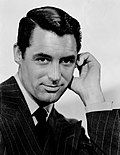 Photograph: RKO publicity photographer; Edit: Chris WoodrichActor Cary Grant (1904–86) in a publicity photo for Suspicion (1940). Known for his transatlantic accent, debonair demeanor and "dashing good looks", Grant is considered one of classic Hollywood's definitive leading men. During his 34-year career he acted in over 50 films, including The Eagle and the Hawk, Bringing Up Baby, and North by Northwest.
 -
 Photo credit: John ByfordPeter Levy (b. 1955) is a British television and radio presenter, currently host of the BBC regional news programme Look North, broadcast from Hull to East Yorkshire and Lincolnshire. He also hosts The Peter Levy Show on BBC Radio Humberside. Born in South West England, Levy moved to Yorkshire in his teens. After a stint in London as an actor, during which time he appeared on Man About the House, he returned to Yorkshire in 1975 to become a disc jockey before joining Look North in 1987.
 -
 Portrait: Peter OliverAn 8.8-centimetre (3.5 in) tall self-portrait of the English miniaturist Peter Oliver (1594–1648). He often worked with watercolours.
 -
 Photo credit: Royal family of BhutanJigme Khesar Namgyel Wangchuck is the fifth and current Bhutan Dragon King and head of the Wangchuck dynasty. He became king on 14 December 2006, and was officially crowned on 6 November 2008. The young king began his unusual reign overseeing the democratization of Bhutan, stating that the responsibility for this generation of Bhutanese was to ensure the success of democracy.
 -
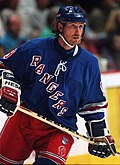 Photo credit: Håkan DahlströmIce hockey player Wayne Gretzky, as a member of the New York Rangers of the National Hockey League (NHL) in 1997. Gretzky, nicknamed "The Great One", is widely considered the best hockey player of all time. Upon his retirement in 1999, he held forty regular-season records, fifteen playoff records, and six All-Star records. He is the only NHL player to total over 200 points in one season—a feat he accomplished four times. In addition, he tallied over 100 points in 15 NHL seasons, 13 of them consecutively. He is the only player to have his number (99) officially retired by the NHL for all teams.
 -
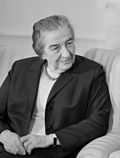 Photo credit: Marion S. Trikosko, U.S. News & World ReportA portrait of Golda Meir from 1973, during her tenure as Prime Minister of Israel. She was the first (and, to date, only) female Prime Minister of Israel, and was the third female Prime Minister in the world, as well as one of the founders of the State of Israel. Born as Golda Mabovitz, she chose her Hebrew name "Meir" upon her appointment as Foreign Minister in 1956. As Prime Minister, Meir oversaw a tumultuous period in Israeli history, with the War of Attrition, Operation Wrath of God, and the Yom Kippur War, all happening during that time.
 -
 Daguerreotype credit: W.S. HartshornA daguerreotype of Edgar Allan Poe taken in 1848, less than a year before his death. Best known for his tales of the macabre and mystery, Poe was one of the early American practitioners of the short story and a progenitor of detective fiction and crime fiction. He is also credited with contributing to the emergent science fiction genre. A copyright statement is inscribed on this image because it is a photograph of the original daguerreotype.
 -
 Photograph credit: William P. Gottlieb; restored by Adam CuerdenBilly Strayhorn (November 29, 1915 – May 31, 1967) was an American jazz composer, pianist, lyricist, and arranger, best remembered for his long-time collaboration with bandleader and composer Duke Ellington that lasted nearly three decades. Though classical music was Strayhorn's first love, his ambition to become a classical composer went unrealized because of the harsh reality of a black man trying to make his way in the world of classical music, which at that time was almost completely white. He was introduced to the music of pianists like Art Tatum and Teddy Wilson at age 19, and the artistic influence of these musicians guided him into the realm of jazz, where he remained for the rest of his life. This photograph of Strayhorn was taken by William P. Gottlieb in the 1940s.
 -
 Photo credit: Underwood and UnderwoodU.S. President Theodore Roosevelt (left) and nature preservationist John Muir, founder of the Sierra Club, stand together on Glacier Point in Yosemite National Park. In the background can be seen Upper and Lower Yosemite Falls. During this trip in 1903, Muir convinced Roosevelt to add Yosemite Valley and Mariposa Grove to the park, which had been established in 1890.
 -
 Photo credit: Bain News ServiceMary of Teck was the queen consort of King George V as well as the Empress of India. Before her accession, she was successively Duchess of York, Duchess of Cornwall and Princess of Wales. By birth, she was a princess of Teck, in the Kingdom of Württemberg, with the style Her Serene Highness. To her family, she was informally known as May, after her birth month. Queen Mary was known for setting the tone of the British royal family, as a model of regal formality and propriety, especially during state occasions. She was the first Queen Consort to attend the coronation of her successors. Noted for superbly bejewelling herself for formal events, Queen Mary left a collection of jewels now considered priceless.
 -
 Painting: Gerlach FlickeThomas Cranmer (1489–1556, depicted in 1545) was a leader of the English Reformation and Archbishop of Canterbury during the reigns of three monarchs. Ascending to power during the reign of Henry VIII, under Edward VI he was able to promote a series of reforms in the Church of England. He was executed for treason under Mary I.
 -
 Photo credit: Peter DuhonUkrainian fashion model Nataliya Gotsiy modeling for Cynthia Rowley, Spring 2007 New York Fashion Week. She was the winner of the Ford Supermodel of the World 2004 search. She has appeared on the cover of French Elle and Italian Marie Claire and modeled for Behnaz Sarafpour, Christian Lacroix, Diane von Furstenberg, Dior, Dolce & Gabbana, Dries van Noten, Gucci, Oscar de la Renta, Valentino, and Vivienne Westwood, among others.
 -
 Photo: Bain News Service; Restoration: Michel VuijlstekeEnrico Caruso (1873–1921) was an Italian tenor who was one of the most famous male opera singers in history. He sang to great acclaim at major opera houses around the world, and spent 18 consecutive seasons as the lead tenor at the Metropolitan Opera in New York City. He was one of the first major classical vocalists to make numerous recordings (more than 260), and his 1902 recording of "Vesti la giubba" was the first to sell over a million copies. His records sold so well that the Collector's Guide to Victor Records asks, "Did the phonograph make Caruso, or did Caruso make the phonograph?"
 -
 Photograph: Keith Allison; Edit: BrandmeisterAmerican professional golfer Morgan Pressel, who first qualified for the Women's Open at age 12. Pressel had her first victory in the Kraft Nabisco Championship in 2007. She made her first professional hole-in-one, an eagle, at that year's Jamie Farr Owens Corning Classic.
 -
 Photo: Charlie ChuRobin Hunicke (b. 1973) is an American video game designer and producer who worked for several companies before establishing her own, Funomena, in 2011. She also supports independent game development.
_01_Crisco_edit.jpg)


.jpg)


.jpg)


On this day – March 4

Births
- 1394 - Henry the Navigator (d. 1460) (pictured)
- 1678 - Antonio Vivaldi, Italian composer (d. 1741)
- 1888 - Knute Rockne, American football player and coach (d. 1931)
- 1954 - Catherine O'Hara, Canadian actress
Deaths
- 1852 - Nikolai Gogol, Russian writer (b. 1809)
- 1858 - Matthew Perry, U.S. naval officer (b. 1794)
- 1868 - Jesse Chisholm, American pioneer of the Chisholm Trail (b. 1805)
- 1903 - Joseph Henry Shorthouse, English novelist (b. 1834)
In the news
- 1 March 2026 – 2026 Iran conflict
- Iran confirms the death of supreme leader Ali Khamenei in an attack yesterday in Tehran by Israel and the United States. Forty days of mourning are declared. (Al Jazeera)
- 1 March 2026 – 2026 Iranian Supreme Leader election
- Iran appoints Ayatollah Alireza Arafi to the Interim Leadership Council that assumed authority following the assassination of supreme leader Ali Khamenei, with the body set to govern alongside president Masoud Pezeshkian and chief justice Gholam-Hossein Mohseni-Eje'i until the Assembly of Experts selects a new supreme leader. (AFP via Al Arabiya)
- 1 March 2026 –
- Venezuelan opposition leader and Nobel Peace Prize laureate Maria Corina Machado says she will return to the country in the coming weeks. (Reuters)
- 28 February 2026 – 2026 Iran conflict
- Israel launches an attack on Iran, calling it a preemptive strike, killing several Iranian high-ranking officials including supreme leader Ali Khamenei. (CNN) (NBC News)
- 22 February 2026 – Mexican drug war
- Nemesio "El Mencho" Oseguera, leader of the Jalisco New Generation Cartel (CJNG), and six other gunmen are killed during a security operation carried out by the Mexican Armed Forces near Tapalpa, Jalisco. In response, CJNG members launched coordinated retaliatory attacks, including road blockades involving burning vehicles and improvised checkpoints across multiple states. (N+) (AP)
- 20 February 2026 – Middle Eastern crisis
- At least 12 people are killed and 33 others are injured in multiple Israeli strikes targeting members of Hezbollah and Hamas across Lebanon. One Hezbollah leader has been reported deceased. (Al Jazeera) (IMEMC) (AFP via Philippine Daily Inquirer)
Quote of the week
"Biography should be written by an acute enemy."
Quoted by S. K. Ratcliffe, The Observer, 30 January 1927
Related portals


.svg)
Categories

Recognized content
 | This is a list of recognized content, updated weekly by JL-Bot (talk · contribs) (typically on Saturdays). There is no need to edit the list yourself. If an article is missing from the list, make sure it is tagged (e.g. {{WikiProject Biography}}) or categorized correctly and wait for the next update. See WP:RECOG for configuration options. |
Featured articles
 1937 tour of Germany by the Duke and Duchess of Windsor
- Ælfwynn, wife of Æthelstan Half-King
- DJ AM
- Aaliyah
- Lazarus Aaronson
- Margaret Abbott
- Abd al-Malik ibn Marwan
- Ibn al-Ash'ath
- Abishabis
- Louis Abramson
- Abu Nidal
- Chinua Achebe
- Eliza Acton
- John Adair
- Amy Adams
- Doc Adams
- John Adams
- Samuel Adams
- Nick Adenhart
- Al-Adid
- Áedán mac Gabráin
- Ælfheah of Canterbury
- Ælle of Sussex
- Æthelbald of Mercia
- Æthelbald, King of Wessex
- Æthelberht, King of Wessex
- Æthelberht of Kent
- Æthelflæd
- Æthelred I of Wessex
- Æthelred of Mercia
- Æthelred, Lord of the Mercians
- Æthelred the Unready
- Æthelstan A
- Æthelstan
- Æthelwold ætheling
- Æthelwulf, King of Wessex
- Ben Affleck
- Afonso, Prince Imperial of Brazil
- Sadruddin Aga Khan
- Jonathan Agnew
- Spiro Agnew
- Ahmose I
- Al-Altan
- Prince Albert Victor, Duke of Clarence and Avondale
- Prince Albert of Saxe-Coburg and Gotha
- Alboin
- Leelah Alcorn
- Aldfrith of Northumbria
- Buzz Aldrin
- Alexander II Zabinas
- Alexander of Lincoln
- Raymond Pace Alexander
- Alexander of Greece
- Alexandra of Denmark
- Prince Alfred of Great Britain
- Hadji Ali
- Princess Alice of Battenberg
- Alice in Chains
- Alice of Champagne
- Charles-Valentin Alkan
- Elizabeth Alkin
- Gubby Allen
- Nadezhda Alliluyeva
- Ike Altgens
- Tommy Amaker
- Herman Vandenburg Ames
- Grand Duchess Anastasia Nikolaevna of Russia
- Anna Anderson
- William Anderson (RAAF officer)
- William T. Anderson
- Maya Angelou
- Anna of East Anglia
- Anne, Queen of Great Britain
- Anne of Denmark
- Mary Anning
- Anthony Roll
- Antiochus XII Dionysus
- Antiochus XI Epiphanes
- Marshall Applewhite
- Angel Aquino
- Yasser Arafat
- Archimedes
- Lilias Armstrong
- Neil Armstrong
- Chester A. Arthur
- King Arthur
- Wilfred Arthur
- Albert Stanley, 1st Baron Ashfield
- Killing of James Ashley
- Elias Ashmole
- Andjar Asmara
- Aspasia
- Assassination of Talaat Pasha
- Asser
- Asylum confinement of Christopher Smart
- Atlanersa
- Attalus I
- James T. Aubrey
- Audioslave
- Augustine of Canterbury
- Augustus
- Arthur O. Austin
- Alice Ayres
- BTS
- Ba Cụt
- Kroger Babb
- Walter Bache
- Alexis Bachelot
- Daisy Bacon
- Peter Badcoe
- Ivan Bagramyan
- Hobey Baker
- Thomas Baker (aviator)
- Betsy Bakker-Nort
- Vidya Balan
- Mark Baldwin (baseball)
- Baldwin of Forde
- Christian Bale
- Albert Ball
- John Balmer
- George Calvert, 1st Baron Baltimore
- Eric Bana
- Bronwyn Bancroft
- Edward Mitchell Bannister
- Ann Bannon
- Alexandre Banza
- Joseph Barbera
- John Barbirolli
- Alben W. Barkley
- William Barley
- Sid Barnes
- Natalie Clifford Barney
- Nicky Barr
- Richard Barre
- John Barrymore
- Basiliscus
- Cyril Bassett
- Billy Bates (baseball)
- Arnold Bax
- Thomas F. Bayard
- Hugh Beadle
- Louis H. Bean
- The Beatles
- Felice Beato
- Princess Beatrice of the United Kingdom
- Kevin Beattie
- Ormond Beatty
- Otto Becher
- J. C. W. Beckham
- John J. Beckley
- Thomas Beecham
- Isabella Beeton
- Bix Beiderbecke
- Mary Bell (aviator)
- Jean Bellette
- Pyotr Ilyich Tchaikovsky and the Belyayev circle
- Ben&Ben
- Judah P. Benjamin
- Cora Agnes Benneson
- Arnold Bennett
- William Sterndale Bennett
- Geoff Bent
- Beorhtwulf of Mercia
- Gottlob Berger
- Hector Berlioz
- David Berman (musician)
- Frank Berryman
- John W. Beschter
- Beyoncé
- Alia Bhatt
- Biddenden Maids
- Steve Biko
- Golding Bird
- Georges Bizet
- Blackbeard
- Arthur Blackburn
- Luke P. Blackburn
- Anna Blackburne
- Frank Bladin
- James G. Blaine
- Thomas Blamey
- Sophie Blanchard
- Enid Blyton
- Bodashtart
- R. V. C. Bodley
- Barthélemy Boganda
- Niels Bohr
- Jean Bolikango
- John F. Bolt
- Margaret Bondfield
- Stede Bonnet
- William Bonville, 1st Baron Bonville
- Daniel Boone
- Brian Booth
- William Borah
- Carsten Borchgrevink
- Frank Borman
- Bernard Bosanquet (cricketer)
- Oliver Bosbyshell
- Harriet Bosse
- William Bostock
- Horatio Bottomley
- Pierre Boulez
- Adrian Boult
- Matthew Boulton
- Boulton and Park
- Luc Bourdon
- David Bowie
- James Bowie
- William D. Boyce
- James E. Boyd (scientist)
- Juan Davis Bradburn
- Bessie Braddock
- Ed Bradley
- Guy Bradley
- Martha Bradley
- William O'Connell Bradley
- Don Bradman
- Caroline Brady (philologist)
- Will P. Brady
- Lester Brain
- Joel Brand
- William M. Branham
- John C. Breckinridge
- Political career of John C. Breckinridge
- Gaetano Bresci
- Matthew Brettingham
- Eric Brewer (ice hockey)
- William Brill (RAAF officer)
- Benjamin Britten
- C. O. Brocato
- Brochfael ap Meurig
- Martin Brodeur
- Neil Brooks
- Bill Brown (cricketer)
- Donald Forrester Brown
- Jesse L. Brown
- John Y. Brown (politician, born 1835)
- Margaret Sibella Brown
- William Robinson Brown
- Raymond Brownell
- Frederick Browning
- John Edward Brownlee as Attorney General of Alberta
- Rupert Bruce-Mitford
- Stanley Bruce
- Steve Bruce
- William Bruce (architect)
- William Speirs Bruce
- Avery Brundage
- Louise Bryant
- Martin Bucer
- Humphrey Stafford, 1st Duke of Buckingham
- Simon Bolivar Buckner
- Paige Bueckers
- David Hillhouse Buel (priest)
- Morgan Bulkeley
- William Burges
- Guy Burgess
- Burke and Hare murders
- Robert Burnell
- Henry Cornelius Burnett
- Henry Burrell (admiral)
- Dan Burros
- William Henry Bury
- The Bus Uncle
- Alan Bush
- Barbara Bush
- James Wood Bush
- Vannevar Bush
- Josephine Butler
- Mongush Buyan-Badyrgy
- Pedro Álvares Cabral
- Cædwalla
- Cai Lun
- William de St-Calais
- William Calcraft
- John C. Calhoun
- John Calvin
- Marjorie Cameron
- Simon Cameron
- Elizabeth Canning
- Richard Cantillon
- Murder of William de Cantilupe
- Georg Cantor
- Mike Capel
- Luisa Capetillo
- Rudolf Caracciola
- Neville Cardus
- Mariah Carey
- Ian Carmichael
- Caroline of Ansbach
- Scott Carpenter
- Charles Carroll the Settler
- Rachel Carson
- Rudolph Cartier
- Nancy Cartwright
- Carlos Castillo Armas
- Robert Catesby
- Catherine de' Medici
- Ceawlin of Wessex
- James Chadwick
- Roger B. Chaffee
- Chagatai Khan
- Neville Chamberlain
- Rise of Neville Chamberlain
- Happy Chandler
- Charlie Chaplin
- Percy Chapman
- Ian Chappell
- Charles I of England
- Charles I of Anjou
- Charles II of England
- Charles Edward, Duke of Saxe-Coburg and Gotha
- Princess Charlotte of Wales (1796–1817)
- Colin Robert Chase
- Jessica Chastain
- Harry Chauvel
- Cher
- Robert de Chesney
- V. Gordon Childe
- Choe Bu
- Leroy Chollet
- Frédéric Chopin
- Priyanka Chopra
- Murray Chotiner
- Chrisye
- Colley Cibber
- Clarence 13X
- Caitlin Clark
- John Bullock Clark
- Dudley Clarke
- Rebecca Clarke (composer)
- Clement of Dunblane
- Cleopatra
- Death of Cleopatra
- Cleopatra Selene of Syria
- Frances Cleveland
- Grover Cleveland
- Rose Cleveland
- Henry Clifford, 10th Baron Clifford
- Kim Clijsters
- Cliff Clinkscales
- Harry Cobby
- Jane Cobden
- Coenred of Mercia
- Coenwulf of Mercia
- Adrian Cole (RAAF officer)
- Paul Collingwood
- A. E. J. Collins
- Martha Layne Collins
- Michael Collins (astronaut)
- Bert Combs
- James B. Conant
- Constans II (son of Constantine III)
- Constantine II of Scotland
- Constantine III (Western Roman emperor)
- Learie Constantine
- Constantine (son of Basil I)
- Constantine (son of Theophilos)
- Henry Conwell
- Ann Cook (cookery book writer)
- James Cook
- Calvin Coolidge
- Grace Coolidge
- Bradley Cooper
- Gary Cooper
- Gordon Cooper
- John Sherman Cooper
- Edward Drinker Cope
- William de Corbeil
- Richard Cordray
- Corinna
- Walter de Coutances
- Stan Coveleski
- Walter de Coventre
- Noël Coward
- William Cragh
- Ian Craig
- Thomas Cranmer
- Jack Crawford (cricketer)
- O. G. S. Crawford
- Tom Crean (explorer)
- Mandell Creighton
- Harry Crerar
- Dick Cresswell
- Thomas Crisp
- Jack Critchley
- George B. Crittenden
- John J. Crittenden
- Ben Crosby
- C. R. M. F. Cruttwell
- Andrew Cunningham, 1st Viscount Cunningham of Hyndhope
- Cyfeilliog
- Urse d'Abetot
- Roderic Dallas
- Damageplan
- Edward Dando
- Edward Thomas Daniell
- Richard Dannatt
- Henry Darger
- Charles Darwin
- Homer Davenport
- Phillip Davey
- David I of Scotland
- Elizabeth David
- David (son of Heraclius)
- Harold Davidson
- Randall Davidson
- Russell T Davies
- S. O. Davies
- George Andrew Davis Jr.
- Jefferson Davis
- Emily Davison
- John Day (printer)
- Claude Debussy
- Len Deighton
- Frederick Delius
- Annie Dove Denmark
- Bill Denny
- Tom Derrick
- Joseph Desha
- Hermann Detzner
- Deusdedit of Canterbury
- Phoolan Devi
- Death of Ms Dhu
- Leonardo DiCaprio
- John Diefenbaker
- Diocletian
- Dirty Dick
- Walt Disney
- Benjamin Disraeli
- D. Djajakusuma
- Djedkare Isesi
- Sumitro Djojohadikusumo
- Momčilo Đujić
- Steve Dodd
- Charles Domery
- Domitian
- Walter Donaldson (snooker player)
- Donnchadh, Earl of Carrick
- James A. Doonan
- John Doubleday (restorer)
- Alec Douglas-Home
- John Douglas (English architect)
- Marjory Stoneman Douglas
- Theodore Komnenos Doukas
- Neal Dow
- Roy Dowling
- Rupert Downes
- Robert Downey Jr.
- Nick Drake
- Uroš Drenović
- Tom Driberg
- Montague Druitt
- Peter Drummond (RAF officer)
- Vance Drummond
- W. E. B. Du Bois
- Du Fu
- Charles Duke
- Bud Dunn
- Kirsten Dunst
- Don Dunstan
- Pavle Đurišić
- Killing of Muhammad al-Durrah
- Gerald Durrell
- Bob Dylan
- Eadbald of Kent
- Eadred
- Eadwig
- Ealdred (archbishop of York)
- Eardwulf of Northumbria
- John Early (educator)
- Early life and education of Donald Trump
- Tom Eastick
- Brian Eaton
- Charles Eaton (RAAF officer)
- Isabelle Eberhardt
- Ecgberht, King of Wessex
- Adam Eckfeldt
- Edgar, King of England
- Edmund I
- Edmund Ætheling
- Edward I
- Edward II
- Edward VI
- Edward VII
- Edward VIII
- Edward the Elder
- Edward the Martyr
- Duncan Edwards
- Henry Edwards (entomologist)
- Monroe Edwards
- Michael Francis Egan
- Jürgen Ehlers
- Edward Elgar
- Elizabeth I
- Elizabeth II
- Queen Elizabeth the Queen Mother
- Thomas Ellison
- Ray Emery
- William Hayden English
- Eritha
- Ernest Augustus, King of Hanover
- Thomas Erpingham
- Etika
- William Etty
- Demetrius III Eucaerus
- Leonhard Euler
- Antiochus X Eusebes
- David Evans (RAAF officer)
- Edmund Evans
- Hiram Wesley Evans
- Peter Evans (swimmer)
- Exhumation and reburial of Richard III of England
- Neil Hamilton Fairley
- Fakhr al-Din II
- Family of Gediminas
- Richie Farmer
- Ray Farquharson
- Adolfo Farsari
- Gabriel Fauré
- Guy Fawkes
- William Feiner
- Felix of Burgundy
- Bob Feller
- Percy Fender
- Benedict Joseph Fenwick
- Enoch Fenwick
- Hughie Ferguson
- Enrico Fermi
- Kathleen Ferrier
- Elinor Fettiplace
- Georges Feydeau
- Richard Feynman
- Nikita Filatov
- Millard Fillmore
- Anna Filosofova
- Anna Lee Fisher
- John FitzWalter, 2nd Baron FitzWalter
- Pain fitzJohn
- Five Go Down to the Sea?
- Ian Fleming
- Ernie Fletcher
- Murder of Yvonne Fletcher
- Theoren Fleury
- Howard Florey
- George Floyd (American football)
- Gilbert Foliot
- Eunice Newton Foote
- Joseph B. Foraker
- Wendell Ford
- George Formby
- George Formby Sr
- Georg Forster
- Johann Reinhold Forster
- Mary Fortune
- Dan Fouts
- Terry Fox
- Eduard Fraenkel
- Rakoto Frah
- Ursula Franklin
- Alison Frantz
- Frederick the Great
- Frederick III, German Emperor
- Charles William Fremantle
- John Fressh
- Robin Friday
- Caspar David Friedrich
- Florence Fuller
- Margaret Fuller
- Melville Fuller
- Karl Aloys zu Fürstenberg
- Fuzuli (poet)
- Dave Gallaher
- William Arthur Ganfield
- Gao Qifeng
- Ronnie Lee Gardner
- James A. Garfield
- Robert Garran
- James Garrard
- Ragnar Garrett
- William Garrow
- Ben Gascoigne
- Death of Kevin Gately
- Genghis Khan
- Jacob Gens
- Geoffrey (archbishop of York)
- George I of Great Britain
- George I of Greece
- George II of Great Britain
- George III
- George IV
- George V
- George VI
- Fall of George Plantagenet, Duke of Clarence
- Prince George of Denmark
- Eddie Gerard
- Gerard (archbishop of York)
- Lisa del Giocondo
- Bobby Gibbes
- Stella Gibbons
- Josiah Willard Gibbs
- William Gibson
- John Gielgud
- W. S. Gilbert
- Adam Gilchrist
- DeLancey W. Gill
- Vince Gill
- Arthur Gilligan
- Nicolo Giraud
- Hannah Glasse
- John Glenn
- Harry Glicken
- Prince William, Duke of Gloucester
- Glycerius
- Rachelle Ann Go
- Stanley Goble
- Godsmack
- Robert Goff, Baron Goff of Chieveley
- Vincent van Gogh
- Emma Goldman
- Michael Gomez
- E. Urner Goodman
- Sir William Gordon-Cumming, 4th Baronet
- George Gosse
- George H. D. Gossip
- Arthur Gould (rugby union)
- Mckenna Grace
- Chris Gragg
- Otto Graham
- Percy Grainger
- Rachel Chiesley, Lady Grange
- Margaret Macpherson Grant
- Ulysses S. Grant
- Giovanni Antonio Grassi
- John de Gray
- El Greco
- Horace Greeley
- Charles Green (Australian soldier)
- Debora Green
- Lewis W. Green
- Stanley Green
- Herbert Greenfield
- Lady Gregory
- Wayne Gretzky
- George Griffith
- Terry Griffiths
- Jane Grigson
- Joseph Grimaldi
- Rufus Wilmot Griswold
- Orval Grove
- Leslie Groves
- Bryan Gunn
- Jake Gyllenhaal
- Maggie Gyllenhaal
- H.D.
- Al-Hafiz
- James P. Hagerstrom
- Frank Hague
- Otto Hahn
- John Richard Clark Hall
- Ayumi Hamasaki
- Wally Hammond
- Amir Hamzah
- Valston Hancock
- Winfield Scott Hancock
- Learned Hand
- Mark Hanna
- William Hanna
- Colin Hannah
- Yuzuru Hanyu Olympic seasons
- William Hardham
- Warren G. Harding
- Donald Hardman
- Thomas Hardy (Royal Navy officer, died 1732)
- Benjamin Harrison
- Eric Harrison (RAAF officer)
- Fairfax Harrison
- George Harrison
- Phil Hartman
- Kent Haruf
- Francis Harvey
- Dominik Hašek
- Anne Hathaway
- Simon Hatley
- Eric A. Havelock
- Richard Hawes
- Ethan Hawke
- John Hay
- Rutherford B. Hayes
- Frank Headlam
- George Headley
- Patrick Francis Healy
- Charles Heaphy
- Reginald Heber
- Princess Helena of the United Kingdom
- John L. Helm
- William Hely
- Ernest Hemingway
- Paul Henderson
- Canadian drug charges and trial of Jimi Hendrix
- Death of Jimi Hendrix
- Jimi Hendrix
- Henry I of England
- Henry II of England
- Henry III of England
- Henry IV, Holy Roman Emperor
- Henry (bishop of Finland)
- Patrick Henry
- Thierry Henry
- Henry de Hinuber
- George Went Hensley
- Hensley Henson
- Katharine Hepburn
- Herman the Archdeacon
- George Herriman
- Edmund Herring
- Herbie Hewett
- Joe Hewitt (RAAF officer)
- Georgette Heyer
- Peter Heywood
- Hi-5 (Australian group)
- Hilary of Chichester
- Clem Hill
- Damon Hill
- Georgiana Hill (cookery book writer)
- Lynn Hill
- William Hillcourt
- Bernard Hinault
- Thomas C. Hindman
- Marie Sophie Hingst
- George Hirst
- Hö'elün
- William D. Hoard
- Garret Hobart
- Jack Hobbs
- Robert Howard Hodgkin
- Philip Seymour Hoffman
- Susanna Hoffs
- Ima Hogg
- James Hogun
- Charles Holden
- Les Holden
- Tom Holland
- Disappearance of Natalee Holloway
- Stanley Holloway
- Oliver Wendell Holmes Sr.
- Gustav Holst
- Imogen Holst
- Lou Henry Hoover
- Michael Hordern
- Kenneth Horne
- Rogers Hornsby
- E. W. Hornung
- Brian Horrocks
- Nicholas Hoult
- Margaret Lea Houston
- Art Houtteman
- Juwan Howard
- C. D. Howe
- Robert Howe (Continental Army officer)
- Cedric Howell
- Hu Zhengyan
- Ludwig Ferdinand Huber
- Thomas J. Hudner Jr.
- Robert Hues
- Paterson Clarence Hughes
- Caesar Hull
- James Humphreys (pornographer)
- Killing of Meredith Hunter
- Paul Hunter
- Hurra-yi Khuttali
- Josh Hutcherson
- Anne Hutchinson
- Len Hutton
- Hygeberht
- Jarome Iginla
- Fanny Imlay
- Joaquim José Inácio, Viscount of Inhaúma
- Ine of Wessex
- Charles Inglis (engineer)
- Roy Inwood
- Irataba
- Henry Irving
- Oscar Isaac
- Isabeau of Bavaria
- Ismail I of Granada
- Hastings Ismay, 1st Baron Ismay
- Israel the Grammarian
- Satoru Iwata
- Andrew Jackson
- Archie Jackson
- Benjamin Jackson (sailor)
- Janet Jackson
- John Francis Jackson
- Michael Jackson
- Mike Jackson (British Army officer)
- Hattie Jacques
- Mick Jagger
- James II of England
- James VI and I
- Jamiroquai
- Eusèbe Jaojoby
- Douglas Jardine
- Peter Jeffrey (RAAF officer)
- Frank Jenner
- Peter Jennings
- Jørgen Jensen (soldier)
- Jesus
- Derek Jeter
- Dobroslav Jevđević
- Jianwen Emperor
- Muhammad Ali Jinnah
- Joan of Arc
- Jocelin of Glasgow
- Jochi
- Joehana
- Scarlett Johansson
- John, King of England
- Andrew Johnson
- Ian Johnson (cricketer)
- Joseph Johnson (publisher)
- Keen Johnson
- Keith Johnson (cricket administrator)
- Ken "Snakehips" Johnson
- Magic Johnson
- Early life of Samuel Johnson
- Samuel Johnson
- Andrew Johnston (singer)
- David A. Johnston
- Angelina Jolie
- The boy Jones
- Murder of Dwayne Jones
- George Jones (RAAF officer)
- Mary Jane Richardson Jones
- Peter Jones (missionary)
- Michael Jordan
- Ove Jørgensen
- Jane Joseph
- Josquin des Prez
- Jovan Vladimir
- Joy Division
- Ernest Joyce
- James Joyce
- Master Juba
- Julian of Norwich
- Justus
- Ted Kaczynski
- Franz Kafka
- Katrina Kaif
- Edgar Kain
- Jamie Kalven
- Dimple Kapadia
- Kareena Kapoor Khan
- Sonam Kapoor
- Abdul Karim (the Munshi)
- Georg Karo
- Robert Kaske
- Masako Katsura
- Panagiotis Kavvadias
- J. R. Kealoha
- Maynard James Keenan
- Fred Keenor
- David Kelly (weapons expert)
- Susi Kentikian
- Jomo Kenyatta
- Johannes Kepler
- Mark Kerry
- Albert Ketèlbey
- Khalid ibn al-Walid
- Shah Rukh Khan
- Hasan al-Kharrat
- Nikita Khrushchev
- Bill Kibby
- Craig Kieswetter
- Harmon Killebrew
- Roy Kilner
- Bart King
- Elwyn Roy King
- Bruce Kingsbury
- Thomas C. Kinkaid
- The Kinks
- Otto Klemperer
- Johann von Klenau
- Nigel Kneale
- John Knox
- Kalki Koechlin
- Manuel I Komnenos
- Tadeusz Kościuszko
- Sandy Koufax
- George Koval
- Christopher C. Kraft Jr.
- Theodora Kroeber
- Walter Krueger
- Nikolai Kulikovsky
- Nodar Kumaritashvili
- Kyla (Filipino singer)
- Leah LaBelle
- Lady Gaga
- Marquis de Lafayette
- Ruby Laffoon
- Nestor Lakoba
- Mathew Charles Lamb
- Daniel Lambert
- Osbert Lancaster
- Kenesaw Mountain Landis
- Franklin Knight Lane
- Cosmo Gordon Lang
- Angela Lansbury
- George Lansbury
- LaRouche criminal trials
- Brie Larson
- Harold Larwood
- Theodore II Laskaris
- Lat (cartoonist)
- Elizabeth Maitland, Duchess of Lauderdale
- Laurence of Canterbury
- Jennifer Lawrence
- Ursula K. Le Guin
- John Le Mesurier
- Lê Quang Tung
- William D. Leahy
- John Leak
- Raymond Leane
- Louis Leblanc
- Faith Leech
- Vivien Leigh
- Christopher Lekapenos
- Émile Lemoine
- Etta Lemon
- Suzanne Lenglen
- Vladimir Lenin
- John Lennon
- Dan Leno
- Helmut Lent
- John Lerew
- Leucippus
- Harriet Leveson-Gower, Countess Granville
- Albert Levitt
- David Lewis (Canadian politician)
- Maurice Leyland
- Honório Hermeto Carneiro Leão, Marquis of Paraná
- Li Rui
- Lie Kim Hok
- Marcel Lihau
- Abraham Lincoln
- Ernst Lindemann
- Trevor Linden
- Lindow Man
- Tara Lipinski
- Little Tich
- John Littlejohn (preacher)
- Edward Lloyd (coffee house owner)
- Marie Lloyd
- Stefan Lochner
- Angel Locsin
- Kellie Loder
- Carl Hans Lody
- London Monster
- Huey Long
- James B. Longacre
- William de Longchamp
- James Longstreet
- Lope Martín
- Joseph A. Lopez
- Lorde
- Prince Louis of Battenberg
- Princess Louise, Duchess of Argyll
- Courtney Love
- Jim Lovell
- James Russell Lowell
- Sam Loxton
- John Bingham, 7th Earl of Lucan
- Shannon Lucid
- Steve Lukather
- Glynn Lunney
- Luo Yixiu
- Roberto Luongo
- Witold Lutosławski
- Elizabeth Lyon (criminal)
- Marcus Ward Lyon Jr.
- Henry Macandrew
- Douglas MacArthur's escape from the Philippines
- James Whiteside McCay
- Douglas MacArthur
- Charlie Macartney
- George Macaulay
- Angus Lewis Macdonald
- John A. Macdonald
- Gregor MacGregor
- Iven Mackay
- William Lyon Mackenzie
- Aeneas Mackintosh
- Archie MacLaren
- Bill Madden (soldier)
- James Madison
- Bernard A. Maguire
- Gustav Mahler
- Miriam Makeba
- Nestor Makhno
- Malcolm X
- Garnet Malley
- Mary Mallon
- Haane Manahi
- Manchester Mummy
- Nelson Mandela
- Bob Mann (American football)
- John Manners (cricketer)
- Olivia Manning
- Marcian
- Margaret (singer)
- Princess Maria Amélia of Brazil
- Spyridon Marinatos
- Kitty Marion
- Clements Markham
- John Churchill, 1st Duke of Marlborough
- Francis Marrash
- Jack Marsh
- Bob Marshall (wilderness activist)
- Roy Marshall
- Thomas R. Marshall
- Billy Martin
- Martinus (son of Heraclius)
- Marwan I
- Mary II
- Mary, Queen of Scots
- Mary of Teck
- Herbert Maryon
- Evelyn Mase
- George Mason
- Jules Massenet
- Frank Matcham
- Empress Matilda
- Lionel Matthews
- William Matthews (priest)
- W. Somerset Maugham
- Maximian
- Murray Maxwell
- Benjamin F. McAdoo
- Jimmy McAleer
- Early life and military career of John McCain
- John McCain
- Bill McCann
- Paul McCartney
- John McCauley
- Barbara McClintock
- James B. McCreary
- Lanny McDonald
- Frank McGee (ice hockey)
- Frances Gertrude McGill
- John McGraw
- William McGregor (football)
- William McKinley
- Lesley J. McNair
- Frank McNamara (RAAF officer)
- H. C. McNeile
- Harry McNish
- William McSherry
- Ian Dougald McLachlan
- Alan McNicoll
- Phil Mead
- Ian Meckiff
- John Silva Meehan
- Ezra Meeker
- Jacobus Anthonie Meessen
- Megadeth
- B. Max Mehl
- Lise Meitner
- Manon Melis
- Melisende, Queen of Jerusalem
- Mellitus
- Danie Mellor
- Felix Mendelssohn
- Menkauhor Kaiu
- Ulf Merbold
- Mercury Seven
- Meshuggah
- André Messager
- Olivier Messiaen
- Metallica
- Meurig ab Arthfael
- Bob Meusel
- August Meyszner
- Michael Brown Okinawa assault incident
- Simonie Michael
- Khalid al-Mihdhar
- Military career of Ian Smith
- Harvey Milk
- John Minsterworth
- Nancy Mitford
- Muhammad I of Granada
- Arthur Mold
- Emery Molyneux
- Marilyn Monroe
- Madeline Montalban
- Pierre Monteux
- Claudio Monteverdi
- James Moore (Continental Army officer)
- Julianne Moore
- Fred Moosally
- Emanuel Moravec
- Howie Morenz
- Sandra Morgan
- Benjamin Morrell
- Arthur Morris
- Olive Morris
- Edwin P. Morrow
- Meinhard Michael Moser
- Mother Solomon
- Benjamin Mountfort
- Mozart in Italy
- Mu'awiya I
- Al-Mu'tadid
- Al-Mu'tasim
- Muhammad II of Granada
- Muhammad III of Granada
- Muhammad ibn Tughj al-Ikhshid
- Muhammad IV of Granada
- Rani Mukerji
- Mukhtar al-Thaqafi
- Samuel Mulledy
- Thomas F. Mulledy
- Baron Munchausen
- Douglas Albert Munro
- Murasaki Shikibu
- Alister Murdoch
- Audie Murphy
- Cillian Murphy
- Harry Murray
- Jessie Murray
- Margaret Murray
- Stan Musial
- Al-Musta'li
- Al-Muti'
- George E. Mylonas
- R. A. B. Mynors
- Florence Nagle
- Fridtjof Nansen
- Daisy Jugadai Napaltjarri
- Wintjiya Napaltjarri
- Makinti Napanangka
- Ram Narayan
- Francis Nash
- Nasr of Granada
- Andrea Navagero
- John Neal
- Francis Neale
- Elizabeth Needham
- Neferefre
- Neferirkare Kakai
- Socrates Nelson
- Merenre Nemtyemsaf I
- Neutral Milk Hotel
- Hugh de Neville
- Ralph Neville
- Thomas Neville (died 1460)
- James Newland
- Sydney Newman
- Bill Newton
- Ngô Đình Cẩn
- Nguyễn Chánh Thi
- Nguyễn Ngọc Thơ
- Arrest and assassination of Ngo Dinh Diem
- Nicholas of Worcester
- Carl Nielsen
- Nigel (bishop of Ely)
- Robert Nimmo
- Nine Inch Nails
- Nirvana (band)
- Pat Nixon
- Richard Nixon
- Nizar ibn al-Mustansir
- Emmy Noether
- Christopher Nolan
- John Mowbray, 3rd Duke of Norfolk
- Ruth Norman
- Norodom Ranariddh
- Roger Norreis
- The Notorious B.I.G.
- Lisa Nowak
- Louie Nunn
- Nynetjer
- Nyuserre Ini
- Mary Margaret O'Reilly
- Ian O'Brien
- Prince Octavius of Great Britain
- Odaenathus
- Óengus I
- Oerip Soemohardjo
- Offa of Mercia
- Jacques Offenbach
- Kevin O'Halloran
- Grand Duchess Olga Alexandrovna of Russia
- Olga Constantinovna of Russia
- Mark Oliphant
- Bronwyn Oliver
- John Oliver
- Laurence Olivier
- Dorothy Olsen
- Gerard K. O'Neill
- Opeth
- J. Robert Oppenheimer
- Sergo Ordzhonikidze
- Bill O'Reilly (cricketer)
- Leo Ornstein
- Johnny Owen
- Edward Oxford
- Deepika Padukone
- Radoje Pajović
- Andreas Palaiologos
- Lionel Palairet
- Emmeline Pankhurst
- José Paranhos, Viscount of Rio Branco
- Pari Khan Khanum
- Rosa Parks
- Osbert Parsley
- Jack Parsons
- William Sterling Parsons
- Ben Paschal
- Robert Pattinson
- George S. Patton
- George S. Patton slapping incidents
- Paul E. Patton
- Paulinus of York
- Death of Blair Peach
- Robert Peake the Elder
- Franklin Peale
- Daisy Pearce
- Pearl Jam
- Kosta Pećanac
- Pedro I of Brazil
- Pedro II of Brazil
- Pedro Afonso, Prince Imperial of Brazil
- Bobby Peel
- Walter Peeler
- I. M. Pei
- John Hastings, 2nd Earl of Pembroke
- Penda of Mercia
- Jerry Pentland
- Pepi I Meryre
- Thomas Percy (Gunpowder Plot)
- Katy Perry
- Henry Petre
- Milorad Petrović
- Florence Petty
- Phạm Ngọc Thảo
- Phan Đình Phùng
- Phan Xích Long
- Philip I Philadelphus
- Philitas of Cos
- Roy Phillipps
- Erin Phillips
- Tommy Phillips
- Artur Phleps
- Frank Pick
- Franklin Pierce
- Albert Pierrepoint
- Józef Piłsudski
- Pink Floyd
- Harold Pinter
- Freida Pinto
- Benedetto Pistrucci
- Henry Hoʻolulu Pitman
- Brad Pitt
- Kyriakos Pittakis
- Pixies (band)
- John Plagis
- Jacques Plante
- Thomas Playford IV
- Gabriel Pleydell
- Virginia Eliza Clemm Poe
- Jean Baptiste Point du Sable
- James K. Polk
- Reg Pollard (general)
- Bill Ponsford
- Lazare Ponticelli
- Robert Poore
- Francis Poulenc
- Ezra Pound
- Powderfinger
- Elizabeth Willing Powel
- Chris Pratt
- Premiership of John Edward Brownlee
- Elvis Presley
- Joseph Priestley
- Adelaide Anne Procter
- John Pulman
- CM Punk
- Minnie Pwerle
- Pyotr Ilyich Tchaikovsky and The Five
- Qalaherriaq
- Matthew Quay
- Angeline Quinto
- Vidkun Quisling
- R.E.M.
- Jean-Joseph Rabearivelo
- Isidor Rabi
- Arthur W. Radford
- Radiohead
- Ion Heliade Rădulescu
- Elizabeth Raffald
- Rainilaiarivony
- Ramesses VI
- Alf Ramsey
- Kangana Ranaut
- Ranavalona I
- Ranavalona III
- Samuel J. Randall
- Rani of Jhansi
- Milos Raonic
- Maurice Ravel
- Peter Raw
- Alan Rawlinson
- Raymond III, Count of Tripoli
- Raynald of Châtillon
- William F. Raynolds
- Ronald Reagan
- Ray Reardon
- Red Barn Murder
- Talbot Baines Reed
- Angel Reese
- Richard Gavin Reid
- Marian Rejewski
- Judith Resnik
- Stamata Revithi
- L. D. Reynolds
- Wilfred Rhodes
- Rhys ap Gruffudd
- Richard II of England
- Maurice Richard
- J. Havens Richards
- Charles Richardson (Royal Navy officer)
- Ralph Richardson
- Sally Ride
- Louis Riel
- Rihanna
- Nikolai Rimsky-Korsakov
- Jochen Rindt
- Mariano Rivera
- Hilda Rix Nicholas
- Robert of Jumièges
- Ernest Roberts (Australian politician)
- Iwan Roberts
- Robert Roberts (writer)
- George Robey
- Jackie Robinson
- Bobby Robson
- Roekiah
- Woodes Rogers
- Ambrose Rookwood
- John Rolph
- Prince Romerson
- George W. Romney
- Mitt Romney
- Richard Roose
- Edith Roosevelt
- William de Ros, 6th Baron Ros
- Juan Manuel de Rosas
- Pasqua Rosée
- Elias Abraham Rosenberg
- Hrithik Roshan
- Art Ross
- Ludwig Ross
- Gioachino Rossini
- James Rowland (RAAF officer)
- Jacob van Ruisdael
- Maria Rundell
- Martin Rundkvist
- Bill Russell
- Frank Russell, 2nd Earl Russell
- Babe Ruth
- Alexander Cameron Rutherford
- Wiley Rutledge
- Louis Rwagasore
- Rex Ryan
- James A. Ryder
- John/Eleanor Rykener
- William S. Sadler
- Sahure
- Lady Saigō
- Camille Saint-Saëns
- Joe Sakic
- Salih ibn Mirdas
- Teresa Sampsonia
- Omayra Sánchez
- William Edward Sanders
- Tessa Sanderson
- Margaret Sanger
- Judy Ann Santos
- Sarcophagus of Eshmunazar II
- Mark Satin
- Death of Mark Saunders
- Reg Saunders
- Stanley Savige
- Henry W. Sawyer
- Dorothy L. Sayers
- Sayf al-Dawla
- Antonin Scalia
- Frederick Scherger
- Sigi Schmid
- Robert Schumann
- Charles Scott (governor)
- David Scott
- James Scott (boxer)
- Robert Falcon Scott
- John Martin Scripps
- Uriel Sebree
- Laura Secord
- Rhea Seddon
- Daniel Sedin
- Henrik Sedin
- Seleucus VI Epiphanes
- Norman Selfe
- Peter Sellers
- Domenico Selvo
- Jason Sendwe
- Sennacherib
- Waisale Serevi
- William H. Seward
- Sex Pistols
- Friedrich Wilhelm von Seydlitz
- Ernest Shackleton
- Kenneth R. Shadrick
- Shefali Shah
- Olivia Shakespear
- William Shakespeare
- Solomon P. Sharp
- Edmund Sharpe
- George Bernard Shaw
- Sebastian Shaw (actor)
- Joseph Francis Shea
- Wail al-Shehri
- Isaac Shelby
- Mary Shelley
- Shen Kuo
- Alan Shepard
- Elliott Fitch Shepard
- Kate Sheppard
- Shepseskaf
- Shepseskare
- John Sherman
- Grace Sherwood
- Mary Martha Sherwood
- Sheshi
- Shigi Qutuqu
- Alfred Shout
- Shunzhi Emperor
- Sabrina Sidney
- Siegfried Lederer's escape from Auschwitz
- Arthur Sifton
- Luís Alves de Lima e Silva, Duke of Caxias
- Silverchair
- Simeon I of Bulgaria
- Josette Simon
- Tom Simpson
- Wallis Simpson
- Pope Sisinnius
- Siward, Earl of Northumbria
- Sjafruddin Prawiranegara
- Tyler Skaggs
- Red Skelton
- William Y. Slack
- Andrew Sledd
- Louis Slotin
- The Smashing Pumpkins
- Bedřich Smetana
- Addie Viola Smith
- Faryl Smith
- Issy Smith
- Lee Smith (baseball)
- Ozzie Smith
- Samantha Smith
- Liza Soberano
- Albertus Soegijapranata
- Georg Solti
- Kaikhosru Shapurji Sorabji
- Aaron Sorkin
- Manuel Marques de Sousa, Count of Porto Alegre
- Alexis Soyer
- Albert Speer
- Lou Spence
- John Spencer (snooker player)
- Adele Spitzeder
- Thomas A. Spragens
- Jo Stafford
- Myles Standish
- Charles Villiers Stanford
- Augustus Owsley Stanley
- Ringo Starr
- Nadezhda Stasova
- William T. Stearn
- Gordon Steege
- Gwen Stefani
- Rod Steiger
- Casey Stengel
- Stephen I of Hungary
- Stephen, King of England
- John Gould Stephenson
- Stereolab
- Thaddeus Stevens
- Clare Stevenson
- Melford Stevenson
- Charles Stewart (premier)
- Stigand
- Constance Stokes
- Emma Stone
- Charles H. Stonestreet
- Strapping Young Lad
- Igor Stravinsky
- Eduard Streltsov
- Charlotte Stuart, Duchess of Albany
- Hod Stuart
- Ronald Stuart
- Vernon Sturdee
- Maurice Suckling
- Sudirman
- Sulayman ibn Abd al-Malik
- Arthur Sullivan
- Arthur Sullivan (Australian soldier)
- Kathryn D. Sullivan
- Jethro Sumner
- Jean-François de Surville
- Taylor Swift
- John Millington Synge
- Tiberius III
- William Howard Taft
- Paul Palaiologos Tagaris
- Tōru Takemitsu
- Don Tallon
- Bazy Tankersley
- Adamson Tannehill
- Tarrare
- Tatannuaq
- Paul Nobuo Tatsuguchi
- Cyclone Taylor
- Pyotr Ilyich Tchaikovsky
- Tecumseh
- Corry Tendeloo
- Terry-Thomas
- Thekla (daughter of Theophilos)
- Theobald of Bec
- Theodosius III
- Teresa Cristina of the Two Sicilies
- Thích Quảng Đức
- John Thirtle
- Thomas of Bayeux
- Murder of Julia Martha Thomas
- Thomas the Slav
- William Beach Thomas
- Jim Thome
- James Thompson (surveyor)
- Tiny Thompson
- Tom Thomson
- Cliff Thorburn
- Ian Thorpe
- Jeremy Thorpe
- Jim Thorpe
- Thurisind
- Paul Tibbets
- Tichborne case
- Benjamin Tillman
- Michael Tippett
- James Tod
- Mary Toft
- J. R. R. Tolkien
- Billy Joe Tolliver
- Tolui
- Jozo Tomasevich
- Death of Ian Tomlinson
- Tôn Thất Đính
- Mark Tonelli
- Ignace Tonené
- John Tonkin
- Tool (band)
- Ernie Toshack
- Edgar Towner
- Meghan Trainor
- Bert Trautmann
- Randy Travis
- John Treloar (museum administrator)
- Marcus Trescothick
- Francis Tresham
- Stephen Trigg
- Harry Trott
- Maria Trubnikova
- Harry R. Truman
- Harry S. Truman
- Hugh Trumble
- Liz Truss
- Irakli Tsereteli
- Harriet Tubman
- George Tucker (author)
- Thurman Tucker
- D. H. Turner
- Emma Louisa Turner
- Dick Turpin
- John Tyler
- John Tyndall (far-right activist)
- U2
- Morihei Ueshiba
- Ulfcytel
- Robert de Umfraville
- Unas
- Uncle Tupelo
- Userkaf
- Userkare
- Fakih Usman
- Edvard August Vainio
- Cherry Valentine
- Mary van Kleeck
- Ralph Vaughan Williams
- Artemy Vedel
- Regine Velasquez
- Hedley Verity
- Peter Martyr Vermigli
- Georges Vézina
- Princess Victoria of Hesse and by Rhine
- Queen Victoria
- Giovanni Villani
- George Vincent (painter)
- Barry Voight
- Kurt Vonnegut
- Jerry Voorhis
- Vesna Vulović
- Alan Wace
- Ellis Wackett
- Abe Waddington
- John Lloyd Waddy
- Cosima Wagner
- Richard Wagner
- Shooting of Stephen Waldorf
- Al-Walid I
- Kenneth Walker (general)
- Alfred Russel Wallace
- Hector Waller
- Hugh Walpole
- Francis Walsingham
- Hubert Walter
- Allan Walters
- William Walton
- Joe Warbrick
- Fabian Ware
- William Warelwast
- Blair Wark
- John Wark
- Peter Warlock
- Jack L. Warner
- George Washington
- George Washington and slavery
- George Washington (inventor)
- Emma Watson
- Oswald Watt
- Evelyn Waugh
- Lawrence Weathers
- James B. Weaver
- Stanley Price Weir
- Henry Wells (general)
- Lawrence Wetherby
- Tyrone Wheatley
- Mortimer Wheeler
- Fatima Whitbread
- Beverly White
- Ryan White
- Thomas White (Australian politician)
- Gough Whitlam
- John D. Whitney
- John Whittle
- The Wiggles
- Wiglaf of Mercia
- Wihtred of Kent
- William Wilberforce
- Wilco
- Maurice Wilder-Neligan
- Wilfrid
- Ellen Wilkinson
- William III of England
- William IV
- William of Wrotham
- William of Tyre
- William the Conqueror
- Michelle Williams (actress)
- Nigel Williams (conservator)
- Richard Williams (RAAF officer)
- Roberta Williams
- Nathaniel Parker Willis
- Wendell Willkie
- Francis Willughby
- Anna Wilson (basketball)
- John Wilton (general)
- Bob Windle
- Kate Winslet
- Reese Witherspoon
- Władysław II Jagiełło
- P. G. Wodehouse
- Mary Wollstonecraft
- Rudolf Wolters
- Henry Wood
- James Park Woods
- Alfred Worden
- Fanny Bullock Workman
- Edward Wright (mathematician)
- John Michael Wright
- Henry Wrigley
- Wulfhere of Mercia
- William Wurtenburg
- Teddy Wynyard
- Yao Ming
- Robert Sterling Yard
- Yazid I
- Murder of Joanna Yeates
- W. B. Yeats
- John C. Young (pastor)
- John Young (astronaut)
- Yusuf I of Granada
- Frank Zappa
- Zeng Laishun
- Zenobia
- Farran Zerbe
- Catherine Zeta-Jones
- Zhang Heng
- Zhang Jingsheng
- Zhao Chongguo
- Zhou Tong (archer)
- Preity Zinta
- Otto Julius Zobel
- Scott Zolak
- Nikita Zotov
- Zufar ibn al-Harith al-Kilabi
- Huldrych Zwingli
- Dolly de Leon
- Thomas de la More
- Peter van Geersdaele

Total pages in content type is 1732
Associated Wikimedia
The following Wikimedia Foundation sister projects provide more on this subject:
-
 Commons
Free media repository -
 Wikibooks
Free textbooks and manuals -
 Wikidata
Free knowledge base -
 Wikinews
Free-content news -
 Wikiquote
Collection of quotations -
 Wikisource
Free-content library -
 Wikiversity
Free learning tools -
 Wiktionary
Dictionary and thesaurus


