Epstein Files Full PDF

CLICK HERE
Technopedia Center
PMB University Brochure
Faculty of Engineering and Computer Science
S1 Informatics S1 Information Systems S1 Information Technology S1 Computer Engineering S1 Electrical Engineering S1 Civil Engineering

faculty of Economics and Business
S1 Management S1 Accountancy

Faculty of Letters and Educational Sciences
S1 English literature S1 English language education S1 Mathematics education S1 Sports Education
teknopedia

  • Registerasi
  • Brosur UTI
  • Kip Scholarship Information
  • Performance
Flag Counter
  1. World Encyclopedia
  2. Takbir - Wikipedia
Takbir - Wikipedia
From Wikipedia, the free encyclopedia
Arabic phrase
"Allahu Akbar" redirects here. For the former national anthem of Libya, see Allahu Akbar (anthem). For other uses, see Allahu Akbar (disambiguation).
Not to be confused with Takfir.

Takbir
Arabic‏تَكْبِير‎
Romanizationtakbīr
IPAArabic pronunciation: [tak.biːr]
Literal meaning"magnification [of God]"
Allahu Akbar
Arabic‏اللّٰهُ أَكْبَر‎
RomanizationAllāhu ʾAkbar
IPA[ʔaɫ.ɫaː.hu ʔak.bar] ⓘ
Literal meaning"God is greater [than everything]"

The takbīr (Arabic: تَكْبِير [tak.biːr], lit. 'magnification [of God]') is the name for the Arabic phrase Allāhu ʾAkbar (Arabic: اللّٰهُ أَكْبَر [ʔaɫ.ɫaː.hu ʔak.bar] ⓘ, lit. 'God is the greatest [of everything]').[1][2][3][4]

It is a common Arabic expression, used in various contexts by Muslims around the world: in formal salah (prayer),[4] in the adhan (Islamic call to prayer),[5] in Hajj, as an informal expression of faith, in times of distress or joy, or to express resolute determination or defiance. The phrase is the official motto of Iran and Iraq. It is also used by Orthodox Arab Christians as an expression of faith.[6]

Etymology

[edit]
takbīr in nastaʿlīq
The Takbir written in Thuluth script
The Takbir written in Naskh script
Takbir in Naskh script

The Arabic word كَبِير (kabīr) means big from the Semitic root k-b-r. A cognate word for this root exists in Hebrew as כביר (kabir). The Arabic word أَكْبَر (ʾakbar) is the elative form ("bigger, biggest") of the adjective kabīr ("big"). When used in the takbīr it is usually translated as "biggest", but some authors translate it as "bigger".[7][8][9] The term takbīr itself is the stem II verbal noun of the root k-b-r, meaning "big", from which akbar "bigger" is derived. The form Allāhu is a nominative of Allah, meaning "God".[10][11]

The takbīr is sometimes translated into English as "God is greater", which is short for "God is greater than all" (الله أَكْبَرُ من كلِّ شيء). It is an example of an Arabic idiom where an incomplete sentence, abbreviated because of its familiarity, is considered grammatically correct.[12]

Usage in Islamic rituals

[edit]
A Muslim raises both of his hands to recite the takbīr in prayer.
Calligraphic Takbir in minaret of Sancaklar Mosque

This phrase is recited by Muslims in many different situations.

In prayer

[edit]

The phrase is said during each stage of both salah (obligatory prayers, performed five times a day), and nafl (supererogatory prayers, performed at will). The call to prayer by the muezzin to those outside the mosque (adhan) and the call to those inside to line up for the commencement of prayer (iqama) also contain the phrase.[5]

While there are many short prayers like it, the takbīr is used more frequently than any other.[13]

Following births and deaths

[edit]

The phrase is used after the birth of a child as a means of praising God.[14] It is also part of Islamic funeral and burial customs.[15]

During the Eid Festival and the Hajj

[edit]

During the festival of Eid al-Adha and the days preceding it, Muslims recite the takbīr. This is particularly the case on the Day of Arafah.[16]

During the halal slaughter of animals

[edit]

In the process of pronouncing the name of God while performing Dhabihah one must say Bismillah Allahu Akbar.[17]

Other social usage

[edit]
Allāhu akbar in a memorial, Desouk, Egypt
Allāhu akbar in Arabic calligraphy seen on Imam Ali Mosque architecture (center of the Iwan), 1994
A sign with Allāhu akbar written on the side of a road in Iran

The expression Allāhu ʾakbar can be used in a variety of situations, from celebrations to times of grief.

In a historical account by someone who was present both at the birth of the ruler Abd Allah ibn al-Zubayr (7th century) and at his funeral, the author observes that Allāhu ʾakbar was said on both occasions.[18]

In times of joy and gratitude

[edit]

The takbīr can be used to express joy or surprise. It is also used as applause in religious contexts, such as after a Quran recital, as other forms of applause are considered less appropriate.[19]

It is used to celebrate an election win.[20][21] As a multi-purpose phrase, it is sometimes used by Arab football commentators as an expression of amazement, or even as a football chant.[22]

Brunei

[edit]

On 1 January 1984, Begawan Sultan Omar Ali Saifuddien led the masses of people who chanted the takbir to celebrate the restoration of independence.[23]

In battle

[edit]

Historically, the takbīr has been used as a cry of victory during battle.[24] Ibn Ishaq's 8th century Life of Muhammed narrates two occasions when Muhammad proclaimed the takbīr during battle.[25]

Iran

[edit]

During the Iranian Revolution of 1979, it was shouted from rooftops in Iran during the evenings as a form of protest. The takbīr was later adopted as the official motto of Iran.[26] This practice returned in the 2009 Iranian presidential election protests,[27][28] which protested the election results.[29]

Bangladesh

[edit]

In December 2025, a mob attacked the office of The Daily Star in Farmgate, Dhaka. Chanting slogans such as “Nara-e-Takbir” and “Allahu Akbar,” they smashed glass panels, dragged out chairs, tables, and papers, and set them on fire.[30]

Usage by extremists and terrorists

[edit]
See also: Islamic terrorism

The phrase has been used as a battle cry by Islamic extremists and terrorists.[31] However, this usage has been denounced by other Muslims.[18][22]

Professor Khaled A. Beydoun, author of The New Crusades: Islamophobia and the Global War on Muslims (2023),[32] writes that the association of the phrase "Allah Akbar" with terrorism has been exacerbated by mass media and television pundits. He adds that films and shows also utilize it as a cinematic trope further cementing the association.[33]

In politics

[edit]

In India, Asaduddin Owaisi, president of the AIMIM and Abu Taher Khan, representing TMC, after being elected as members of the Indian Parliament, ended their oath with the slogan of "Allahu Akbar".[34]

Usage by Christians

[edit]

The phrase (Allah; meaning God in English) is recited by Arabic speaking Orthodox Christians as an expression of their faith.[6] Palestinian Christians use Allah in their prayer to refer to the creator of the world, and the takbir as an expression of their faith. The use of takbir has been defended by Theodosios Hanna, the Palestinian Orthodox Archbishop of Sebastia.[35]

Use on flags

[edit]

Afghanistan

[edit]

The Afghan constitution that came into force on January 4, 2004, required that Allāhu akbar be inscribed on the flag of the Islamic Republic of Afghanistan.[36] After the 2021 Taliban offensive, the flag of the first emirate was readopted, and thus the takbīr removed from the flag.[37]

Iran

[edit]

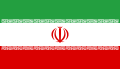
Allāhu akbar is written in stylized form across the bottom of the green stripe and the top of the red stripe of the flag of the Islamic Republic of Iran, adopted in 1980.[38]

Iraq

[edit]

The phrase Allāhu akbar is written on the center of the flag of Iraq.

During the Gulf War in January 1991, Saddam Hussein held a meeting with top military commanders, where it was decided to add the words Allāhu akbar (described as the Islamic battle cry)[39] to Iraq's flag to boost his secular regime's religious credentials, casting himself as the leader of an Islamic army.[40][41] Hussein described the flag as "the banner of jihad and monotheism".[42]

In 2004, the US-picked Iraqi Governing Council approved a new flag for Iraq that abandoned symbols of Hussein's regime, such as the words Allāhu akbar.[40][43] In January 2008, however, Iraq's parliament passed a law to change the flag by leaving in the phrase, but changing the calligraphy of the words Allāhu akbar, which had been a copy of Hussein's handwriting, to a Kufic script.[44][45] The Iraqi flag under Hussein had each of the two words of the phrase written in one of the spaces between the stars on the central band; the flag adopted in 2008 kept the phrase and removed the stars.

Other uses

[edit]

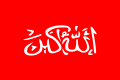
A resistance movement that fought British rule in Waziristan, Pakistan, used a red flag bearing Allāhu akbar in white letters.[46]

The flag used by the Houthis in Yemen also includes bearing Allāhu akbar in green letters.[47]

  • Flag of Iraq, with stylized Kufic script, introduced in 2008
    Flag of Iraq, with stylized Kufic script, introduced in 2008
  • Flag of Iran, introduced in 1980
    Flag of Iran, introduced in 1980
  • Former flag of Afghanistan, with the phrase beneath the Shahada, used from 2004 to 2021
    Former flag of Afghanistan, with the phrase beneath the Shahada, used from 2004 to 2021
  • Flag of 1930s Waziristan (Pakistan) resistance movement
    Flag of 1930s Waziristan (Pakistan) resistance movement

See also

[edit]
  • Dhikr
  • Tasbih
  • Tahmid
  • Tahlil
  • Tasmiyah
  • Salawat
  • Shahada
  • Hallelujah
  • Hallel
  • Alláh-u-Abhá
  • Deo optimo maximo

References

[edit]
  1. ^ Wensinck, A.J., "Takbīr", in: Encyclopaedia of Islam, Second Edition, Edited by: P. Bearman, Th. Bianquis, C.E. Bosworth, E. van Donzel, W.P. Heinrichs. Consulted online on 09 September 2023 doi:10.1163/1573-3912_islam_SIM_7330 First published online: 2012
  2. ^ "Takbīr". The Oxford Encyclopedia of the Islamic World. Oxford University Press. 2009. ISBN 978-0-19-530513-5.
  3. ^ "Takbīr". Encyclopedia.com. 22 August 2023. Archived from the original on 7 October 2023. Retrieved 9 September 2023.
  4. ^ a b "The Times of the Five Daily Prayers". Archived from the original on 23 March 2023. Retrieved 23 August 2015.
  5. ^ a b Nigosian, S. A. (2004). Islam: Its History, Teaching, and Practices. Indiana: Indiana University Press. p. 102. ISBN 0-253-21627-3.
  6. ^ a b Emma Bennett, What does Allahu Akbar mean?, The Telegraph (UK), 12 June 2016.
  7. ^ E. W. Lane, Arabic English Lexicon, 1893, gives for kabir: "bigger, and biggest, in body, or corporeal substance, and in estimation or rank or dignity, and more, or most, advanced in age, older, and oldest" (p. 2587) Archived October 7, 2016, at the Wayback Machine.
  8. ^ A.O.Green (1887). A Practical Arabic Grammar. Clarendon Press. p. 66.
  9. ^ "The formula, as the briefest expression of the absolute superiority of the One God, is used in Muslim life in different circumstances, in which the idea of God, His greatness and goodness is suggested." Wensinck, A. J. The Encyclopaedia of Islam, 2nd edition. Brill, 2000. Volume 10, T-U, p. 119, Takbir.
  10. ^ Böwering, Gerhard, God and His Attributes, Encyclopaedia of the Qurʼān, Brill, 2007.
  11. ^ Macdonald, D. B. The Encyclopaedia of Islam, 2nd edition. Brill, 1971. Volume 3, H-Iram, p. 1093, Ilah.
  12. ^ إسماعيل عتوك, محمد (December 2019). "لماذا لا نقول في الأذان : ( الله الأكبر ) مع أل التعريف، بدلاً من ( الله أكبر ) ؟". Archived from the original on 2023-06-11.
  13. ^ Patrick J. Ryan, S.J. (29 October 2015). "What I learned from Muslims about God". America. Archived from the original on 7 December 2023. Retrieved 8 January 2025.
  14. ^ "On Birth & School". Archived from the original on 27 August 2013. Retrieved 4 September 2013.
  15. ^ el-Hibri, Tayeb (19 October 2010). Parable and Politics in Early Islamic History: The Rashidun Caliphs. Columbia University Press. ISBN 9780231521659.
  16. ^ Rabbani, Faraz. "The Day of 'Arafah: The 9th of Dhu'l Hijjah". Qibla.com. Archived from the original on 15 October 2013. Retrieved 4 September 2013.
  17. ^ "Arabic Definitions". USA Halal Chamber of Commerce, Inc. Archived from the original on 19 July 2023. Retrieved 5 August 2020.
  18. ^ a b Omar Suleiman. "What 'Allahu Akbar' really means". CNN. Archived from the original on 2020-07-27. Retrieved 2020-08-10.
  19. ^ "Allahu akbar: What is the Takbir?". The Week. 25 August 2017. Archived from the original on 19 July 2023. Retrieved 8 January 2025.
  20. ^ "Who is Mothin Ali? British Councillor Who Shouted 'Allahu Akbar' After Being Elected in Local Polls". 6 May 2024. Archived from the original on 16 May 2024. Retrieved 16 May 2024.
  21. ^ Hazell, Will (18 May 2024). "Most voters think shouting 'Allahu Akbar' is inappropriate for politicians". The Telegraph.
  22. ^ a b Nagourney, Eric (2017-11-02). "'Allahu Akbar': An Everyday Phrase, Tarnished by Attacks". The New York Times. ISSN 0362-4331. Archived from the original on 2021-11-12. Retrieved 2023-01-10.
  23. ^ Scoop, The (2018-02-23). "A look back at Brunei's first National Day". The Scoop. Retrieved 2025-08-08.
  24. ^ Ludwig W. Adamec, Historical Dictionary of Islam, Scarecrow Press, 2nd ed. 2009, pg. 32
  25. ^ Life of Mohammed [سيرة رسول الله] by Ibn Ishaq, translated by Alfred Guillaume, Oxford University Press, 1955, 17th printing, Karachi, 2004 https://archive.org/details/TheLifeOfMohammedGuillaume
  26. ^ Constitution of Iran, Article 18
  27. ^ "Yahoo News". Archived from the original on June 17, 2009.
  28. ^ "YouTube". YouTube. June 9, 2009. Archived from the original on 2021-11-10. Retrieved May 8, 2011.
  29. ^ "How Iran's opposition inverts old slogans". BBC News. December 7, 2009. Archived from the original on January 2, 2010. Retrieved December 21, 2009.
  30. ^ "Prothom Alo, The Daily Star offices vandalised, set on fire; all trapped staff evacuated". The Business Standard. 2025-12-19. Retrieved 2025-12-20.
  31. ^ "'We Have Some Planes'". 9/11 Commission Report. National Commission on Terrorist Attacks Upon the United States. 2004. Archived from the original on May 14, 2008. Retrieved May 30, 2008.
  32. ^ Beydoun, Khaled A. (21 March 2023). The New Crusades: Islamophobia and the Global War on Muslims. Univ of California Press. ISBN 978-0520356306.
  33. ^ Khaled Beydoun. "The perils of saying 'Allahu Akbar' in public". Washington Post. Archived from the original on 2020-12-04. Retrieved 2020-08-10.
  34. ^ "'Jai Shri Ram', 'Allahu Akbar': Religious slogans mark swearing in ceremony of 17th LS". Tribune India. 18 June 2019. Archived from the original on 20 July 2023. Retrieved 18 April 2023.
  35. ^ Adib, Reem; Hadji, Sohayle M; Racman, Abdul; Gubat-Manabilang, Monaimah (15 Jun 2022). "Deciphering the Stereotyping of Arabs, their language and religion by the Bruneians". Firdaus Journal. p. 20. doi:10.37134/firdaus.vol2.1.2.2022. Retrieved 23 Nov 2025.
  36. ^ McCarthy, Andrew C., "Cold Comfort on Islam and Apostasy; No one who's actually read the Afghan constitution should be surprised by the Abdul Rahman case", National Review, March 27, 2006, accessed February 11, 2010]
  37. ^ "Taliban hoist giant flag in Afghan capital, eight months after return". France 24. 2022-03-31. Archived from the original on 2022-04-02. Retrieved 2023-03-21.
  38. ^ McKeever, Amy (November 29, 2022). "Why Iran's flag is at the center of controversy at the World Cup". National Geographic. Archived from the original on November 29, 2022. Retrieved 10 October 2023.
  39. ^ "New Straits Times". January 15, 1991. Retrieved May 8, 2011.[permanent dead link]
  40. ^ a b "U.S.-picked Iraq leaders approve new flag". USA Today. April 26, 2004. Retrieved February 9, 2010.
  41. ^ Deroy Murdock. "Murdock, Deroy, "The 9/11 Connection," April 3, 2003". The National Review. Archived from the original on June 17, 2010. Retrieved May 8, 2011.
  42. ^ Long, Jerry M. (April 2004). Saddam's war of words: politics, religion, and the Iraqi invasion of Kuwait. University of Texas Press. ISBN 978-0-292-70264-6. Retrieved February 19, 2014.
  43. ^ Rosen, Nir (May 26, 2004). "Iraq's religious tide cannot be turned back". Asia Times. Archived from the original on May 28, 2004. Retrieved May 8, 2011.
  44. ^ Abdul-Zahra, Qassim, "Iraqi Lawmakers Vote to Change Flag," USA Today, January 22, 2008, accessed February 9, 2010 Archived March 5, 2016, at the Wayback Machine
  45. ^ Abdul, Qassim (February 5, 2008). "Abdul-Zahra, Qassim, "Iraq unveils flag without Saddam's stars"". USA Today. Retrieved May 8, 2011.
  46. ^ "Analysis: A ride on the wild side". UPI. September 19, 2005. Retrieved May 8, 2011.
  47. ^ Riedel, Bruce (2017-12-18). "Who are the Houthis, and why are we at war with them?". Brookings. Archived from the original on 2018-06-12. Retrieved 2023-03-29.

Sources

[edit]
  • Rohi Baalbaki (1995). Al-Mawrid (7th ed.). Beirut: Dar El-Ilm Lilmalayin. ISBN 9953-9023-1-3.
  • F. Steingass Ph.D., University of Munich (1870). Persian-English Dictionary, Including the Arabic words and phrases to be met with in literature. Beirut: Librairie Du Liban.

External links

[edit]
Wikimedia Commons has media related to Takbir.
  • Essay on the takbir at Slate
  • Team, Bridge Initiative (12 September 2017). "Allahu Akbar - Factsheet: Islam, Muslims, Islamophobia". Bridge Initiative. Archived from the original on 1 November 2021. Retrieved 2 Nov 2021.
  • v
  • t
  • e
Salah (Islamic prayer)
Islamic prayers - Prayer compensation - Woman prayer
Categories and types
Regular mandatory prayers
  • Fajr (Fajr nafl prayer, Qunut)
  • Zuhr
  • Asr
  • Maghrib
  • Isha (Chafa'a, Witr)
  • Jumu'ah (weekly Friday prayer)
Communal mandatory prayers
  • Salat al-Janazah
  • Prayers for the absent
  • Eid prayers (according to some Islamic scholars)
Congregational prayers
  • Jumu'ah
  • Tarawih
  • Eid prayers
  • Rain prayer
  • Eclipse prayer
Supererogatory prayers
  • Prayers of the tradition
  • Voluntary prayers
  • Duha
  • Ishraq
  • Tahajjud
  • Night nafl prayer [ar]
  • Tarawih
  • Tawassul
  • Chafa'a
  • Witr
  • Tahiyyat masjid [ar]
Occasional prayers
  • Salat al-Istikharah
  • Salat al-Tawba
  • Sick prayer [ar]
  • Need prayer [ar]
  • Fear prayer [ar]
  • Tasbih prayer [ar]
  • Eid prayers
  • Tarawih (Ramadan)
Prayer unit (raka'ah) and
its constituents
  • Intention (Niyyah)
  • Basmala
  • Takbir
  • Al-Fatiha
  • Standing (Qiyam)
  • Recitation
    • Qira'at
    • Proper pronunciation (Tajwid)
    • Tilawa
    • Loud prayer [ar]
    • Silent prayer [ar]
  • Supplication (Qunut)
  • Bowing (Ruku)
  • Prostration
    • Sujud
      • Sujud Sahwi
      • Sujud Shukr
      • Sujud Tilawa
  • Sitting in salah (Tashahhud)
  • Peace greeting (Taslim)
  • Reverence (Khouchouâa [ar])
  • Contentment
Mosque
  • Mihrab
  • Podium (Minbar)
  • Sermon (Khutbah)
  • Prayer hall (Musalla)
  • Prayer rug (sajjādah)
Conditions
  • Prayer call
    • Adhan
    • Iqama
  • Salah times
  • Prayer forbidden times
  • Prayer direction (Qibla)
  • Islamic hygienical jurisprudence
  • Ritual purity in Islam
    • Junub
    • Menstruation in Islam
    • Istihadha
    • Najis
  • Bath (Ghusl)
  • Ablution (Wudu)
  • Dry ablution (Tayammum)
  • Screen or barrier (Sutrah)
Category
  • v
  • t
  • e
People and things in the Quran
Characters
Non-humans
  • Allāh ('The God')
    • Names of Allah found in the Quran, such as Karīm (Generous)
Animals
Related
  • The baqara (cow) of Israelites
  • The dhiʾb (wolf) that Jacob feared could attack Joseph
  • The fīl (elephant) of the Abyssinians
  • Ḥimār (Domesticated donkey)
  • The hud-hud (hoopoe) of Solomon
  • The kalb (dog) of the sleepers of the cave
  • The namlah (female ant) of Solomon
  • The nūn (fish or whale) of Jonah
  • The nāqat (she-camel) of Ṣāliḥ
Non-related
  • ʿAnkabūt (Female spider)
  • Dābbat al-Arḍ (Beast of the Earth)
  • Ḥimār (Wild ass)
  • Naḥl (Honey bee)
  • Qaswarah ('Lion', 'beast of prey' or 'hunter')
Malāʾikah (Angels)
  • Angels of Hell
    • Mālik
    • Zabāniyah
  • Bearers of the Throne
  • Harut and Marut
  • Jundallah
  • Kirāman Kātibīn (Honourable Scribes)
    • Raqib
    • Atid
Muqarrabun
  • Jibrīl (Gabriel, chief)
    • Ar-Rūḥ ('The Spirit')
      • Ar-Rūḥ al-Amīn ('The Trustworthy Spirit')
      • Ar-Rūḥ al-Qudus ('The Holy Spirit')
  • Angel of the Trumpet (Isrāfīl or Raphael)
  • Malakul-Mawt (Angel of Death, Azrael)
  • Mīkāil (Michael)
Jinn (Genies)
  • Jann
  • ʿIfrīt
  • Sakhr (Asmodeus)
  • Qarīn
Shayāṭīn (Demons)
  • Iblīs ash-Shayṭān (the (chief) Devil)
  • Mārid ('Rebellious one')
Others
  • Ghilmān or Wildān
  • Ḥūr
Prophets
Mentioned
  • Ādam (Adam)
  • Al-Yasaʿ (Elisha)
  • Ayyūb (Job)
  • Dāwūd (David)
  • Dhūl-Kifl (Ezekiel?)
  • Hārūn (Aaron)
  • Hūd (Eber?)
  • Idrīs (Enoch?)
  • Ilyās (Elijah)
  • ʿImrān (Joachim the father of Maryam)
  • Isḥāq (Isaac)
  • Ismāʿīl (Ishmael)
    • Dhabih Ullah
  • Lūṭ (Lot)
  • Ṣāliḥ
  • Shuʿayb (Jethro, Reuel or Hobab?)
  • Sulaymān ibn Dāwūd (Solomon son of David)
  • Yaḥyā ibn Zakariyyā (John the Baptist the son of Zechariah)
  • Yaʿqūb (Jacob)
    • Isrāʾīl (Israel)
  • Yūnus (Jonah)
    • Dhūn-Nūn ('He of the Fish (or Whale)' or 'Owner of the Fish (or Whale)')
    • Ṣāḥib al-Ḥūt ('Companion of the Whale')
  • Yūsuf ibn Ya‘qūb (Joseph son of Jacob)
  • Zakariyyā (Zechariah)
Ulul-ʿAzm
('Those of the
Perseverance
and Strong Will')
  • Muḥammad
    • Aḥmad
    • Other names and titles of Muhammad
  • ʿĪsā (Jesus)
    • Al-Masīḥ (The Messiah)
    • Ibn Maryam (Son of Mary)
  • Mūsā Kalīmullāh (Moses He who spoke to God)
  • Ibrāhīm Khalīlullāh (Abraham Friend of God)
  • Nūḥ (Noah)
Debatable ones
  • ʿUzair (Ezra?)
  • Dhūl-Qarnain
  • Luqmān
  • Maryam (Mary)
  • Ṭālūt (Saul or Gideon?)
Implied
  • Irmiyā (Jeremiah)
  • Ṣamūʾīl (Samuel)
  • Yūshaʿ ibn Nūn (Joshua, companion and successor of Moses)
People of Prophets
Good ones
  • Adam's immediate relatives
    • Martyred son
    • Wife
  • Believer of Ya-Sin
  • Family of Noah
    • Father Lamech
    • Mother Shamkhah bint Anush or Betenos
  • Luqman's son
  • People of Abraham
    • Mother Abiona or Amtelai the daughter of Karnebo
    • Ishmael's mother
    • Isaac's mother
  • People of Jesus
    • Disciples (including Peter)
    • Mary's mother
    • Zechariah's wife
  • People of Solomon
    • Mother
    • Queen of Sheba
    • Vizier
  • Zayd (Muhammad's adopted son)
People of
Joseph
  • Brothers (including Binyāmin (Benjamin) and Simeon)
  • Egyptians
    • ʿAzīz (Potiphar, Qatafir or Qittin)
    • Malik (King Ar-Rayyān ibn Al-Walīd))
    • Wife of ʿAzīz (Zulaykhah)
  • Mother
People of
Aaron and Moses
  • Egyptians
    • Believer (Hizbil or Hizqil ibn Sabura)
    • Imraʾat Firʿawn (Āsiyá bint Muzāḥim the Wife of Pharaoh, who adopted Moses)
    • Magicians of the Pharaoh
  • Wise, pious man
  • Moses' wife
  • Moses' sister-in-law
  • Mother
  • Sister
Evil ones
  • Āzar (possibly Terah)
  • Firʿawn (Pharaoh of Moses' time)
  • Hāmān
  • Jālūt (Goliath)
  • Qārūn (Korah, cousin of Moses)
  • As-Sāmirī
  • Abū Lahab
  • Slayers of Ṣāliḥ's she-camel (Qaddar ibn Salif and Musda' ibn Dahr)
Implied or
not specified
  • Abraha
  • Abu Bakr
  • Bal'am/Balaam
  • Barṣīṣā
  • Caleb or Kaleb the companion of Joshua
  • Luqman's son
  • Nebuchadnezzar II
  • Nimrod
  • Rahmah the wife of Ayyub
  • Shaddad
Groups
Mentioned
  • Aṣḥāb al-Jannah
    • People of Paradise
    • People of the Burnt Garden
  • Aṣḥāb as-Sabt (Companions of the Sabbath)
  • Jesus' apostles
    • Ḥawāriyyūn (Disciples of Jesus)
  • Companions of Noah's Ark
  • Aṣḥāb al-Kahf war-Raqīm (Companions of the Cave and Al-Raqaim?
  • Companions of the Elephant
  • People of al-Ukhdūd
  • People of a township in Surah Ya-Sin
  • People of Yathrib or Medina
  • Qawm Lūṭ (People of Sodom and Gomorrah)
  • Nation of Noah
Tribes,
ethnicities
or families
  • ‘Ajam
  • Ar-Rūm (literally 'The Romans')
  • Banī Isrāʾīl (Children of Israel)
  • Muʾtafikāt (Sodom and Gomorrah)
  • People of Ibrahim
  • People of Ilyas
  • People of Nuh
  • People of Shuaib
    • Ahl Madyan People of Madyan)
    • Aṣḥāb al-Aykah ('Companions of the Wood')
  • Qawm Yūnus (People of Jonah)
  • Ya'juj and Ma'juj/Gog and Magog
  • People of Fir'aun
  • Current Ummah of Islam (Ummah of Muhammad)
    • Aṣḥāb Muḥammad (Companions of Muhammad)
      • Anṣār (literally 'Helpers')
      • Muhajirun (Emigrants from Mecca to Medina)
  • People of Mecca
    • Wife of Abu Lahab
  • Children of Ayyub
  • Sons of Adam
  • Wife of Nuh
  • Wife of Lut
  • Yaʾjūj wa Maʾjūj (Gog and Magog)
  • Son of Nuh
Aʿrāb (Arabs
or Bedouins)
  • ʿĀd (people of Hud)
  • Companions of the Rass
  • Qawm Tubbaʿ (People of Tubba)
    • People of Sabaʾ or Sheba
  • Quraysh
  • Thamūd (people of Ṣāliḥ)
    • Aṣḥāb al-Ḥijr ('Companions of the Stoneland')
Ahl al-Bayt
('People of the
Household')
  • Household of Abraham
    • Brothers of Yūsuf
    • Lot's daughters
    • Progeny of Imran
  • Household of Moses
  • Household of Muhammad
    • ibn Abdullah ibn Abdul-Muttalib ibn Hashim
    • Daughters of Muhammad
    • Muhammad's wives
  • Household of Salih
Implicitly
mentioned
  • Amalek
  • Ahl as-Suffa (People of the Verandah)
  • Banu Nadir
  • Banu Qaynuqa
  • Banu Qurayza
  • Iranian people
  • Umayyad Dynasty
  • Aus and Khazraj
  • People of Quba
Religious
groups
  • Ahl al-Dhimmah
  • Kāfirūn
    • disbelievers
  • Majūs Zoroastrians
  • Munāfiqūn (Hypocrites)
  • Muslims
    • Believers
  • Ahl al-Kitāb (People of the Book)
    • Naṣārā (Christian(s) or People of the Injil)
      • Ruhban (Christian monks)
      • Qissis (Christian priest)
    • Yahūd (Jews)
      • Ahbār (Jewish scholars)
      • Rabbani/Rabbi
    • Sabians
  • Polytheists
    • Meccan polytheists at the time of Muhammad
    • Mesopotamian polytheists at the time of Abraham and Lot
Locations
Mentioned
  • Al-Arḍ Al-Muqaddasah ('The Holy Land')
    • 'Blessed' Land'
  • Al-Jannah (Paradise, literally 'The Garden')
  • Jahannam (Hell)
  • Door of Hittah
  • Madyan (Midian)
  • Majmaʿ al-Baḥrayn
  • Miṣr (Mainland Egypt)
  • Salsabīl (A river in Paradise)
In the
Arabian Peninsula
(excluding Madyan)
  • Al-Aḥqāf ('The Sandy Plains,' or 'the Wind-curved Sand-hills')
    • Iram dhāt al-ʿImād (Iram of the Pillars)
  • Al-Madīnah (formerly Yathrib)
  • ʿArafāt and Al-Mashʿar Al-Ḥarām (Muzdalifah)
  • Al-Ḥijr (Hegra)
  • Badr
  • Ḥunayn
  • Makkah (Mecca)
    • Bakkah
    • Ḥaraman Āminan ('Sanctuary (which is) Secure')
    • Kaʿbah (Kaaba)
    • Maqām Ibrāhīm (Station of Abraham)
    • Safa and Marwa
  • Sabaʾ (Sheba)
    • ʿArim Sabaʾ (Dam of Sheba)
  • Rass
Sinai Region
or Tīh Desert
  • Al-Wād Al-Muqaddas Ṭuwan (The Holy Valley of Tuwa)
    • Al-Wādil-Ayman (The valley on the 'righthand' side of the Valley of Tuwa and Mount Sinai)
      • Al-Buqʿah Al-Mubārakah ('The Blessed Place')
  • Mount Sinai or Mount Tabor
In Mesopotamia
  • Al-Jūdiyy
    • Munzalanm-Mubārakan ('Place-of-Landing Blessed')
  • Bābil (Babylon)
  • Qaryat Yūnus ('Township of Jonah,' that is Nineveh)
Religious
locations
  • Bayʿa (Church)
  • Miḥrāb
  • Monastery
  • Masjid (Mosque, literally 'Place of Prostration')
    • Al-Mashʿar Al-Ḥarām ('The Sacred Grove')
    • Al-Masjid Al-Aqṣā (Al-Aqsa, literally 'The Farthest Place-of-Prostration')
    • Al-Masjid Al-Ḥarām (The Sacred Mosque of Mecca)
    • Masjid al-Dirar
    • A Mosque in the area of Medina, possibly:
      • Masjid Qubāʾ (Quba Mosque)
      • The Prophet's Mosque
  • Salat (Synagogue)
Implied
  • Antioch
    • Antakya
  • Arabia
    • Al-Ḥijāz (literally 'The Barrier')
      • Al-Ḥajar al-Aswad (Black Stone) & Al-Hijr of Isma'il
      • Cave of Hira
      • Ghār ath-Thawr (Cave of the Bull)
      • Hudaybiyyah
      • Ta'if
  • Ayla
  • Barrier of Dhul-Qarnayn
  • Bayt al-Muqaddas & 'Ariha
  • Bilād ar-Rāfidayn (Mesopotamia)
  • Canaan
  • Cave of Seven Sleepers
  • Dār an-Nadwa
  • Jordan River
  • Nile River
  • Palestine River
  • Paradise of Shaddad
Events, incidents, occasions or times
  • Incident of Ifk
  • Laylat al-Qadr (Night of Decree)
  • Event of Mubahala
  • Sayl al-ʿArim (Flood of the Great Dam of Ma'rib in Sheba)
  • The Farewell Pilgrimage
  • Treaty of Hudaybiyyah
Battles or
military expeditions
  • Battle of al-Aḥzāb ('the Confederates')
  • Battle of Badr
  • Battle of Hunayn
  • Battle of Khaybar
  • Battle of Uhud
  • Expedition of Tabuk
  • Conquest of Mecca
Days
  • Al-Jumuʿah (The Friday)
  • As-Sabt (The Sabbath or Saturday)
  • Days of battles
  • Days of Hajj
  • Doomsday
Months of the
Islamic calendar
  • 12 months
    • Ash-Shahr Al-Ḥarām (The Sacred or Forbidden Months:
      • Dhu al-Qadah
      • Dhu al-Hijjah
      • Muharram
      • Rajab)
    • Ramadan
Pilgrimages
  • Al-Ḥajj (literally 'The Pilgrimage', the Greater Pilgrimage)
  • Al-ʿUmrah (The Lesser Pilgrimage)
Times for prayer
or remembrance
Times for Duʿāʾ ('Invocation'), Ṣalāh and Dhikr ('Remembrance', including Taḥmīd ('Praising'), Takbīr and Tasbīḥ):
  • Al-ʿAshiyy (The Afternoon or the Night)
  • Al-Ghuduww ('The Mornings')
    • Al-Bukrah ('The Morning')
    • Aṣ-Ṣabāḥ ('The Morning')
  • Al-Layl ('The Night')
    • Al-ʿIshāʾ ('The Late-Night')
  • Aẓ-Ẓuhr ('The Noon')
  • Dulūk ash-Shams ('Decline of the Sun')
    • Al-Masāʾ ('The Evening')
    • Qabl al-Ghurūb ('Before the Setting (of the Sun)')
      • Al-Aṣīl ('The Afternoon')
      • Al-ʿAṣr ('The Afternoon')
  • Qabl ṭulūʿ ash-Shams ('Before the rising of the Sun')
    • Al-Fajr ('The Dawn')
Implied
  • Ghadir Khumm
  • Laylat al-Mabit
  • First Pilgrimage
  • Other
    Holy books
    • Al-Injīl (The Gospel of Jesus)
    • Al-Qurʾān (The Book of Muhammad)
    • Ṣuḥuf-i Ibrāhīm (Scroll(s) of Abraham)
    • At-Tawrāt (The Torah)
      • Ṣuḥuf-i-Mūsā (Scroll(s) of Moses)
      • Tablets of Stone
    • Az-Zabūr (The Psalms of David)
    • Umm al-Kitāb ('Mother of the Book(s)')
    Objects
    of people
    or beings
    • Heavenly food of Jesus' apostles
    • Noah's Ark
    • Staff of Musa
    • Tābūt as-Sakīnah (Casket of Shekhinah)
    • Throne of Bilqis
    • Trumpet of Israfil
    Mentioned idols
    (cult images)
    • 'Ansāb
    • Jibt and Ṭāghūt (False god)
    Of Israelites
    • Baʿal
    • The ʿijl (golden calf statue) of Israelites
    Of Noah's people
    • Nasr
    • Suwāʿ
    • Wadd
    • Yaghūth
    • Yaʿūq
    Of Quraysh
    • Al-Lāt
    • Al-ʿUzzā
    • Manāt
    Celestial
    bodies
    Maṣābīḥ (literally 'lamps'):
    • Al-Qamar (The Moon)
    • Kawākib (Planets)
      • Al-Arḍ (The Earth)
    • Nujūm (Stars)
      • Ash-Shams (The Sun)
    Plant matter
  • Baṣal (Onion)
  • Fūm (Garlic or wheat)
  • Shaṭʾ (Shoot)
  • Sūq (Plant stem)
  • Zarʿ (Seed)
  • Fruits
    • ʿAdas (Lentil)
    • Baql (Herb)
    • Qith-thāʾ (Cucumber)
    • Rummān (Pomegranate)
    • Tīn (Fig)
    • Zaytūn (Olive)
    • In Paradise
      • Forbidden fruit of Adam
    Bushes, trees
    or plants
    • Plants of Sheba
      • Athl (Tamarisk)
      • Sidr (Lote-tree)
    • Līnah (Tender Palm tree)
    • Nakhl (Date palm)
    • Sidrat al-Muntahā
    • Zaqqūm
    Liquids
    • Māʾ (Water or fluid)
      • Nahr (River)
      • Yamm (River or sea)
    • Sharāb (Drink)
    Note: Names are sorted alphabetically. Standard form: Islamic name / Biblical name (title or relationship)
    Authority control databases Edit this at Wikidata
    • İslâm Ansiklopedisi
    Retrieved from "https://teknopedia.ac.id/w/index.php?title=Takbir&oldid=1341690938"
    Categories:
    • Islamic terminology
    • Superlatives in religion
    • Religious formulas
    • Dhikr
    • National mottos
    Hidden categories:
    • Pages using the Phonos extension
    • Webarchive template wayback links
    • All articles with dead external links
    • Articles with dead external links from January 2025
    • Articles with permanently dead external links
    • Articles with short description
    • Short description is different from Wikidata
    • Articles containing Arabic-language text
    • Pages with Arabic IPA
    • Pages including recorded pronunciations
    • Articles containing Hebrew-language text
    • Commons category link from Wikidata

    • indonesia
    • Polski
    • العربية
    • Deutsch
    • English
    • Español
    • Français
    • Italiano
    • مصرى
    • Nederlands
    • 日本語
    • Português
    • Sinugboanong Binisaya
    • Svenska
    • Українська
    • Tiếng Việt
    • Winaray
    • 中文
    • Русский
    Sunting pranala
    url url url url url url url url url url url url url url url url url url url url url url url url url url url url url url url url url url url url url url url url url url url url url url url url url url url url url url url url url url url url url url url url url url url url url url url url url url url url url url url url url url url url url url url url url url url url url url url url url url url url url url url url url url url url url url url url url url url url url url url url url url url url url url url url url url url url url url url url url url url url url url url url url url url url url url url url url url url url url url url url url url url url url url url url url url url url url url url url url url url url url url url url url url url url url url url url url url url url url url url url url url url url url url url url url url url url url url url url url url url url url url url url url url url url url url url url url url url url url url url url url url url url url url url url url url url url url url url url url url url url url url url url url url url url url url url url url url url url url url url url url url url url url url url url url url url url url url url url url url url url url url url url url url url url url url url url url url url url url url url url url url url url url url url url url url url url url url url url url url url url url url url url url url url url url url url url url url url url url url url url url url url url url url url url url url url url url url url url url url url url url url url url url url url url url url url url url url url url url url url url url url url url url url url url url url url url url url url url url url url url url url url url url url url url url url url url url url url url url url url url url url url url url url url url url url url url url url url url url url url url url url url url url url url url url url url url url url url url url url url url url url url url url url url url url url url url url url url url url url url url url url url url url url url url url url url url url url url url url url url url url url url url url url url url url url url url url url url url url url url url url url url url url url url url url url url url url url url url url url url url url url url url url url url url url url url url url url url url url url url url url url url url url url url url url url url url url url url url url url url url url url url url url url url url url url url url url url url url url url url url url url url url url url url url url url url url url url url url url url url url url url url url url url url url url url url url url url url url url url url url url url url url url url url url url url url url url url url url url url url url url url url url url url url url url url url url url url url url url url url url url url url url url url url url url url url url url url url url url url url url url url url url url url url url url url url url url url url url url url url url url url url url url url url url url url url url url url url url url url url url url url url url url url url url url url url url url url url url url url url url url url url url url url url url url url url url url url url url url url url url url url url url url url url url url url url url url url url url url url url url url url url url url url url url url url url url url url url url url url url url url url url url url url url url url url url url url url url url url url url url url url url url url url url url url url url url url url url url url url url url url url url url url url url url url url url url url url url url url url url url url url url url url url url url url url url url url url url url url url url url url url url url url url url url url url url url url url url url url url url url url url url url url url url url url url url url url url url url url url url url url url url url url url url url url url url url url url url url url url url url url url url url url url url url url url url url url url url url url url url url url url url url url url url url url url url url url url url url url url url url url url url url url url url url url url url url url url url url url url url url url url url url url url url url url url url url url url url url url url url url url url url url url url url url url url url url url url url url url url url url url url url url url url url url url url url url url url url url url url url url url url url url url url url url url url url url url url url url url url url url url url url url url url url url url url url url url url url url url url url url url url url url url url url url url url url url url url url url url url url url url url url url url url url url url url url url url url url url url url url url url url url url url url url url url url url url url url url url url url url url url url url url url url url url url url url url url url url url url url url url url url url url url url url url url url url url url url url url url url url url url url url url url url url url url url url url url url url url url url url url url url url url url url url url url url url url url url url url url url url url url url url url url url url url url url url url url url url url url url url url url url url url url url url url url url url url url url url url url url url url url url url url url url url url url url url url url url url url url url url url url url url url url url url url url url url url url url url url url url url url url url url url url url url url url url url url url url url url url url url url url url url url url url url url url url url url url url url url url url url url url url url url url url url url url url url url url url url url url url url url url url url url url url url url url url url url url url url url url url url url url url url url url url url url url url url url url url url url url url url url url url url url url url url url url url url url url url url url url url url url url url url url url url url url url url url url url url url url url url url url url url url url url url url url url url url url url url url url url url url url url url url url url url url url url url url url url url url url url url url url url url url url url url url url url url url url url url url url url url url url url url url url url url url url url url url url url url url url url url url url url url url url url url url url url url url url url url url url url url url url url url url url url url url url url url url url url url url url url url url url url url url url url url url url url url url url url url url url url url url url url url url url url url url url url url url url url url url url url url url url url url url url url url url url url url url url url url url url url url url url url url url url url url url url url url url url url url url url url url url url url url url url url url url url url url url url url url url url url url url url url url url url url url url url url url url url url url url url url url url url url url url url url url url url url url url url url url url url url url url url url url url url url url url url url url url url url url url url url url url url url url url url url url url url url url url url url url url url url url url url url url url url url url url url url url url url url url url url url url url url url url url url url url url url url url url url url url url url url url url url url url url url url url url url url url url url url url url url url url url url url url url url url url url url url url url url url url url url url url url url url url url url url url url url url url url url url url url url url url url url url url url url url url url url url url url url url url url url url url url url url url url url url url url url url url url url url url url url url url url url url url url url url url url url url url url url url url url url url url url url url url url url url url url url url url url url url url url url url url url url url url url url url url url url url url url url url url url url url url url url url url url url url url url url url url url url url url url url url url url url url url url url url url url url url url url url url url url url url url url url url url url url url url url url url url url url url url url url url url url url url url url url url url url url url url url url url url url url url url url url url url url url url url url url url url url url url url url url url url url url url url url url url url url url url url url url url url url url url url url url url url url url url url url url url url url url url url url url url url url url url url url url url url url url url url url url url url url url url url url url url url url url url url url url url url url url url url url url url url url url url url url url url url url url url url url url url url url url url url url url url url url url url url url url url url url url url url url url url url url url url url url url url url url url url url url url url url url url url url url url url url url url url url url url url url url url url url url url url url url url url url url url url url url url url url url url url url url url url url url url url url url url url url url url url url url url url url url url url url url url url url url url url url url url url url url url url url url url url url url url url url url url url url url url url url url url url url url url url url url url url url url url url url url url url url url url url url url url url url url url url url url url url url url url url url url url url url url url url url url url url url url url url url url url url url url url url url url url url url url url url url url url url url url url url url url url url url url url url url url url url url url url
    Pusat Layanan

    UNIVERSITAS TEKNOKRAT INDONESIA | ASEAN's Best Private University
    Jl. ZA. Pagar Alam No.9 -11, Labuhan Ratu, Kec. Kedaton, Kota Bandar Lampung, Lampung 35132
    Phone: (0721) 702022
    Email: pmb@teknokrat.ac.id