Epstein Files Full PDF

CLICK HERE
Technopedia Center
PMB University Brochure
Faculty of Engineering and Computer Science
S1 Informatics S1 Information Systems S1 Information Technology S1 Computer Engineering S1 Electrical Engineering S1 Civil Engineering

faculty of Economics and Business
S1 Management S1 Accountancy

Faculty of Letters and Educational Sciences
S1 English literature S1 English language education S1 Mathematics education S1 Sports Education
teknopedia

  • Registerasi
  • Brosur UTI
  • Kip Scholarship Information
  • Performance
Flag Counter
  1. World Encyclopedia
  2. Fish sauce - Wikipedia
Fish sauce - Wikipedia
From Wikipedia, the free encyclopedia
Condiment made from fish

Fish sauce
TypeCondiment
Place of originVarious places
Region or stateSoutheast Asia and East Asia
Associated cuisineBurmese, Cambodian, Chinese, Lao, Filipino, Thai, and Vietnamese
Main ingredientsFish, salt
  • Cookbook: Fish Sauce
  •   Media: Fish sauce
Part of a series on
Chinese cuisine
Regional cuisines
Four Great Traditions
  • Chuan (Sichuan)
  • Lu (Shandong)
  • Yue (Guangdong)
  • Huaiyang (Jiangsu)
Eight Great Traditions
(+all above)
  • Anhui
  • Fujian
  • Hunan
  • Zhejiang
Ten Great Traditions
(+all above)
  • Beijing
  • Shanghai
Twelve Great Traditions
(+all above)
  • Henan
  • Shaanxi
Fourteen Great Traditions
(+all above)
  • Hubei
  • Liaoning
Sixteen Great Traditions
(+all above)
  • Tianjin
  • Yunnan
New Eight Great Traditions
  • Gansu
  • Hangzhou
  • Jilin
  • Liaoning
  • Ningbo
  • Shaanxi
  • Shanghai
  • Shanxi
Beijing and the vicinity
  • Beijing
  • Imperial
  • Aristocrat
  • Tianjin
Other regional styles
  • Teochew
  • Guangxi
  • Guizhou
  • Hainan
  • Haipai
  • Hakka
  • Hong Kong
  • Jiangxi
  • Macanese
  • Manchu
  • Northeastern
  • Putian (Henghwa)
  • Qinghai
  • Taiwan
  • Tibetan
  • Xinjiang
Overseas cuisine
  • Australia
  • Britain
  • Burma
  • Cambodia
  • Canada
  • Caribbean
  • Philippines
  • India
  • Indonesia
  • Japan
  • Latin America
    • Perú
    • Puerto Rico
  • Korea
  • Malaysia
  • New Zealand
  • Pakistan
  • Singapore
  • United States
Religious cuisines
  • Buddhist
  • Islamic
  • Taoist
Ingredients and types of food
  • Main dishes
  • Desserts
  • Noodles
Preparation and cooking
  • Stir frying
  • Double steaming
  • Red cooking
See also
  • Customs and etiquette
  • List of Chinese desserts
  • List of Chinese dishes
  • List of Chinese restaurants
  • List of restaurants in China
  • icon Asia portal
  • flag China portal
  • flag Taiwan portal
  • flag Hong Kong portal
  • flag Singapore portal
  • flag Malaysia portal
  • v
  • t
  • e
This article is part of the series
Japanese cuisine
日本料理
Regional cuisines
Main article
  • Nagoya
  • Okinawa
  • Yōshoku
Ingredients
  • Bento
  • Main dishes
  • Desserts
  • Noodles
  • Sashimi
  • Sushi
Preparation and cooking
  • Stir frying
  • Double steaming
  • Red cooking
Utensils
  • List of Japanese cooking utensils
Rituals and festivals
  • Etiquette
  • Kaiseki
  • New Year
flag Japan portal
icon Food portal
  • v
  • t
  • e
Fish sauce
Chinese name
Traditional Chinese魚露
Simplified Chinese鱼露
Transcriptions
Standard Mandarin
Hanyu Pinyinyúlù
Wade–Gilesyü2-lu4
Yue: Cantonese
Jyutpingjyu4lou6
Southern Min
Teochew Peng'imhe5 lou7
Alternative Chinese name
Traditional Chinese蝦油
Simplified Chinese虾油
Transcriptions
Southern Min
Hokkien POJhê-iû (Min Dong, Hokkien)
Second alternative Chinese name
Traditional Chinese魚水
Simplified Chinese鱼水
Transcriptions
Yue: Cantonese
Jyutpingjyu4 seoi2 (Guangzhou Cantonese, Vietnam, Cambodia)
Burmese name
Burmeseငါးငံပြာရည် (ngan bya yay)
Vietnamese name
Vietnamese alphabetnước mắm
Chữ Nôm渃𩻐
Thai name
Thaiน้ำปลา
RTGSnam pla
Korean name
Hangul어장
Hanja魚醬
Transcriptions
Revised Romanizationeojang
Japanese name
Kanji魚醤
Kanaぎょしょう
Kyūjitai魚醬
Transcriptions
Romanizationgyoshō
Malay name
Malaysos ikan
Indonesian name
Indonesiankecap ikan
Filipino name
Tagalogpatis
Lao name
Laoນ້ຳປາ (nam pā)
Khmer name
Khmerទឹកត្រី (tɨk trəy)

Fish sauce is a liquid condiment made from fish or krill that have been coated in salt and fermented for up to two years.[1][2]: 234  It is used as a staple seasoning in East Asian cuisine and Southeast Asian cuisine, particularly Myanmar, Cambodia, Laos, Philippines, Thailand, and Vietnam. Some garum-related fish sauces have been used in the West since the Roman times.

Due to its ability to add a savory umami flavor to dishes, it has been embraced globally by chefs and home cooks. The umami flavor in fish sauce is due to its glutamate content.[3]

Fish sauce is used as a seasoning during or after cooking, and as a base in dipping sauces. Soy sauce is regarded by some in the West as a vegetarian alternative to fish sauce though they are very different in flavor.[1]: 234 

History

[edit]

Asia

[edit]

Sauces that included fermented fish parts with other ingredients such as meat and soy bean were recorded in China, 2300 years ago.[4] During the Zhou dynasty of ancient China, fish fermented with soybeans and salt was used as a condiment.[5][6] By the time of the Han dynasty, soy beans were fermented without the fish into soy paste and its by-product soy sauce,[7]: 346, 358–359  with fermented fish-based sauces developing separately into fish sauce.[8] A fish sauce, called kôechiap in Hokkien Chinese, might be the precursor of ketchup.[9][1]: 233 

By 50–100 BC, demand for fish sauces and fish pastes in China had fallen drastically, with fermented bean products becoming a major trade commodity. Fish sauce, however, developed massive popularity in Southeast Asia. Food scholars traditionally divide East Asia into two distinct condiment regions, separated by a bean-fish divide: Southeast Asia, mainly using fermented fish (Vietnam, Thailand, Cambodia), and Northeast Asia, using mainly fermented beans (China, Korea, Japan). Fish sauce re-entered China in the 17th and 18th centuries, brought from Vietnam and Cambodia by Chinese traders up the coast of the southern provinces, Guangdong and Fujian.[10]

Europe

[edit]

Fish sauces were widely used in ancient Mediterranean cuisine. The earliest recorded production was between 4th–3rd century BC by the Ancient Greeks, who fermented scraps of fish called garos into one.[1]: 235 [11]It is believed to have been made with a lower salt content than modern fish sauces.[12]

The Romans made a similar condiment called either garum or liquamen.[1]: 235  According to Pliny the Elder, "garum consists of the guts of fish and other parts that would otherwise be considered refuse so that garum is really the liquor from putrefaction."[13] Garum was made in the Roman outposts of Spain almost exclusively from mackerel by salting the scrap fish innards, and then sun fermenting the flesh until it fell apart, usually for several months. The brown liquid would then be strained, bottled, and sold as a condiment. Remains of Roman fish salting facilities can still be seen, including in Algeciras in Spain and near Setúbal in Portugal. The process lasted until the 16th century when garum makers switched to anchovy and removed the innards.[1]: 235 

Garum was ubiquitous in Classical Roman cooking. Mixed with wine it was known as oenogarum, or with vinegar, oxygarum, or mixed with honey, meligarum. Garum was one of the trade specialties in Hispania Baetica.[14][page needed] Garum was frequently maligned as smelling bad or rotten, being called, for example, "evil-smelling fish sauce"[15] and is said to be similar to modern colatura di alici, a fish sauce used in Neapolitan cuisine.[who?]

In English garum was formerly translated as fish pickle. The original Worcestershire sauce is a related product because it is fermented and contains anchovies.

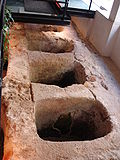
  • Ruins of a Roman garum factory near Tarifa, Spain
    Ruins of a Roman garum factory near Tarifa, Spain
  • Ancient Roman garum factory in Portugal
    Ancient Roman garum factory in Portugal
  • Two amphoras for garum
    Two amphoras for garum

Difference from oyster sauce

[edit]

While fish sauce and oyster sauce are both briny and may have related histories, they are different products. Fish sauce is watery, clear, and salty, whereas oyster sauce is made by reducing oyster extracts and therefore sweeter with a hint of salt and not as strong an aroma as fish sauce.[16]

Ingredients and manufacture

[edit]
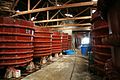
Fish sauce fermentation containers in Phú Quốc, Vietnam

Fish sauces historically have been prepared from different species of fish and shellfish, and from using the whole fish, or by using just fish blood or viscera. Most modern fish sauces contain only fish and salt, usually made from anchovy, shrimp, mackerel, or other strong-flavored, high oil fish. Some variants add herbs and spices. For modern fish sauces, fish or shellfish are mixed with salt at a concentration of 10% to 30%. It is then sealed in a closed container for up to two years.[1]: 234 

Once the original draft has been made, some fish sauces will be produced through a re-extraction of the fish mass via boiling. To improve the visual appearance and add taste, second-pass fish sauces often have added caramel, molasses, or roasted rice.[1]: 234  They are thinner, and less costly. Some volume manufacturers of fish sauce will also water down a first-press to manufacture more products.[17]

Fish sauce that has been only briefly fermented has a pronounced fishy taste. Extended fermentation reduces this and gives the product a nuttier, richer and more savory flavor.[18] An anonymous article, "Neuc-num", in Diderot and d'Alembert's 18th-century Encyclopédie, states: "It is said that Europeans become accustomed enough to this type of sauce".[19]

Regional variations

[edit]

Southeast Asia

[edit]

Fish sauce is a fundamental condiment and flavoring widely used in Southeast Asian cuisines. Thai and Cambodian fish sauces are generally milder and less pungent compared to their Vietnamese counterparts.[20]

Myanmar

[edit]

Fish sauce in Myanmar is called ngan bya yay (ငါးငံပြာရည်). It's often a by-product of Hmyin ngapi (မျှင်ငပိ) (Burmese fish paste made from small fish, anchovies, krill and shrimp).[21]

Cambodia

[edit]

In Cambodia, fish sauce is called tik trei (Khmer: ទឹកត្រី, tœ̆k trei). Just like prahok, it is believed to date back to the pre-Angkorean era. Industrially fish sauce is produced by mixing trei aing keuy or anchovies with coarse salt and fermenting it in large wooden vats. Over the period of six to eight months, it is distilled five times, before being transferred into jars and sun-fermented for the final 2–3 months. The most famous fish sauce is produced in the Kampot Province. Food Production Company of Kampot produces a speciality fish sauce containing roe.[22] Fish sauce is mixed with sugar, lime juice, chili peppers and crushed roasted peanuts to create sweet fish sauce, which is the most popular dipping sauce in Cambodia.[23]

  • Cambodian sweet fish sauce mixed with chopped chili peppers and slices of garlic
    Cambodian sweet fish sauce mixed with chopped chili peppers and slices of garlic

Laos

[edit]

In Lao/Isan, it is called nam pa (Lao: ນ້ໍາປາ). A chunkier, more aromatic version known as padaek is also used.[24][25]

Philippines

[edit]
Main articles: Bagoong and Dayok

The Philippine fish sauce is known as patis. It is one of the most important ingredients in Filipino cuisine.[26] Patis is a by-product of bagoong production, which include bagoong isda (fermented fish) and bagoong alamang (fermented krill), as well as the rarer bagoong macabebe (fermented oysters) and bagoong sisi (fermented clams). The fish used are typically small like sardines, anchovies, ambassids, and the fry of larger fish. Unlike other fish sauce variants, the fermented solids are not discarded but are sold as separate products. The patis is skimmed from the upper layers of fermenting bagoong and is not pressed. As such, patis usually takes longer to produce than other types of fish sauce as it is reliant on the readiness of bagoong.[27][28][29]

Patis is nearly always cooked prior to consumption, even when used as an accent to salads or other raw dishes. Patis is also used as an ingredient in cooked dishes, including a rice porridge called arroz caldo, as a condiment for fried fish or an umami accent in a common dish, sinigang. Patis is also used in place of table salt in meals to enhance the flavor of the food, where it can either be dashed from a dispensing bottle onto the food, or poured into a saucer and mixed with calamansi and labuyo chilis and used as a dipping sauce.[30][29][31][27]

  • Traditional burnay jars containing fermenting bagoong in Ilocos Norte
    Traditional burnay jars containing fermenting bagoong in Ilocos Norte
  • Commercial patis sold in the Philippines
    Commercial patis sold in the Philippines
  • Dipping sauce made from patis with siling labuyo peppers
    Dipping sauce made from patis with siling labuyo peppers

Thailand

[edit]

Fish sauce in Thailand is called Nam pla (Thai: น้ำปลา). In Isan, it is called nam pa. Similar to the Laotian padaek is pla ra (Thai: ปลาร้า), also used in Thai cuisine. In Thailand, fish sauce is used both in cooking and also served at the table as a condiment, for instance in noodle soups. Nearly every Thai meal is served with phrik nam pla as a condiment: a mixture of fish sauce, lime juice, and chopped bird's eye chilies. Sliced garlic is often added to this sauce.

Historically, there were two types of fish sauce made in Thailand: that made from freshwater fish, pla soi, and that made from saltwater fish, pla kratak. Either fish is fermented for at least eight months, three parts fish to two parts salt. The resulting mash is filtered. This yields the best fish sauce called the "base". The dregs are then mixed with water and salt and again fermented for three to four months. This yields a second-grade fish sauce, mostly used in cooking.[32]

In 2014, the US Food and Drug Administration (FDA) banned the import of Thai fish sauces due to a lack of information about tests for botulinum toxin. The toxin can cause death if more than 0.5 micrograms are consumed. The Thai Office of Food Safety and Quality then tested 48 brands of fish sauce to determine the content of botulinum toxin in the products. Of 48 brands tested, 28 were genuine fish sauces from 18 production sites in 12 provinces. Twenty samples from production sites in eight provinces were adulterated fish sauce. Tests showed that none were contaminated with botulinum toxin types A, B, E, and F and were free of Clostridium botulinum bacteria.[33] In 2018, rumours again surfaced concerning banned Thai fish sauce.[34]

  • Phrik nam pla ("fish sauce with chili") is served with some Thai meals
    Phrik nam pla ("fish sauce with chili") is served with some Thai meals
  • Prepared fish sauces in Thailand
    Prepared fish sauces in Thailand

Vietnam

[edit]
See also: Nước chấm and Mắm nêm

The variety from Vietnam is called nước mắm.[35] There are two areas in Vietnam that are most famous for producing fish sauce: Phú Quốc and Phan Thiết.

Fish sauce has a 300-year history dating back to the Champa kingdom of the Cham people.[36] Phan Thiết can be identified with the birthplace of Vietnamese fish sauce. Before 1693, Phan Thiết was a territory of Champa. The Vietnamese occupied the area in 1693 and commercialized the fish sauce by keeping it in barrels and selling throughout the country. This business was popularized by Trần Gia Hòa who was born in 1872. There is a fish sauce museum in Phan Thiết. Popular brands in the US include Mega Chef, Red Boat, 3 Crabs, Golden Boy, and Hòn Phan Thiết.[37]

Vietnamese fish sauces are made with anchovies, mackerel, scabbard fish, and salt. High mercury concentration can be found in larger fish, especially in predator fish like scabbard fish. They do not have any additives like sugar, hydrolyzed protein, or preservatives.[38] Vietnamese prefer sauces without a strong smell, and transparent with a deep golden amber color. "First press" fish sauce, meaning the sauce is bottled from the first time the fermenting barrels are drained, also indicates quality. Lastly, when measuring the nitrogen level of fish sauces (°N, or grams of nitrogen per liter), most fish sauce on the market falls within the mid 20°N range. Anything over 30°N is considered high-grade, and 40°N is optimal.[39][40]

Nước chấm is a Vietnamese prepared fish-based condiment (also referred to as a "sauce") that is savory, lightly sweet and salty tasting, and can be sour and spicy if lime and chili peppers are added. The main components are fish sauce, water, and sugar.

Mắm is made much like fish sauce, except that it is not fermented as long, and the fish is kept along with its liquid extract, not just the extract. Mắm can be used as a base condiment in dipping sauces with additional ingredients, used in soups, stir-fries and meat loaves, or eaten with rice as a main dish.

In January 2016, the Institute of Food Technologists published a study asserting that using Vietnamese fish sauce as a substitute for sodium chloride (salt) in chicken broth, tomato sauce, and coconut curry reduced the amount of sodium chloride by 10 to 25 percent while still maintaining the perceived deliciousness, saltiness, and overall flavor intensity.[41] This idea is similar to the use of umami flavor enhancers such as MSG to increase flavor intensity and reduce sodium requirement.[42]

According to the General Statistics Office, in 2020, the output of fish sauce reached nearly 380 million liters.[43][44][45] According to the Vietnam Fish Sauce Association, the output of fish sauce in 2023 is expected to reach about 420 million liters.[46][47] The reason for this growth is due to the increasing domestic demand and the strong development of the fish sauce export industry.[48][49] Vietnamese fish sauce is currently exported to more than 60 countries and territories around the world.[50][51][52] According to statistics, Vietnam currently has 783 fish sauce production facilities with 1,500 participating farming households,[53][54] producing about 250 million liters of fish sauce per year. Of which, 35 facilities produce fish sauce for export to 20 markets.[55][56]

  • Fishing boats in Phú Quốc, where the most prized fish sauce is made
    Fishing boats in Phú Quốc, where the most prized fish sauce is made
  • A fish sauce factory in Phú Quốc
    A fish sauce factory in Phú Quốc
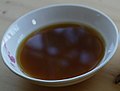
  • A small bowl of nước chấm (literally meaning, dipping water)
    A small bowl of nước chấm (literally meaning, dipping water)
  • A bowl of mắm nêm
    A bowl of mắm nêm

East Asia

[edit]

China

[edit]

In China, fish sauce is called yúlù (simplified Chinese: 鱼露; traditional Chinese: 魚露; pinyin: yúlù, literally "fish dew") and is native to the provinces of Guangdong and Fujian. In Chaoshan cuisine, fish sauce is made with Reeve's shad (Tenualosa reevesii), which is unsuitable for direct eating due to being fatty, bony, and odorous.[57]

Japan

[edit]

In Japan, fish sauce is called gyoshō (魚醤); another name is uoshōyu (魚醤油). There are several variations used in regional cuisines. Ishiru in the Noto Peninsula is made from sardine and squid. Shottsuru, the best-known type of Japanese fish sauce and often used as a synonym for all gyoshō, is from Akita Prefecture and is mainly made from sailfin sandfish. Ikanago shoyu of Kagawa Prefecture is made from sand lance. They are used in nabemono, in salad dressings, and as a flavoring ingredient in ramen soups. Imported Thai / Vietnamese fish sauce in Japan is referred to as nanpurā (ナンプラー), from the Thai word for fish sauce nam pla.

  • Japanese fish sauces shottsuru and ishiru
    Japanese fish sauces shottsuru and ishiru

Korea

[edit]

In Korea, fish sauce is called eojang (어장).

Across the Korean Peninsula, aekjeot (액젓, literally "liquid jeotgal"), a type of fish sauce usually made from fermented anchovies or kkanari (sand lances), is used as a crucial ingredient in many types of kimchi, both for taste and fermentation.[58][59]

In Jeju Island, eoganjang (어간장), made of fermented godori (young chub mackerel) or horse mackerel, is used in place of soy sauce.

  • Myeolchi-aekjeot (anchovy sauce)
    Myeolchi-aekjeot (anchovy sauce)
  • Eo-ganjang of Jeju Island
    Eo-ganjang of Jeju Island

Europe

[edit]

Italy

[edit]

Colatura di alici is an Italian fish sauce originating in the village of Cetara, Campania.

England

[edit]

Worcestershire sauce contains fermented anchovies among other ingredients, which is common in the Anglosphere countries.

Nutrition contents

[edit]

Common commercial brands of fish sauce generally contain about 50% to 60% of the FDA's daily recommended amount of sodium per tablespoon serving. Most commercial brands of reasonable quality contain one or two grams of protein per serving; however, higher-quality brands may have four grams of protein or more, while lower-quality brands may have less than one gram of protein per serving. Fish sauce has an insignificant amount of carbohydrates and fats. Vitamin B12, vitamin B-6, and magnesium are present in small amounts.

See also

[edit]
  • iconFood portal
  • Budu
  • List of Chinese sauces
  • List of dips
  • List of fish sauces
  • Prahok
  • Shrimp paste

References

[edit]
  1. ^ a b c d e f g h McGee, Harold. On Food and Cooking: The Science and Lore of the Kitchen (Kindle ed.). Scribners.
  2. ^ Abe, Kenji; Suzuki, Kenji; Hashimoto, Kanehisa (1979). "Utilization of Krill as a Fish Sauce Material". Nippon Suisan Gakkaishi. 45 (8): 1013–1017. doi:10.2331/suisan.45.1013.
  3. ^ "Seashore Foraging & Fishing Study: From Poot-Poot to Fish Sauce to Umami to MSG". Archived from the original on 18 February 2009. Retrieved 6 September 2009.
  4. ^ Butler, Stephanie (20 July 2012). "Ketchup: A Saucy History". History. Retrieved 4 April 2017.
  5. ^ "调料文化:酱油的由来". Big5.xinhuanet.com. Archived from the original on 30 January 2012. Retrieved 21 June 2018.
  6. ^ zh:酱
  7. ^ Hsing-Tsung, Huang (2000). Joseph Needham: Science and Civilisation in China, Vol.6, Part 5. Cambridge University Press. ISBN 0521652707.
  8. ^ Kurlansky, Mark (2002). Salt: A World History. New York: Walker and Co. p. 20. ISBN 978-0-8027-1373-5.
  9. ^ Gandhi, Lakshmi (3 December 2013). "Ketchup: The All-American Condiment That Comes From Asia". NPR. Retrieved 4 April 2017.
  10. ^ Lim, Lisa (21 July 2017). "When China invented ketchup in 300BC, and how it morphed from a preserved fish sauce to sweet tomato gloop". South China Morning Post. Retrieved 25 November 2018.
  11. ^ Farnworth, Edward R. (2003). Handbook of Fermented Functional Foods (PDF). Boca Raton, Florida: CRC Press. p. 22. ISBN 0849313724.
  12. ^ Grainger, Sally. "Fish Sauce: An Ancient Condiment". Good Food SAT 1 OCT 2011. National Public Radio. Retrieved 26 October 2011.
  13. ^ Natural History Pliny, the Elder. LoebClassics.com
  14. ^ Wilkinson, Paul (2003). "Introduction". Pompeii: The Last Day. London: BBC. ISBN 9780563487708.
  15. ^ Curtis, Robert I. (1 January 1983). "In Defense of Garum". The Classical Journal. 78 (3): 232–240. JSTOR 3297180.
  16. ^ "How to Use Fish Sauce". The Spruce Eats. Retrieved 20 May 2021.
  17. ^ Phan, Duong (14 March 2019). "6 khác biệt giữa nước mắm truyền thống và nước mắm công nghiệp" [6 differences between traditional fish sauce and industrial fish sauce]. vnexpress.net (in Vietnamese). Archived from the original on 15 July 2025. Retrieved 24 November 2025.
  18. ^ Julalak Chuprom, Preeyanuch Bovornreungroj, Mehraj Ahmad, Duangporn Kantachote, Toshiki Enomoto, Statistical optimization for the improved production of an extracellular alkaline nuclease by halotolerant Allobacillus halotolerans MSP69: Scale-up approach and its potential as flavor enhancer of fish sauce, Biocatalysis and Agricultural Biotechnology, Volume 8, 2016, Pages 236–247
  19. ^ Diderot, Denis (15 September 2012). "Fish Sauce". The Encyclopedia of Diderot and d'Alembert Collaborative Translation Project. Retrieved 1 April 2015.
  20. ^ Alford, Jeffrey; Duguid, Naomi (2000). Hot Sour Salty Sweet: A Culinary Journey Through Southeast Asia. Workman Publishing Company. p. 317. ISBN 978-1579-6511-4-5.
  21. ^ Mi Mi Khaing, Cook and Entertain the Burmese Way (Rangoon, 1975) p. 98
  22. ^ Thaitawat, Nusara (2000). The Cuisine of Cambodia. Thailand: Nusara & Friends Co. Ltd. p. 31. ISBN 978-9-748-77885-3.
  23. ^ "Sweet Fish Sauce". Cambodian Recipes. 6 July 2017. Retrieved 15 March 2020.
  24. ^ Marui, Junichiro; Phouphasouk, Souphachay; Giavang, Yethao; Yialee, Yanglao; Boulom, Sayvisene (1 March 2021). "Relationship between Salinity and Histamine Accumulation in Padaek, a Salt-Fermented Freshwater Fish Paste from Laos". Journal of Food Protection. 84 (3): 429–436. doi:10.4315/JFP-20-272. ISSN 0362-028X.
  25. ^ Ngo, Hope; Staff, Tasting Table (9 May 2022). "14 Fish Sauces Around The World, Explained". Tasting Table. Retrieved 15 April 2025.
  26. ^ "Patis / Fish Sauce". Market Manila. 14 July 2007. Retrieved 13 January 2019.
  27. ^ a b "Filipino Icon: Bagoong". For Filipinos in Europe. 8 April 2014. Retrieved 13 January 2019.
  28. ^ Van Veen, E.M. (1953). "Fish Preservation in Southeast Asia". In Mrak; Stewart, G.F. (eds.). Advances in Food Research. Vol. 4. Academic Press. p. 217. ISBN 9780080567495. {{cite book}}: ISBN / Date incompatibility (help)
  29. ^ a b "Patis - Filipino Fishy Goodness". Oyster Food and Culture. Archived from the original on 11 November 2020. Retrieved 13 January 2019.
  30. ^ Olympia, Minerva (1992). "Fermented Fish Products in the Philippines". Applications of Biotechnology to Fermented Foods: Report of an Ad Hoc Panel of the Board on Science and Technology for International Development. National Academies Press.
  31. ^ "Patis". TagalogLang. Retrieved 13 January 2019.
  32. ^ Sukphisit, Suthon (6 March 2014). "A very fishy tale". Bangkok Post.
  33. ^ "21 brands of Thai fish sauce free from botulinum toxin". Thai PBS. 6 February 2017. Archived from the original on 3 June 2019. Retrieved 25 November 2018.
  34. ^ "FDA denies US ban on fish sauce from Thailand". The Nation. 25 October 2018. Archived from the original on 16 June 2019. Retrieved 25 November 2018.
  35. ^ Robuchon, Joël (2009). Larousse Gastronomique (Updated ed.). London: Hamlyn. p. 714. ISBN 9780600620426.
  36. ^ Ng, J. (2021, September 13). Fish Sauce Museum: 300-Year-Old Recipes & Champa Artifacts In Phan Thiết. The Smart Local. Retrieved May 25, 2022, from https://thesmartlocal.com/vietnam/fish-sauce-museum/
  37. ^ Hildebrant, Kyle (17 February 2014). "Fish Sauce Taste Test, 13 Brands Compared – Our Daily Brine". Ourdailybrine.com. Archived from the original on 8 November 2020. Retrieved 4 April 2017.
  38. ^ Stanton, J. (2 May 2012). "What Are "Hydrolyzed Soy Protein" And "Hydrolyzed Wheat Protein," And Why Are They in Everything?". Gnolls.org. Retrieved 4 April 2017.
  39. ^ "Everything you want to know about Phu Quoc Fish Sauce". Phuquocislandguide.com. Archived from the original on 25 August 2018. Retrieved 4 April 2017.
  40. ^ Pham, Cuong; Nguyen, Tien; Tran, Diep (2021). The Red Boat Fish Sauce Cookbook: Beloved Recipes from the Family Behind the Purest Fish Sauce. Houghton Mifflin Harcourt. p. 10. ISBN 978-0-358-41097-3.
  41. ^ Huynh, Hue Linh; Danhi, Robert; Yan, See Wan (27 November 2015). "Using Fish Sauce as a Substitute for Sodium Chloride in Culinary Sauces and Effects on Sensory Properties". Journal of Food Science. 81 (1): S150–S155. doi:10.1111/1750-3841.13171. PMID 26613570.
  42. ^ Lubin, Gus (2 February 2017). "Everyone should cook with MSG, says food scientist". Business Insider. Retrieved 27 January 2019.
  43. ^ "Giải pháp nào cho ngành Nước mắm Việt Nam phát triển?". thanhtra.com.vn. Retrieved 19 February 2024.
  44. ^ "Nghề nước mắm tạo ra 6.000 tỷ đồng mỗi năm, xuất khẩu 25 triệu USD". thegioitiepthi.danviet.vn (in Vietnamese). Retrieved 19 February 2024.
  45. ^ NLD.COM.VN. "Việt Nam đang xuất khẩu 12,6% sản lượng nước mắm ra thế giới". Báo Người Lao Động Online (in Vietnamese). Retrieved 19 February 2024.
  46. ^ "Thành lập Hiệp hội nước mắm Việt Nam là rất cần thiết". HIỆP HỘI NƯỚC MẮM VIỆT NAM (in Vietnamese). 15 April 2021. Retrieved 19 February 2024.
  47. ^ Phượng, Cẩm (28 October 2023). "Chắp cánh nước mắm Việt Nam". Tạp chí Thủy sản Việt Nam (in Vietnamese). Retrieved 19 February 2024.
  48. ^ ANH, QUỲNH (5 October 2023). "Động lực tăng trưởng từ xuất khẩu và kích cầu tiêu dùng trong nước". BÁO KIỂM TOÁN NHÀ NƯỚC (in Vietnamese). Retrieved 19 February 2024.
  49. ^ tcct (11 August 2019). "Một số giải pháp phát triển thương hiệu nước mắm Phan Thiết". Tạp chí Công Thương (in Vietnamese). Retrieved 19 February 2024.
  50. ^ "Sẽ có hơn 300 đoàn thu mua đến từ 60 nước đổ về Việt Nam tìm nguồn cung" (in Vietnamese). 11 August 2019.
  51. ^ "Định vị hạng sang cho nước mắm việt". nhipcaudautu.vn (in Vietnamese). Retrieved 19 February 2024.
  52. ^ Ngoc, Nu (14 February 2022). "Đặc sản Vinafood" (in Vietnamese). Retrieved 19 February 2024.
  53. ^ Hoàng -, Song (15 December 2021). "Khẩn cấp tìm giải pháp bảo vệ nguồn cá sản xuất nước mắm trước nguy cơ cạn kiệt". Nhịp sống kinh tế Việt Nam & Thế giới (in Vietnamese). Retrieved 19 February 2024.
  54. ^ Mai, Phạm Sao (11 January 2022). "Sản xuất nước mắm: Nỗi lo cạn kiệt nguyên liệu". Tạp chí Thủy sản Việt Nam (in Vietnamese). Retrieved 19 February 2024.
  55. ^ baochinhphu.vn (25 June 2022). "Nhiều dư địa cho xuất khẩu nước mắm của Việt Nam". baochinhphu.vn (in Vietnamese). Retrieved 19 February 2024.
  56. ^ "Chuyên trang Infonet Báo VietnamNet". Infonet News (in Vietnamese). Retrieved 19 February 2024.
  57. ^ Flavorful Origins, Season 1, Episode
  58. ^ "REVIEW | Seoul Kimchi, Upper Brook Street | Confidentials Manchester". Manchester: Manchester Confidential. 1 November 2016. Archived from the original on 2 February 2017. Retrieved 4 April 2017.
  59. ^ "Thousands prepare kimchi feast for Seoul's poor". Channel NewsAsia. Archived from the original on 8 November 2016. Retrieved 8 November 2016.

Further reading

[edit]
  • Cooks Illustrated (September/October 2015) "Fish Sauce Taste Test" Best Fish Sauces of 2021 | Cook's Illustrated
  • Hastings (2015) Fish sauce a versatile ingredient that works in many cuisines.
  • Hildebrant (2014) "Fish Sauce Taste Test, 13 Brands Compared" Archived 8 November 2020 at the Wayback Machine from Our Daily Brine
  • Johnson (2015) "3 Reasons To Get A Little More Umami in your Diet". from US News health.
  • Meewes, Veronica (2015) The Fish Sauce Cookbook published by Andrews McMeel ISBN, 9781449468699
  • Murdoch (2004) Essential Seafood Cookbook Seafood sauces, pp. 128–143. Murdoch Books. ISBN 978-1-74045-412-4.
  • Nguyen (2008) "How to Buy Fish Sauce: A Guide" Archived 8 September 2018 at the Wayback Machine from Viet World Kitchen
  • Prichep, Deena (26 October 2013). "Fish Sauce: An Ancient Roman Condiment Rises Again". NPR. Retrieved 5 November 2013.
  • Rosen (2013) "Can Fish Sauce Be Vietnam's Champagne?" from The Atlantic

External links

[edit]
Wikimedia Commons has media related to Fish sauce.
Look up fish sauce in Wiktionary, the free dictionary.
  • Making Vietnamese prepared fish sauce dipping sauce (nước chấm) from HungryHuy.com
  • Phu Quoc fish sauce guide Archived 25 August 2018 at the Wayback Machine from PhuQuocIslandGuide.com
  • v
  • t
  • e
Fish sauces and pastes
Fish sauce
  • Anchovy essence
  • Colatura di alici
  • Budu
  • Cincalok
  • Garum
  • Jeotgal
  • Mahyawa
  • Patis
  • Pla ra
  • Shottsuru
  • Worcestershire sauce
  • XO sauce
Budu sauce
Fish paste
  • Anchovy paste
  • Balao-balao
  • Bagoong
  • Bagoong monamon
  • Bagoong terong
  • Bekasang
  • Burong isda
  • Dayok
  • Fish paste
  • Garum
  • Gentleman's Relish
  • Jakoten
  • Jeotgal
  • Kamaboko
  • Ngachin
  • Ngapi
  • Padaek
  • Pissalat
  • Pla ra
  • Prahok
  • Shiokara
  • Shrimp paste
  • Surimi
  • Taba ng talangka
  • Tomalley
List articles
  • Fish pastes
  • Fish sauces
  • v
  • t
  • e
Seafood
Fish
  • Anchovy
  • Barramundi
  • Billfish
  • Carp
  • Catfish
  • Cod
  • Eel
  • Flatfish
  • Flounder
  • Herring
  • Mackerel
  • Salmon
  • Sardine
  • Shark
  • Sturgeon
  • Swordfish
  • Tilapia
  • Trout
  • Tuna
  • Whitebait
Shellfish
  • Abalone
  • Cockles
  • Conch
  • Crab
  • Crayfish
  • Geoduck
  • Krill
  • Lobster
  • Mussels
  • Oysters
  • Prawn/Shrimp
  • Scallops
  • Sea urchins
  • Crustaceans
  • Molluscs
Other seafood
  • Jellyfish
  • Marine mammals
    • Whale
  • Octopus
  • Sea cucumber
  • Seaweed
  • Squid
  • Algae
  • List of seafoods
  • more...
Processed
seafood
  • Caviar
  • Dried fish
  • Canned fish
  • Cod liver oil
  • Cured fish
  • Fermented fish
  • Fish fillet
  • Fish head
  • Fish maw
  • Fish oil
  • Fish sauce
  • Fish paste
  • Fish steak
  • Fish stock
  • Lutefisk
  • Salted fish
  • Salted squid
  • Shark liver oil
  • Shrimp paste
  • Smoked fish
  • Stockfish
  • Surimi
  • Roe
  • more...
Seafood dishes
  • List of seafood dishes
  • List of crab dishes
  • List of fish dishes
  • List of raw fish dishes
  • List of tuna dishes
  • Bisque
  • Chowder
  • Fish and chips
  • Fish pie
  • Fish soup
  • Fried fish
  • Hoe
  • Seafood boil
  • Shark fin soup
  • Sushi
  • Sushi bake
  • more...
Health hazards
  • Ciguatera
  • Fish diseases and parasites
  • Mercury in fish
  • Metagonimiasis
  • Scombroid food poisoning
  • Shellfish poisoning
Advisory services
  • Seafood mislabelling
  • Sustainable seafood
  • Sustainable seafood advisory lists and certification
Animal welfare
  • Declawing of crabs
  • Eyestalk ablation
  • Eating live seafood
  • Goldfish swallowing
  • Live fish trade
  • Pain in fish
  • Pain in crustaceans
  • Shark finning
Related topics
  • Fish preservation
  • Fish processing
  • Gathering seafood by hand
  • History of seafood
  • History of sushi
  • List of seafood companies
  • Pescetarianism
  • Raw bar
  • Salmon cannery
  • Seafood restaurant
  • icon Food portal
  •  Category: Seafood
  • v
  • t
  • e
Condiments
  • List of condiments
  • List of common dips
  • List of syrups
Sauces
  • Agre dulce
  • Agrodolce
  • Aioli
  • Barbecue
  • Bigarade
  • Brown
  • Buffalo
  • Cheese
    • Alfredo
    • Caruso
    • Cheddar
    • Cheez Whiz
    • Fondue
    • Mornay
    • Nacho cheese
  • Chili
  • Chimichurri
  • Cocktail
  • Colo-colo
  • Crema
  • Caruru
  • Dabu-dabu
  • Fish
  • Fritessaus
  • Fry
  • Garum
  • Gastrique
  • Gravy
  • Hot
  • Latik
  • Khrenovina
  • Lechon
  • Marie Rose
  • Mayonnaise
    • Kewpie
    • Kielecki
    • Miracle Whip
  • Mignonette
  • Mild
  • Monkey gland
  • Mujdei
  • Mumbo
  • Oyster
  • Peanut
  • Pearà
  • Pesto
  • Pistou
  • Remoulade
  • Salsa golf
  • Salsa macha
  • Salsa verde
  • Satsivi
  • Steak
  • Tartar
  • Tatbila
  • Teriyaki
  • Tiparos
  • Tkemali
  • Tomato
  • Vincotto
  • XO
  • Zingara
Dips
  • Ajika
  • Baba ghanoush
  • Chile con queso
  • Duck
  • Duqqa
  • Garlic chive flower sauce
  • Guacamole
  • Hogao
  • Honey dill
  • Hummus
  • Muhammara
  • Nam chim
  • Nam phrik
  • Nước chấm
  • Skyronnes
  • Sweet chili
  • Toum
  • Tzatziki
  • Zhug
Pickles and
preserves
  • Amba
  • Atchara
  • Cheong
  • Chutney
    • Green mango chutney
  • Curtido
  • Encurtido
  • Fruit preserves
  • Gari
  • Horseradish
  • Ljutenica
  • Pepper jelly
  • Piccalilli
  • Pickled cucumber
  • Pickled fruit
  • Relish
    • Chicago-style relish
  • Sauerkraut
  • Kimchi
  • Sumbala
  • Taba ng talangka
  • Tomato jam
  • Varenye
  • Watermelon rind preserves
Spreads and pastes
  • Ajvar
  • Anchovy paste
  • Bagoong
  • Biber salçası
  • Beurre maître d'hôtel
  • Chili paste
  • Chrain
  • Coconut jam
  • Fish paste
  • Gochujang
  • Liver spread
  • Kyopolou
  • Maafe
  • Malidzano
  • Meat extract
    • Bovril
  • Murri
  • Nut butter
  • Palapa
  • Pindjur
  • Roe
    • Caviar
  • Sahawiq
  • Tapai
  • Wasabi
  • Yeast extract
    • Marmite
    • Vegemite
  • Zacuscă
Oils and liquids
  • Chili
  • Halford Leicestershire Table Sauce
  • Mustard
  • Olive
  • Patis
  • Perilla
  • Ponzu
  • Salmoriglio
  • Sesame
  • Soy sauce
    • Soup soy sauce
    • Sweet soy sauce
    • Toyomansi
  • Syrup
  • Worcestershire sauce
    • Tonkatsu sauce
Spices and powders
  • Asín tibuok
  • Chipotle
  • Crushed red pepper
  • Gomashio
  • MSG
  • Nutritional yeast
  • Paprika
  • Popcorn seasoning
  • Salt and pepper
  • Tekka
  • Za'atar
Salads
  • Carolina style
  • Coleslaw
  • Kachumbari
  • Kachumber
  • Salsa
    • Pico de gallo
    • Salsa criolla
Dressings
  • Blue cheese
  • French
  • Ginger
  • Green goddess
  • Italian
  • Louis
  • Mayfair salad
  • Ranch
  • Russian
  • Salad cream
  • Tahini
  • Thousand Island
  • Vinaigrette
    • Wafu
Ketchups
  • Banana
  • Curry
  • Fruit
  • Mushroom
  • Tomato
Mustards
  • Dijon
  • Honey
  • Karashi
  • Kasundi
  • Mostarda
  • Spicy brown
    • Creole
  • Sweet
  • Tecuci
  • Tewkesbury
  • Turun sinappi
  • Yellow
Vinegars
  • Apple cider
  • Balsamic
    • Balsamic vinegar of Modena
  • Black
  • Kaong palm
  • Malt
  • Nipa palm
List articles
  • Accompaniments to french fries
  • Brand name condiments
  • Chutneys
  • Fish pastes
  • Fish sauces
  • Indian condiments
  • Indonesian condiments
  • Japanese condiments
  • Mayonnaises
  • Mustard brands
  • Hot sauces
  • Pakistani condiments
  • Philippine condiments
  • Pickled foods
Accoutrements
  • Cruet-stand
  • Sachet
  • Salt and pepper shakers
  • Soy sauce fish
  • Squeeze bottle
  • v
  • t
  • e
Philippines Filipino cuisine
Main dishes
  • Balut
  • Bola-bola
  • Bopis
  • Burong isda
  • Burong mangga
  • Chori burger
  • Coconut burger
  • Curacha
    • Alavar
  • Decho
  • Dinengdeng
  • Embutido
  • Escabeche
  • Everlasting
  • Goto
  • Halabós
  • Hardinera
  • Inubaran
  • Kilawin
  • Kinilnat
  • Kinilaw
    • Biyaring
  • Kulawo
  • Lengua pastel
  • Linagpang
  • Lumlom
    • Waknatoy
  • Nilagang saging
  • Pinangat na isda
  • Pinsec frito
  • Piutu
  • Poqui poqui
  • Proben
  • Pudpod
  • Salpicao
  • Sinanglay
  • Sinantolan
  • Siomai
  • Tamale
  • Tinapayan
  • Tuslob buwa
Braised dishes
and stews
  • Adobo
  • Afritada
  • Asado
    • matua
    • pork
  • Balbacua
  • Bicol express/Sinilihan
  • Binagoongan
    • Kangkong
  • Bistek
  • Carne norte guisado
  • Chicken galantina/Relyenong manok
  • Chicken pastel/Pastel de pollo
  • Dinuguan
  • Estofadong baboy
  • Giniling
  • Ginisang kangkóng
  • Hamonado
  • Humbà
  • Igado
  • Kaldereta
  • Kare-kare
  • Laing/Pinangat
    • Inulukan
    • Linapay/Tinamuk
    • Tinumok
  • Lengua estofado
    • Lengua Sevillana
  • Linarang
  • Linat-an
  • Mechado
  • Menudo/Ginamay
  • Morcón
  • Paklay
  • Pares
    • Pares kanto
  • Pata tim
  • Piaparan
  • Pinais
  • Pinakbet
  • Pinapaitan
  • Pinatisan
  • Pininyahang hipon
  • Pininyahang manok
  • Piyanggang manok
  • Putsero
  • Rendang
  • Ropa vieja
  • Sarsa na uyang
  • Talunan
Grilled dishes
(inihaw)
  • Dinakdakan/Warek-Warek
  • Inihaw/Filipino barbecue
  • Inasal
  • Isaw
  • Lechon
    • baboy
    • baka
    • manok
  • Tapa
  • Satti
  • Tinapa
Fried dishes
  • Bagnet
  • Calamares
  • Camaron rebosado
  • Carne frita
  • Chicharon
  • Crispy kangkóng
  • Crispy pata
  • Crispy tadyang ng baka
  • Daing
  • Fish balls
  • Kikiam
  • Lechon kawali
  • Nilasing na hipon
  • Okoy
  • Pudpod
  • Sisig
  • Tapa
  • Tocino
  • Tokneneng
    • Kwek kwek
  • Tokwa't baboy
  • Torta
    • carne norte
    • kalabasa
    • sardinas
    • talong
Rice dishes
  • Aligue fried rice
  • Arroz a la cubana
  • Arroz a la valenciana
  • Arroz caldo
  • Bagoong fried rice
  • Balao-balao
  • Binalot
  • Java rice
  • Junay
  • Kiampong
  • Kuning
  • Lugaw
  • Morisqueta tostada
  • Oko-oko
  • Paelya
    • Bringhe
    • Nasing biringyi
  • Pastil
  • Pusô/Tamu
  • Silog
  • Sinangag
  • Sinigapuna
Soups
  • Batchoy Tagalog/Batsoy
  • Binakol
  • Bulalo
  • Cansi
  • Ginataan
    • ampalaya
    • hipon
    • isda
    • kalabasa
    • kuhol
    • labong
    • langka
    • manok
    • sugpo
    • ubod
  • Ginisang munggo
  • Gising-gising
  • Kadyos, baboy, kag langka
  • Kadyos, manok, kag ubad
  • Kinamatisang manok (Sarciadong manok)
  • Nilaga
  • Paksiw
    • Inun-unan
  • Pinikpikan
  • Sarsiado
  • Sinabawang corned beef
  • Sinabawang gulay
  • Sinampalukan
  • Sinigang
  • Sorol
  • Soup Number Five
  • Suam na mais
  • Tinola
  • Tiyula itum
Noodles and pasta
  • Balbacua con misua
  • Batchoy
    • Batchoy Tagalog
  • Filipino spaghetti
  • Kinalas
  • Macaroni salad
  • Maki mi
  • Odong
  • Pancit
    • bihon
    • buko
    • canton
    • choca
    • estacion
    • lomi
    • luglug
    • Malabon
    • mami
    • miki
    • Molo
    • palabok
    • sotanghon
  • Pares mami
  • Sopa de fideo
  • Sopas
Sausages
  • Longganisa
    • Alaminos
    • Baguio
    • Cabanatuan/Batutay
    • Calumpit
    • Chicken
    • Fish
    • Guagua/Candaba
    • Guinobatan
    • Longganisang dugo
    • Lucban
    • Pampanga
    • Tuguegarao
    • Vigan
  • Chorizo
    • de Bilbao
    • de Cebu
    • de Macao
    • Negrense
    • pudpud
  • Pinuneg
Lumpia and turón
  • Daral
  • Dinamita
  • Lumpia
    • adobo
    • gulay
    • hubad
    • isda
    • keso
    • labong
    • prito
    • sariwa
    • Shanghai
    • singkamas
    • togue
    • ubod
    • Vegetarian lumpia
  • Ngohiong
  • Turón
Breads, cakes,
and pastries
  • Alfajor
  • Asado roll
  • Banada
  • Banana cake
  • Bicho
  • Binangkal
  • Biscocho
    • Kinihad
  • Brazo de Mercedes
  • Buko pandan cake
  • Buko pie
  • Buñuelo
  • Churro
  • Crema de Fruta
  • Double buddy
  • Egg pie
  • Empanada
  • Ensaymada
  • Flan cake
  • Food for the gods
  • Hopia
  • Inipit
  • Kababayan
  • Kumukunsi
  • Mamón
    • Broas
    • Puto mamón
    • Taisan
    • tostado
  • Mango cake
  • Mango float
  • Napoleones
  • Ohaldre
  • Pan de coco
  • Pan de monggo
  • Pan de monja/Monáy
    • Putok
  • Pan de regla
  • Pan de siosa/Pan de leche
  • Pandesal
  • Pastel de Camiguín
  • Pianono
  • Piaya
  • Pilipit
  • Pinagong
  • Polvorón
  • Sans rival
  • Spanish bread
  • Shakoy
  • Shing-a-ling
  • Silvana
  • Siopao
  • Ube cake
  • Ube cheesecake
  • Waffle dog
  • Yema cake
Biscuits/cookies
  • Aparon
  • Apas
  • Barquillos
  • Barquiron
  • Camachile cookies
  • Caycay
  • Galletas
    • de bato
    • de patatas/Egg cracklets
    • del Carmen
    • pesquera
  • Gorgoria
  • Jacobina
  • Lengua de gato
  • Linga
  • Masa podrida
  • Otap
  • Paciencia
  • Paborita
  • Puto seco
  • Roscas
  • Rosquillo
  • Ugoy-ugoy
  • Uraró/Arrowroot cookies
Desserts
  • Ampaw
  • Banana cue
  • Baye baye
  • Binagol
  • Binaki
  • Buko salad
    • Buko halo
    • Buko melon
    • Buko pandan
  • Camote cue
  • Camote halaya
  • Cascaron
  • Cassava cake
    • Pitsi-pitsî
  • Champóy
  • Coconut macaroon
  • Cornick
  • Daral
  • Dodol
  • Duman
  • Ginanggang
  • Kalamay
  • Kiamoy
  • Leche flan
  • Lokot-lokot
  • Maja blanca
  • Maruya
  • Masareal
  • Membrilyo
  • Minatamis na saging
  • Nilupak/Nilusak
  • Pinipig
  • Pritong saging
  • Salukara
  • Taho
  • Tamales
  • Tibok-tibok
  • Tocino de cielo
  • Turón
  • Turrón de casúy
  • Turrón de pili
  • Ube
    • halaya
    • macapuno
Candies and confections
  • Pastillas
  • Balikucha
  • Belekoy
  • Coconut toffee
  • Peanut Brittle
    • Panocha mani
  • Sampalok candy
  • Yema
Chips and crackers
  • Banana chips
  • Kabkab/Cassava cracker
  • Kropek
  • Kiping
  • Pinasugbo/Consilva
Frozen desserts
  • Avocado and milk in ice/Abukado lamaw
  • Guinomis
  • Halo-halo
  • Ice buko
  • Ice scramble
  • Knickerbocker
  • Maíz con hielo
  • Queso ice cream
  • Saba con hielo
  • Sili ice cream
  • Sorbetes
  • Ube ice cream
Kakanin (ricecakes)
  • Bibingka
    • Bibingkoy
  • Binakle
  • Biko
  • Espasol
  • Kutsinta
  • Mache
  • Masi
  • Moche
  • Morón
  • Palitaw
  • Panyalam
  • Putli mandi
  • Puto
    • Bumbong
    • Calasiao
    • Maya
  • Sapin-sapin
  • Sayongsong
  • Suman
  • Tikoy
  • Tupig
Soup desserts
  • Bilo-bilo
  • Binatog
  • Binignit
  • Champorado
  • Ginataan
    • mais
    • munggo/Lelot balatong
    • saba
  • Lamaw
Condiments
and ingredients
  • Agre dulce/sweet and sour sauce
  • Achuete
  • Asín tibuok
  • Atchara
  • Bagoong
    • alamang
    • monamon
    • terong
  • Banana ketchup
  • Biasong
  • Bukayo
  • Burô/tapay
  • Calamansi
  • Dayap
  • Dayok
  • Dungon
  • Galapóng
  • Gamet
  • Gatâ
  • Giniling
  • Gulaman
  • Gusô
  • Kakang gatâ
  • Kamias
  • Kaong
  • Kasubha
  • Keso de bola
  • Kesong puti
  • Labóng
  • Landang
  • Latik
  • Latô
  • Lemongrass
  • Liver spread/Lechon sauce
  • Luyang dilaw
  • Macapuno
  • Minatamís na báo
  • Muscovado
  • Nata de coco
  • Nata de piña
  • Pakô
  • Palapa
  • Pandan
  • Panutsa
  • Patis
  • Pili nut
  • Saba banana
  • Sago
  • Sakurab/Sibujing
  • Siling haba
  • Siling labuyo
  • Taba ng talangka
  • Tabon-tabon
  • Toyomansi
  • Toyo, suka, at sili
  • Túltul
  • Ube
  • Ubad
  • Ubod
  • Vinegar
    • cane
    • coconut
    • kaong palm
    • nipa palm
    • spiced
Beverages
Non-alcoholic
  • Avocado milkshake
  • Calamansi juice
  • Coffee
    • Barako
    • Benguet
    • Sagada
    • Sulu
  • Salabat
  • Samalamig
    • Buko pandan drink
    • Sago at gulaman
  • Tsokolate
  • Tubho tea
Alcoholic
  • Agkud
  • Anisado
  • Bahalina
  • Bais
  • Basi
  • Bignay wine
  • Byais
  • Dubado
  • Duhat wine
  • Intus
  • Kabarawan
  • Kinutil
  • Laksoy/Dalisay de nipa/Barik
  • Lambanog/Dalisay de coco
  • Mallorca
  • Palek
  • Pangasi
  • Tapuy/Baya
  • Tubâ
  • Tuhak
  • Tunggang
  • icon Food portal
  • See also:
  • Philippine condiments
  • Filipino Chinese cuisine
  • Kamayan
  • Kapampangan cuisine
  • List of Filipino restaurants
  • List of restaurant chains in the Philippines
  • v
  • t
  • e
Thailand Thai cuisine
Individual dishes
  • American fried rice
  • Bami
  • Chok
  • Evil jungle prince
  • Hoi thot
  • Khao kha mu
  • Khao khluk kapi
  • Khao man kai
  • Khao na pet
  • Khao mok
  • Khao mu daeng
  • Kuaitiao khua kai
  • Kuaitiao ruea
  • Mi krop
  • Pad kee mao
  • Pad thai
  • Phat mi Khorat
  • Phat si-io
  • Rat na
  • Sukhothai noodles
  • Thai fried rice
  • Yentafo
Shared dishes
  • Green curry
  • Ho mok
  • Kaeng pa
  • Kaeng som
  • Kaeng thepho
  • Khai yat sai
  • Kung chae nampla
  • Massaman curry
  • Nam kaeng hua chai thao
  • Nuea phat phrik
  • Phanaeng
  • Phat kaphrao
  • Phat khing
  • Phat phrik khing
  • Red curry
  • Som tam
  • Tom kha kai
  • Tom khlong
  • Tom som
  • Tom yum
  • Tom yum kung
  • Yam khai dao
  • Yellow curry
Isan dishes
  • Bamboo shoot salad
  • Chim chum
  • Kai yang
  • Koi
  • Larb
  • Nam tok
  • Sai krok Isan
  • Suea rong hai
  • Tam maak hoong
  • Yam naem khao thot
Northern Thai dishes
  • Kaeng khae
  • Kaeng hang le
  • Khao kan chin
  • Khao soi
  • Nam ngiao
  • Nam phrik num
  • Nam phrik ong
  • Sai ua
Southern Thai dishes
  • Kaeng phrik kraduk mu
  • Kaeng tai pla
  • Khao yam
  • Khua kling
  • Nasi dagang
  • Nasi goreng
  • Nasi lemak
Snacks
  • Cho muang
  • Hakao
  • Hoicho
  • Kalamae
  • Karipap
  • Khaep mu
  • Khao phan
  • Khanom bodin
  • Khanom chip
  • Keropok
  • Khanom khai nok kratha
  • Khanom kheng
  • Khanom khi noo
  • Khanom khuai ling
  • Khanom fak bua
  • Khanom nuan haeo
  • Khanom phak kat
  • Khanom Tokyo
  • Khao chae
  • Khao kriap kung
  • Khrongkhraeng krop
  • Kluai khaek
  • Koh-Kae
  • Krop khem
  • Kuaitiao lot
  • La tiang
  • Loba
  • Mamuang kuan
  • Mamuang nampla wan
  • Miang kham
  • Mu ping
  • Pathongko
  • Popia
  • Roti sai mai
  • Sakhu sai mu
  • Salapao
  • Satay
  • Thong muan
  • Thong muan sot
Desserts
  • List of Thai khanom
  • Bua loi
  • Bulan dan mek
  • Cha mongkut
  • Chaokuai
  • Fakthong kaeng buat
  • Foi thong
  • Khanom babin
  • Khanom bueang
  • Khanom bueang Yuan
  • Khanom chak
  • Khanom chan
  • Khanom farang kudi chin
  • Khanom keson lamchiak
  • Khanom khai
  • Khanom khai hong
  • Khanom khai pla
  • Khanom krok
  • Khanom la
  • Khanom met khanun
  • Khanom mo kaeng
  • Khanom namdokmai
  • Khanom phing
  • Khanom piakpun
  • Khanom sai bua
  • Khanom sane chan
  • Khanom sot sai
  • Khanom tan
  • Khanom thang taek
  • Khanom thian
  • Khanom thuai
  • Khanom thuai fu
  • Khanom tom
  • Khanom wong
  • Khao lam
  • Khao mak
  • Khao niao sangkhaya
  • Khao tom mat
  • Kleeb lamduan
  • Kluai buat chi
  • Krayasat
  • Lot chong
  • Luk chup
  • Mango sticky rice
  • Namkhaeng sai
  • Namtan pan
  • O-aew
  • Sago with coconut milk
  • Stir-fried ice cream
  • Sangkhaya
  • Sangkhaya fak thong
  • Sarim
  • Thapthim krop
  • Thong ek
  • Thong yip
  • Thong yot
  • Thua khiao tom namtan
Miscellaneous
  • Budu
  • Fish sauce
  • Hot dogs in Thai cuisine
  • Jasmine rice
  • Kap klaem
  • Khantoke
  • Khanom chin
  • Khao chae
  • Kiao
  • Kun chiang
  • Mu daeng
  • Mu kratha
  • Mu yo
  • Naem
  • Nam chim
  • Nam phrik
  • Nam phrik phao
  • Nine auspicious Thai desserts
  • Padaek
  • Phrik khi nu
  • Pla ra
  • Riceberry
  • Kapi
  • Shumai
  • Sriracha
  • Steamed rice
  • Sticky rice
  • Suki
  • Thai curry
  • Thai fruit carving
  • Thai salads
Beverages
  • Cha chak
  • Krating Daeng
  • Lao Khao
  • Mekhong
  • Nom yen
  • Oliang
  • Sang Som
  • Satho
  • Singha
  • Thai beers
  • Thai tea
  • Thai wine
See also
  • List of Thai dishes
  • List of Thai ingredients
  • List of Thai restaurants
  • Street food of Thailand
  •  Category: Thai cuisine
Retrieved from "https://teknopedia.ac.id/w/index.php?title=Fish_sauce&oldid=1336907039"
Categories:
  • Ancient dishes
  • Cambodian cuisine
  • Chinese sauces
  • Fish sauces
  • Korean condiments
  • Lao cuisine
  • Philippine condiments
  • Sauces
  • Thai cuisine
  • Umami enhancers
  • Vietnamese cuisine
Hidden categories:
  • Articles containing Vietnamese-language text
  • CS1: unfit URL
  • CS1 Vietnamese-language sources (vi)
  • CS1 errors: ISBN date
  • Articles with short description
  • Short description is different from Wikidata
  • Use dmy dates from June 2020
  • Articles containing Japanese-language text
  • Articles containing Chinese-language text
  • Articles containing Burmese-language text
  • Articles containing Thai-language text
  • Articles containing Korean-language text
  • Articles containing Malay (macrolanguage)-language text
  • Articles containing Indonesian-language text
  • Articles containing Tagalog-language text
  • Articles containing Lao-language text
  • Articles containing Khmer-language text
  • Wikipedia articles needing page number citations from April 2017
  • All articles with specifically marked weasel-worded phrases
  • Articles with specifically marked weasel-worded phrases from May 2017
  • Articles containing simplified Chinese-language text
  • Articles containing traditional Chinese-language text
  • Webarchive template wayback links
  • Commons category link from Wikidata

  • indonesia
  • Polski
  • العربية
  • Deutsch
  • English
  • Español
  • Français
  • Italiano
  • مصرى
  • Nederlands
  • 日本語
  • Português
  • Sinugboanong Binisaya
  • Svenska
  • Українська
  • Tiếng Việt
  • Winaray
  • 中文
  • Русский
Sunting pranala
url url url url url url url url url url url url url url url url url url url url url url url url url url url url url url url url url url url url url url url url url url url url url url url url url url url url url url url url url url url url url url url url url url url url url url url url url url url url url url url url url url url url url url url url url url url url url url url url url url url url url url url url url url url url url url url url url url url url url url url url url url url url url url url url url url url url url url url url url url url url url url url url url url url url url url url url url url url url url url url url url url url url url url url url url url url url url url url url url url url url url url url url url url url url url url url url url url url url url url url url url url url url url url url url url url url url url url url url url url url url url url url url url url url url url url url url url url url url url url url url url url url url url url url url url url url url url url url url url url url url url url url url url url url url url url url url url url url url url url url url url url url url url url url url url url url url url url url url url url url url url url url url url url url url url url url url url url url url url url url url url url url url url url url url url url url url url url url url url url url url url url url url url url url url url url url url url url url url url url url url url url url url url url url url url url url url url url url url url url url url url url url url url url url url url url url url url url url url url url url url url url url url url url url url url url url url url url url url url url url url url url url url url url url url url url url url url url url url url url url url url url url url url url url url url url url url url url url url url url url url url url url url url url url url url url url url url url url url url url url url url url url url url url url url url url url url url url url url url url url url url url url url url url url url url url url url url url url url url url url url url url url url url url url url url url url url url url url url url url url url url url url url url url url url url url url url url url url url url url url url url url url url url url url url url url url url url url url url url url url url url url url url url url url url url url url url url url url url url url url url url url url url url url url url url url url url url url url url url url url url url url url url url url url url url url url url url url url url url url url url url url url url url url url url url url url url url url url url url url url url url url url url url url url url url url url url url url url url url url url url url url url url url url url url url url url url url url url url url url url url url url url url url url url url url url url url url url url url url url url url url url url url url url url url url url url url url url url url url url url url url url url url url url url url url url url url url url url url url url url url url url url url url url url url url url url url url url url url url url url url url url url url url url url url url url url url url url url url url url url url url url url url url url url url url url url url url url url url url url url url url url url url url url url url url url url url url url url url url url url url url url url url url url url url url url url url url url url url url url url url url url url url url url url url url url url url url url url url url url url url url url url url url url url url url url url url url url url url url url url url url url url url url url url url url url url url url url url url url url url url url url url url url url url url url url url url url url url url url url url url url url url url url url url url url url url url url url url url url url url url url url url url url url url url url url url url url url url url url url url url url url url url url url url url url url url url url url url url url url url url url url url url url url url url url url url url url url url url url url url url url url url url url url url url url url url url url url url url url url url url url url url url url url url url url url url url url url url url url url url url url url url url url url url url url url url url url url url url url url url url url url url url url url url url url url url url url url url url url url url url url url url url url url url url url url url url url url url url url url url url url url url url url url url url url url url url url url url url url url url url url url url url url url url url url url url url url url url url url url url url url url url url url url url url url url url url url url url url url url url url url url url url url url url url url url url url url url url url url url url url url url url url url url url url url url url url url url url url url url url url url url url url url url url url url url url url url url url url url url url url url url url url url url url url url url url url url url url url url url url url url url url url url url url url url url url url url url url url url url url url url url url url url url url url url url url url url url url url url url url url url url url url url url url url url url url url url url url url url url url url url url url url url url url url url url url url url url url url url url url url url url url url url url url url url url url url url url url url url url url url url url url url url url url url url url url url url url url url url url url url url url url url url url url url url url url url url url url url url url url url url url url url url url url url url url url url url url url url url url url url url url url url url url url url url url url url url url url url url url url url url url url url url url url url url url url url url url url url url url url url url url url url url url url url url url url url url url url url url url url url url url url url url url url url url url url url url url url url url url url url url url url url url url url url url url url url url url url url url url url url url url url url url url url url url url url url url url url url url url url url url url url url url url url url url url url url url url url url url url url url url url url url url url url url url url url url url url url url url url url url url url url url url url url url url url url url url url url url url url url url url url url url url url url url url url url url url url url url url url url url url url url url url url url url url url url url url url url url url url url url url url url url url url url url url url url url url url url url url url url url url url url url url url url url url url url url url url url url url url url url url url url url url url url url url url url url url url url url url url url url url url url url url url url url url url url url url url url url url url url url url url url url url url url url url url url url url url url url url url url url url url url url url url url url url url url url url url url url url url url url url url url url url url url url url url url url url url url url url url url url url url url url url url url url url url url url url url url url url url url url url url url url url url url url url url url url url url url url url url url url url url url url url url url url url url url url url url url url url url url url url url url url url url url url url url url url url url url url url url url url url url url url url url url url url url url url url url url url url url url url url url url url url url url url url url url url url url url url url url url url url url url url url url url url url url url url url url url url url url url url url url url url url url url url url url url url url url url url url url url url url url url url url url url url url url url url url url url url url url url url url url url url url url url url url url url url url url url url url url url url url url url url url url url url url url url url url url url url url url url url url url url url url url url url url url url url url url url url url url url url url url url url url url url url url url url url url url url url url url url url url url url url url url url url url url url url url url url url url url url url url url url url url url url url url url url url url url url url url url url url url url url url url url url url url url url url url url url url url url url url url url url url url url url url url url url url url url url url url url url url url url url url url url url url url url url url url url url url url url url url url url url url url url url url url url url url url url url url url url url url url url url url url url url url url url url url url url url url url url url url url url url url url url url url url url url url url url url url url url url url url url url url url url url url url url url url url url url url url url url url url url url url url url url url url url url url url url url url url url url url url url url url url url url url url url url url url url url url url url url url url url url url url url url url url url url url url url url url url url url url url url url url url url url url url url url url url url url url url url url url url url url url url url url url url url url url url url url url url url url url url url url url url url url url url url url url url url url url url url url url url url url url url url url url url url url url url url url url url url url url url url url url url url url url url url url url url url url url url url url url url url url url url url url url url url url url url url url url url url url url url url url url url url url url url url url url url url url url url url url url url url url url
Pusat Layanan

UNIVERSITAS TEKNOKRAT INDONESIA | ASEAN's Best Private University
Jl. ZA. Pagar Alam No.9 -11, Labuhan Ratu, Kec. Kedaton, Kota Bandar Lampung, Lampung 35132
Phone: (0721) 702022
Email: pmb@teknokrat.ac.id